







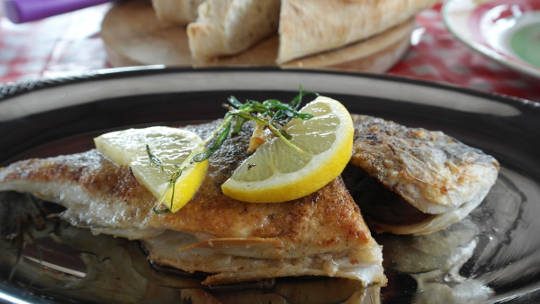
A recent study reveals that children who eat fish at least once a week experience better sleep and have IQ scores averaging 4 points higher than those who eat fish less frequently. The research highlights the significance of omega-3 fatty acids in fish, suggesting a link between fish consumption, sleep quality, and cognitive performance.
In This Article
- What is the connection between fish consumption and cognitive performance?
- How do omega-3 fatty acids influence sleep and intelligence?
- What methods were used to assess fish consumption and sleep quality?
- How can families practically incorporate more fish into children's diets?
- What are the potential risks or limitations of this research?
You're standing in the kitchen at 7 p.m. on a Tuesday, and your nine-year-old is already asking what's for dinner. The fish you bought yesterday is still in the fridge because honestly, you weren't sure anyone would actually eat it. Your kid prefers chicken nuggets. Your partner eats everything but thinks fish smells weird. And you're tired enough that the path of least resistance sounds like ordering pizza again.
Here's what I want to tell you, and I mean this gently: that fish in your fridge might be one of the more impactful things you could serve your family this week. Not because you're a bad parent if you don't. Not because fish is magic. But because the research coming out of the University of Pennsylvania suggests something worth paying attention to, especially if you're someone who lies awake at night worried about your kids' sleep, their focus at school, or their overall wellbeing.
A study published in Scientific Reports found that kids who eat fish at least once a week sleep better and score about 4 points higher on IQ tests than children who rarely or never eat it. That's not a massive jump, but in the landscape of childhood development, it's meaningful. And here's the part that made me sit up and listen: the researchers think they've found the missing link. Sleep. It's not just that fish makes kids smarter. It's that fish helps them sleep better, and better sleep then supports clearer thinking. That's not correlation pretending to be causation. That's a chain that actually makes biological sense.
What's Actually in That Fish?
Before we talk about why this matters, let's understand what we're really talking about. Fish contains omega-3 fatty acids, which have been linked in previous research to cognitive improvement. Scientists already knew that omega-3s help with sleep. They already knew they support brain function. What they hadn't done before was connect all three dots in one study of real kids eating real food instead of supplements.
There's something important about that distinction. Supplements are convenient, sure. But there's a difference between taking a pill and sitting down to a meal. There's a neurological difference, and there's also a relational difference. When your family eats fish together, you're not just delivering omega-3s into your child's body. You're creating an experience, a ritual, a moment of togetherness around something that actually matters for their health. That's not nothing.
Jianghong Liu, the lead researcher and an associate professor of nursing and public health at the University of Pennsylvania, put it this way: "This area of research is not well-developed. It's emerging." What she's saying is that we're just beginning to understand how the pieces fit together. The science here is still writing itself. That can feel unsettling if you're someone who wants absolute certainty before making changes. But it can also feel like permission to experiment, to notice what happens in your own family, to treat this less like dogma and more like an invitation to pay attention.
The Study: What They Actually Looked At
The researchers studied 541 children between 9 and 11 years old in China, roughly split between boys and girls. These aren't tiny kids or teenagers trying to individuate. They're the age where their eating patterns are still largely shaped by what you put in front of them, but old enough to have preferences that feel real and fixed. So if you're thinking "that won't work with my kid," I get it. This study was done with real resistance too.
The children answered questions about how often they ate fish in the past month. The options ranged from "never" to "at least once per week." Notice that. The study wasn't comparing kids eating fish every day to kids eating it never. The significant group was eating it weekly. That's attainable. That's not a wholesale life overhaul.
Then the kids took the Chinese version of the Wechsler Intelligence Scale for Children-Revised, which tests both verbal and nonverbal skills like vocabulary and coding. This wasn't a measure of how smart kids are in general. It was measuring specific cognitive capacities that matter for learning and problem-solving.
The parents answered a standardized questionnaire about sleep habits called the Children Sleep Habits Questionnaire. This covered things like how long kids slept, how often they woke up during the night, and whether they seemed drowsy during the day. In other words, it wasn't just asking about time in bed. It was measuring sleep quality, which is where the actual magic happens for a developing brain.
The researchers also controlled for other factors: how educated the parents were, what they did for work, whether the parents were together, how many siblings each child had. Because they knew that all of these things shape outcomes too. They were trying to isolate what belonged specifically to the fish.
What the Numbers Actually Showed
Here's where it gets concrete. Children who reported eating fish weekly scored 4.8 points higher on the IQ tests compared to kids who said they seldom or never ate fish. Kids whose meals sometimes included fish scored 3.3 points higher. Those are real differences, measured on a test designed to be stable and reliable.
But the thing that struck me more than the IQ numbers was the sleep data. Increased fish consumption was linked to fewer sleep disturbances. That means fewer middle-of-the-night wake-ups. It means less tossing and turning at 3 a.m. For parents, this is transformative information. Because you know what happens when your kid sleeps better? Everything else gets better too.
Adrian Raine, a professor with appointments across multiple schools at the University of Pennsylvania, pointed out something else in the research: omega-3 supplements have been shown to reduce antisocial behavior. Poor cognition is associated with antisocial behavior. Lack of sleep is associated with antisocial behavior. So we're not just talking about IQ points. We're talking about emotional regulation, impulse control, the ability to sit with frustration without lashing out. That's the stuff that determines whether your kid has a decent day at school or comes home dysregulated and exhausted.
The Practical Reality: How This Actually Happens in a Home
Jennifer Pinto-Martin, a professor of nursing and epidemiology and executive director of the Center for Public Health Initiatives at the same institution, sees real potential in these findings. She also sees the real barriers. "It adds to the growing body of evidence showing that fish consumption has really positive health benefits and should be something more heavily advertised and promoted," she says. "Children should be introduced to it early on."
Early on. Let's sit with that for a second, because this is where the conversation shifts from science to actual human life.
You can introduce fish to babies as young as 10 months, as long as it's boneless and finely chopped. But honestly, most families don't start thinking about fish until around age 2. And here's what Pinto-Martin knows that I think matters: introducing the taste early makes it more palatable. It doesn't mean your kid will suddenly love fish. It means their nervous system won't react to it like it's a threat.
Because here's what actually happens in culture: fish is not as commonly served in many American households. It smells distinctive. It requires different preparation than chicken or beef. Children are sensitive to smell, and if they're not used to it, they may shy away from it. This isn't pickiness. This is neurology. New smells can feel unsafe to a developing brain.
So what does this mean for you, sitting in your kitchen right now with that fish in the fridge and a kid who eats chicken nuggets?
It means you might need a plan that isn't about forcing anything. It's about introducing the smell first. Maybe tonight you cook the fish just for you and your partner. Your child smells it while they're eating their chicken nugget. That's it. That's the exposure. Next week, you ask them if they want to try a tiny piece. They don't have to eat it. But they might. Or they might lick it. Or they might just touch it with their tongue and declare the whole operation a failure. All of that is progress.
Pinto-Martin says it clearly: it has to be a concerted effort. Not a power struggle. Not a battle of wills. A concerted effort. That means you're thinking about this consistently, trying different approaches, staying patient with the resistance.
The Limitations and Honest Uncertainties
Before we wrap this up with inspiration and practical next steps, let's name what we don't know yet. The researchers studied a specific group of children in China at a specific age. They didn't dig into which types of fish matter most. Salmon versus cod versus tilapia? We don't know if they're equivalent. They're planning to do that analysis with older children, but not yet.
This was an observational study, which means researchers looked at what was already happening and found correlations. They didn't do a randomized controlled trial where some kids eat fish and others don't to prove causation. That's important, because correlation and causation are not the same thing. It's possible that families who feed their kids fish also do other things that support sleep and cognitive development. Maybe they're more intentional about bedtime routines. Maybe they have more resources. Maybe they're less stressed, and their stress levels actually influence their kids' sleep and function.
The researchers know this. That's why they controlled for demographic factors. That's why they're planning more rigorous studies. They're not claiming they've cracked some secret code. They're pointing at something worth investigating more carefully.
And here's what I think is true anyway: even if fish doesn't turn out to be the magical solution that directly improves sleep and IQ, eating more real food and fewer processed options is probably good for your kid. Creating family meals instead of individual quick fixes is probably good for your kid. Introducing them to a wider variety of flavors and textures is probably good for them. These things might not show up in IQ point gains, but they show up in resilience and flexibility and a sense of belonging.
What to Actually Do This Week
The researchers recommend incrementally incorporating more fish into your diet. You don't need to go from zero to fish five nights a week. Once a week moves you into the group that showed these benefits. Once. A. Week.
Adrian Raine says something I think about often: "Doing that could be a lot easier than nudging children about going to bed." Think about how much energy you spend on sleep battles. Negotiations about bedtime. Arguments about screens before sleep. Trying to convince a dysregulated kid that they're tired and need to go to bed. Now imagine if one meal choice per week reduced all of that friction. "If the fish improves sleep, great. If it also improves cognitive performance, even better. It's a double hit."
Here are some actual things you could do:
Start this week with what you already know your kid will eat. Maybe that's fish sticks. Are they fish? Yes. Are they ideal nutrition? Not exactly. But are they delivering omega-3s? Actually, yes. If your kid will eat them, that's a starting point, not a failure.
Or go to your grocery store and ask the person at the fish counter what they recommend for kids. Tell them your kid has never eaten fish before. They'll probably suggest something mild and not too "fishy" tasting. White fish, maybe. Cod or halibut. Try it once. If it doesn't work, you learned something. If it does, you've created a new option.
Make it a moment. Not a test. Not a judgment. Just a meal where you're trying something new together. Tell your kids the truth if you want: "Scientists found out that fish helps your brain work better and helps you sleep better, so we're going to try it." Kids respond to honesty way more than they respond to manipulation.
If your child resists, remember Pinto-Martin's point about smell and unfamiliarity. Serve it alongside foods they already love. Let them eat around it. Let them watch you eat it and enjoy it. The exposure itself is valuable.
And if you live in a community where fish isn't common in your family's cultural tradition, acknowledge that. You're not replacing your culture. You're adding to it. That's a different thing, and it matters.
The Real Thing Under All of This
I think what gets me about this research is that it points to something we already sense but don't always trust: that the small choices we make at home, the meals we cook, the patterns we establish, they actually matter. Not in a crushing, perfectionist way. In a real, measurable, scientific way. Your kid's sleep is not purely a matter of willpower or discipline. It's not purely about screens or bedtime routines. It's also about what they eat. And that's something you can actually control.
You're not waiting for a diagnosis. You're not waiting for medication. You're not waiting for therapy to kick in. You're making one different choice at dinner, and that choice is showing up in how your child sleeps and how their brain functions. That's the kind of agency that most of us are starving for.
This week, that fish in your fridge isn't just dinner. It's a small, concrete way of saying to your kid, "I'm paying attention. I'm thinking about what helps you be your best self. I'm doing something about it." That matters more than any nutrient analysis.
Cook it with whatever energy you have. Serve it without fanfare. See what happens. You might be surprised.
mcdaniels_bio
Further Reading
-
Brain Food: The Surprising Science of Eating for Cognitive Power
Lisa Mosconi’s book offers a clear bridge between nutrition and brain health, making it a strong fit for an article about fish, omega-3s, sleep, and childhood development. It helps readers understand why food choices are not just about calories, but about supporting memory, focus, and long-term cognitive function.
Amazon: https://www.amazon.com/exec/obidos/ASIN/0399573992/innerselfcom
-
The Better Brain: Overcome Anxiety, Combat Depression, and Reduce ADHD and Stress with Nutrition
Bonnie J. Kaplan and Julia J. Rucklidge examine how nutrients influence mood, attention, and emotional regulation. This connects closely with the article’s discussion of how food may affect sleep, behavior, and the developing brain.
Amazon: https://www.amazon.com/exec/obidos/ASIN/0358447100/innerselfcom
-
The Family Dinner: Great Ways to Connect with Your Kids, One Meal at a Time
Laurie David’s book fits the article’s practical emphasis on making healthy eating a family experience rather than a food battle. It supports the idea that dinner can become a simple ritual where children are gradually introduced to new foods, better habits, and shared connection.
Amazon: https://www.amazon.com/exec/obidos/ASIN/0446565466/innerselfcom
Article Recap
Eating fish weekly may enhance children's sleep quality and cognitive abilities. Families are encouraged to gradually introduce fish into their diets to maximize these benefits.
#InnerSelfcom #ChildNutrition #Omega3s #CognitiveDevelopment #SleepQuality #HealthyEating







