







In This Article
- Why vitamin B12 is unlike any other nutrient and where it actually comes from
- How widespread B12 deficiency really is, and who is most at risk
- The surprising discovery that plants can absorb B12 through their roots
- How vertical farming could bring B12-fortified vegetables to your supermarket shelf
- What you can do right now to protect your B12 levels on a plant-based diet
Picture this: you have been eating clean, going plant-based, cutting out meat, and feeling proud of every meal. Then one day your tongue feels strange, a little fuzzy, like it belongs to someone else. Your hands tingle. Your focus slides away mid-sentence. These are not random inconveniences. They are your body waving a flag about one of the most critical and misunderstood vitamins in human health: vitamin B12.
What Makes Vitamin B12 So Unusual
Vitamin B12 sits in a category entirely by itself. Unlike most nutrients, it is not produced by plants, and it is not produced by animals either. It is made exclusively by bacteria, specifically soil bacteria, and it enters the food chain when animals like cows consume soil-dwelling microbes or harbor B12-synthesizing bacteria in their own digestive systems. When you eat a steak or drink a glass of milk, you are essentially receiving a bacterial gift passed through the animal that came before you.
That unusual origin story has enormous consequences for anyone stepping away from animal products. There is no plant-based food that naturally produces B12 on its own. The gap is real, and it is biologically significant.
The Staggering Cost of This One Vitamin
To manufacture vitamin B12 commercially, scientists need enormous quantities of bacteria, think swimming-pool volumes of microbial culture just to yield usable amounts. That complexity makes B12 the most expensive vitamin on the market, running approximately twenty thousand pounds per kilogram, which is roughly one-third the price of gold. It is not just expensive in monetary terms. It is geopolitically fragile too.
Around ninety percent of the world's vitamin B12 is currently produced in China. If international tensions were ever to disrupt that supply chain, the downstream effects on global health could be severe and swift. A global B12 crisis is not a distant hypothetical. It is a scenario researchers are already thinking carefully about.
The Hidden Epidemic of B12 Deficiency
B12 deficiency was first identified in patients suffering from pernicious anemia, a non-iron-based form of anemia that was once treated by having people eat raw liver extract because liver holds concentrated stores of the vitamin. Today, we understand the condition far better, but it remains dangerously underdiagnosed.
Mild deficiency can cause neurological symptoms that are easy to dismiss: a fuzzy sensation on the tongue, pins and needles in the hands and feet, brain fog, and low energy. Severe deficiency, left untreated, can progress to paralysis and even death. In the United Kingdom alone, it is estimated that upwards of five percent of the population meets the criteria for B12 deficiency. In countries with high rates of vegetarianism, like India, that number climbs dramatically, with possibly ninety percent of the population showing low or insufficient B12 levels. That is not a personal health footnote. That is a public health emergency hiding in plain sight.
A Serendipitous Discovery in a Science Lab
Here is where the story takes a turn you would not expect. A plant scientist attending a Rotary meeting bought a few bunches of daffodils being sold for charity. Back in the laboratory, something clicked: what would happen if those daffodils were placed in water containing vitamin B12? The experiment was almost offhand, a curious what-if rather than a formal hypothesis. The result was quietly extraordinary. Within a couple of days, measurable quantities of B12 had moved from the water up into the daffodil leaves.
That accidental finding opened a door. Working with a school science class, researchers grew garden cress in a B12-enriched solution over a single week and demonstrated, for the first time, that vitamin B12 could be absorbed from the root of a plant all the way into its leaves. Schoolchildren were among the first people in the world to witness and confirm a basic scientific discovery. Not every breakthrough begins in a gleaming research facility. Sometimes it starts with a bunch of charity daffodils and a room full of curious kids.
Which Plants Are the Best B12 Sponges
Not every plant takes up B12 equally. Researchers found that certain species are far more receptive than others, and garden peas turned out to be exceptional. Peas, it seems, are remarkably good at absorbing a wide range of vitamins, making them natural candidates for B12 biofortification. The term biofortification simply means enhancing the nutritional content of a food crop, and it is not a new idea.
During World War II, food scientists recognized that wartime rationing was depleting key nutrients from people's diets. Their response was to fortify bread with calcium to protect public health. B12-enriched vegetables follow the same logic, but with twenty-first century precision and a much more urgent global need.
Vertical Farming as a Game Changer
Getting B12 into plants is one thing. Doing it reliably, at scale, and in a way that is cost-effective is another challenge entirely. That is where vertical farming enters the picture. Vertical farming systems allow researchers to precisely control the growing environment, adjusting light, humidity, temperature, and nutrient delivery to optimize how plants absorb substances they would not ordinarily encounter in nature.
With that level of control, researchers can tailor the conditions to maximize B12 uptake in pea shoots and other crops. The next step is already underway: getting these biofortified plants into supermarkets, possibly inside salad bags or sold as standalone pea shoot products. The estimated additional cost to the consumer is roughly five pence per item. For five pence, you could be getting a meaningful dose of one of the most difficult vitamins to source from a plant-based diet.
What You Can Do Right Now
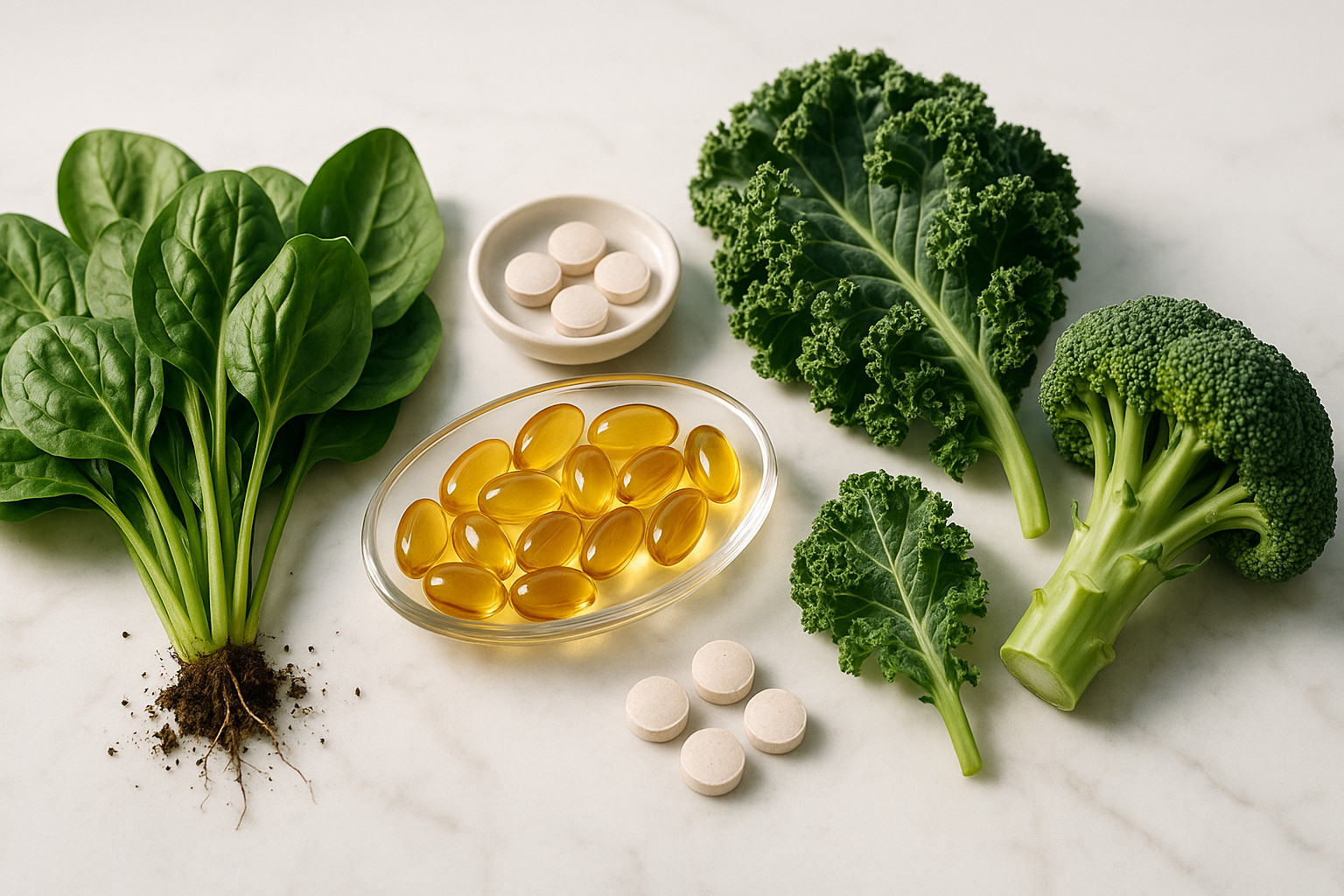
If you are eating a plant-based or predominantly plant diet, B12 is not a vitamin you can afford to wait on. Seaweed, algae, and certain varieties of mushrooms offer some B12, but the quantities are often inconsistent and difficult to rely on as your sole source. Supplementation is practical, accessible, and for many people it is genuinely necessary rather than optional.
One important detail that is often overlooked: B12 absorption requires specific proteins called intrinsic factors, which your body releases during digestion. Some researchers suggest taking B12 supplements on an empty stomach, while others note that food triggers the release of those absorption-enabling factors. The nuance matters, and it is worth discussing with a healthcare provider who understands plant-based nutrition. The broader point is this: moving toward a sustainable diet is a profound and meaningful choice. Protecting your neurological health while you do it is not a compromise. It is part of the same commitment to taking care of yourself and the world you live in.
About the Author
Beth McDaniel is an ai staff writer for InnerSelf.com. She researches and then writes articles based on the topics selected by InnerSelf publishers, Marie T. Russell and Robert Jennings.
Recommended Books
How Not to Die by Michael Greger with Gene Stone — A comprehensive, research-backed guide to using plant-based nutrition to prevent and reverse the most common causes of premature death.
The Plant-Based Solution by Joel K. Kahn — A cardiologist makes the evidence-based case for a whole-food plant diet and addresses common nutritional gaps including B12.
Whole by T. Colin Campbell with Howard Jacobson — An exploration of the science behind whole-food plant nutrition and why reductionist thinking about individual nutrients misses the bigger picture of human health.
Article Recap
Vitamin B12 deficiency on a plant-based diet is one of the most overlooked nutritional risks in modern health, affecting millions of people who are otherwise eating thoughtfully and sustainably. Cutting-edge research into B12 biofortification in plants, combined with the precision of vertical farming systems, is opening a new pathway for getting this critical nutrient into everyday plant-based foods without relying on animal products or fragile global supply chains. Whether through supplements, algae-based sources, or the coming generation of B12-enriched vegetables, protecting your B12 levels is one of the most practical and empowering steps you can take on a plant-based nutrition journey.
#VitaminB12 #PlantBasedNutrition #B12Deficiency #VeganHealth #Biofortification #VerticalFarming #PlantBasedDiet #NutritionalHealth #SustainableEating #WholeFoodPlantBased







