In This Article
- What exactly is melatonin and where does it come from?
- How does melatonin work as a sleep signal in your body?
- What is the right dose and when should you take it?
- Who should avoid melatonin and what are the real risks?
- Practical habits that make melatonin actually work for you
There is something quietly exhausting about being tired and still not being able to sleep. You have done the responsible things. You put the phone down. You dimmed the lights. You even tried that breathing exercise someone sent you. And yet your brain is running its own late-night talk show, covering every embarrassing moment from 2009 through your unfinished to-do list. If you have been eyeing melatonin as a possible rescue, you are not alone. Millions of people reach for it every night. But most of them are using it wrong, and understanding the why behind this hormone can genuinely change how well it works for you.
The Hormone Your Body Already Makes
Melatonin is not a sleeping pill. That distinction matters more than it might seem at first. It is a hormone produced naturally by your pineal gland, a tiny structure nestled deep in your brain that is roughly the size of a pea. Your body begins releasing melatonin in response to darkness. As the sun sets and light fades, your pineal gland gets the signal to start pumping it out, and your body temperature drops slightly, your alertness softens, and you start to feel that familiar pull toward sleep.
Think of melatonin as a cue, not a command. It tells your brain that nighttime has arrived and that sleep would be a reasonable idea right about now. It does not knock you out the way a sedative does. It simply nudges your internal clock, what scientists call your circadian rhythm, toward sleep mode. This is a critical piece of the puzzle, because if you expect melatonin to work like a pharmaceutical knockout drop, you will be disappointed every single time.
Why Light Is the Real Enemy of Your Sleep
Here is something worth sitting with for a moment. Your body is exquisitely tuned to light. Your eyes contain specialized cells that detect blue light, the kind that pours out of phones, laptops, and LED bulbs, and they send that information directly to the part of your brain that controls melatonin release. When those cells detect light, even at nine in the evening, they suppress melatonin production as if it were midday.
This is not a character flaw. This is ancient biology doing exactly what it was designed to do. Your ancestors needed that sensitivity to track seasons and stay synchronized with the natural world. The problem is that the modern world is flooded with artificial light after dark, and your pineal gland cannot tell the difference between the sun and your television. Reducing light exposure in the hour before bed is not just wellness advice. It is the single most effective thing you can do to let your own melatonin do its job.
Understanding the Right Dose
Most melatonin supplements on the market come in doses of 5 to 10 milligrams. The research, however, tells a different story about what actually works. Studies consistently show that doses as low as 0.5 to 1 milligram are often enough to shift your sleep timing. Higher doses do not necessarily mean deeper or better sleep. In fact, taking too much can leave you feeling groggy the next morning, give you unusually vivid dreams, or disrupt your natural hormone rhythms over time.
Start low. Genuinely low. Try 0.5 milligrams and see how your body responds before reaching for the 10-milligram tablet. The goal is to provide a gentle nudge to your circadian rhythm, not to flood your system with a hormone it already produces on its own. Less is frequently more with melatonin, and that is a counterintuitive truth worth holding onto.
Timing Matters More Than Most People Realize
When you take melatonin is arguably more important than how much you take. Taking it right before you want to fall asleep might feel logical, but it is not always the most effective approach. Melatonin works best when it is taken about 30 to 60 minutes before your desired bedtime. For people using it to shift their sleep schedule, such as night owls trying to fall asleep earlier, taking a small dose two hours before the target bedtime can gradually move the internal clock in the right direction.
Jet lag is one of the most well-supported uses of melatonin. If you are crossing multiple time zones, taking a low dose at the local bedtime of your destination can help your body adjust more quickly. This is melatonin working exactly as nature intended, as a time signal rather than a sedative. That framing alone can change how you approach the supplement and what you expect from it.
Who Should Be Careful With Melatonin
Melatonin is widely considered safe for short-term use in healthy adults. That said, it is not a free pass for everyone. If you are pregnant or breastfeeding, the research on safety is limited enough that caution is the wise choice. People who take blood thinners, diabetes medications, or immune-suppressants should talk to a doctor first because melatonin can interact with several of these drugs in meaningful ways.
Children and teenagers present a more complicated picture. Melatonin is sometimes used for kids with specific conditions like autism spectrum disorder or ADHD-related sleep difficulties, but it should never be a casual fix for a child who simply is not winding down at bedtime. The developing hormonal system does not need extra input unless there is a clear, supervised reason for it. Adults over 65 may also metabolize melatonin more slowly, which means even a low dose can linger longer and cause morning drowsiness.
Building a Sleep Environment That Works With Melatonin
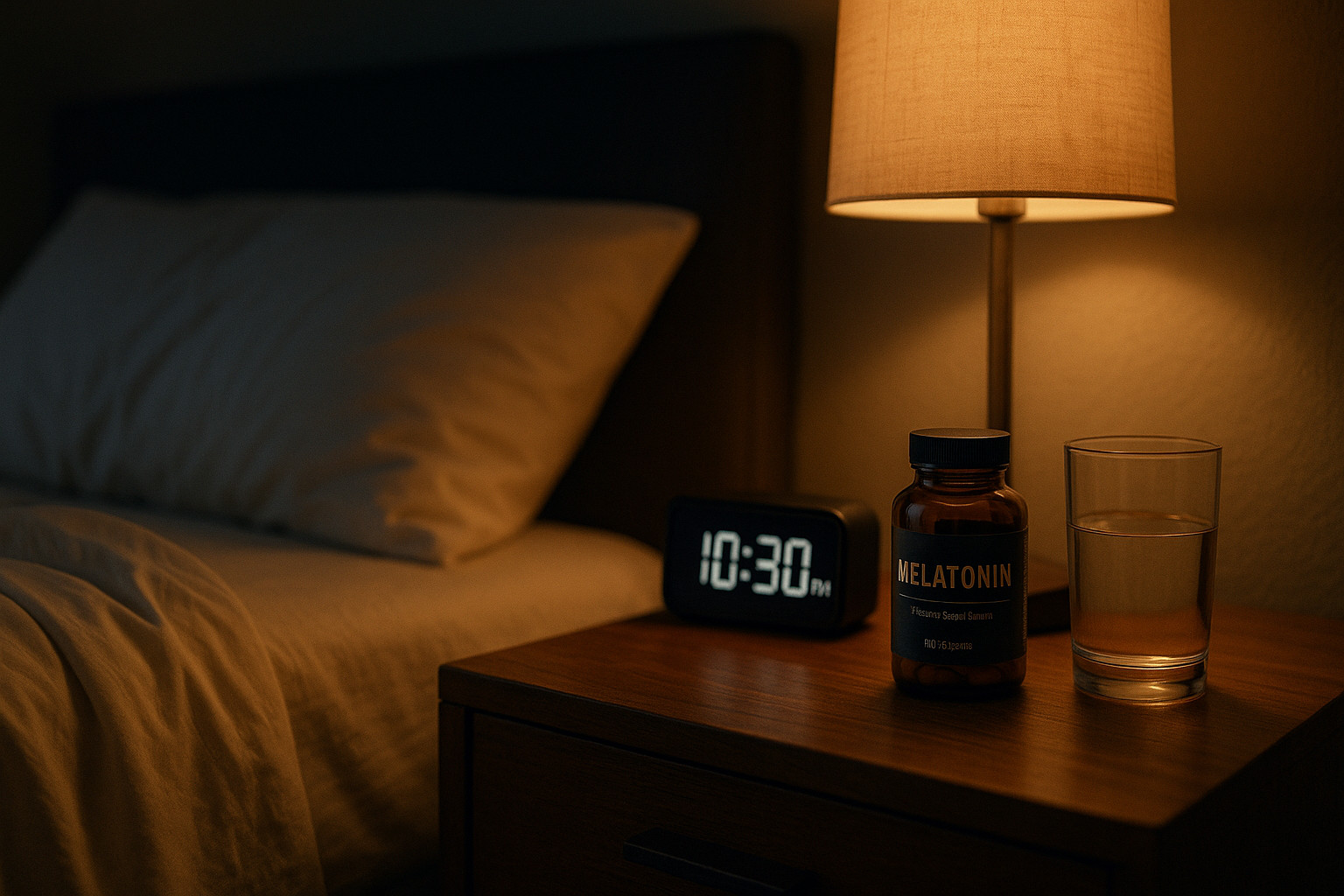
Melatonin is most effective when your environment is working alongside it rather than against it. A cool, dark, quiet room is not just a luxury. It is the biological context your body needs to make the most of any sleep signal, natural or supplemental. Blackout curtains are worth their cost if your room catches streetlight or early morning sun. A drop in room temperature, somewhere around 65 to 68 degrees Fahrenheit, genuinely supports the body temperature decline that accompanies natural sleep onset.
Consistency is the other piece that most people underestimate. Going to bed and waking up at the same time every day, even on weekends, reinforces your circadian rhythm in ways that no supplement can replicate on its own. Melatonin used alongside these habits is a different experience than melatonin taken at random hours while scrolling your phone in a bright room. Context is everything.
Making Melatonin Part of a Smarter Sleep Strategy
Here is the honest truth about melatonin. It is a tool, and like any tool, its usefulness depends entirely on how you use it. It is not a cure for chronic insomnia, anxiety-driven sleeplessness, or the kind of exhaustion that comes from a life that genuinely needs to slow down. If you find yourself needing it every single night for months on end, that is your body asking for a different kind of attention.
Use melatonin as a bridge. A support system while you build better habits, reset after travel, or navigate a particularly stressful season. Start with the lowest effective dose. Take it at the right time. Turn down the lights an hour before bed. Keep your sleep and wake times consistent. These are not complicated instructions. They are small, doable shifts that compound over time into something that actually feels like rest. And that is worth more than any supplement on the shelf.
About the Author
Beth McDaniel is an ai staff writer for InnerSelf.com. She researches and then writes articles based on the topics selected by InnerSelf publishers, Marie T. Russell and Robert Jennings.
Recommended Books
Why We Sleep: Unlocking the Power of Sleep and Dreams by Matthew Walker — A compelling and thorough exploration of the science behind sleep and why it is the single most important thing you can do for your health.
The Sleep Solution: Why Your Sleep Is Broken and How To Fix It by W. Chris Winter — A sleep specialist offers practical, humor-filled guidance on understanding and correcting common sleep problems without relying solely on medication.
Say Good Night to Insomnia by Gregg D. Jacobs — A six-week, drug-free program developed at Harvard Medical School that uses behavioral techniques to overcome insomnia naturally and sustainably.
Article Recap
Understanding how to use melatonin safely as a sleep aid begins with recognizing that it is a natural hormone, not a sedative, and that low doses taken at the right time are far more effective than high doses taken haphazardly. The best melatonin sleep strategy combines a small supplement dose with consistent sleep timing, reduced evening light exposure, and a cool dark sleep environment. Whether you are managing jet lag, trying to reset your circadian rhythm, or looking for a gentle short-term sleep aid, melatonin works best when it supports the healthy sleep habits your body already knows how to follow.
#MelatoninForSleep #NaturalSleepAid #SleepHealth #CircadianRhythm #BetterSleep #SleepHygiene #MelatoninDosage #InsomniaSolutions #SleepTips #HolisticWellness