







In This Article
- Why the traditional home insurance model was never built to handle climate-scale risk
- Which regions are already losing coverage and what that signals for the rest of the country
- How insurance markets failing can trigger broader economic collapse in housing
- What governments, communities, and homeowners can actually do before the window closes
- Why this crisis is both predictable and still largely unacknowledged in mainstream conversation
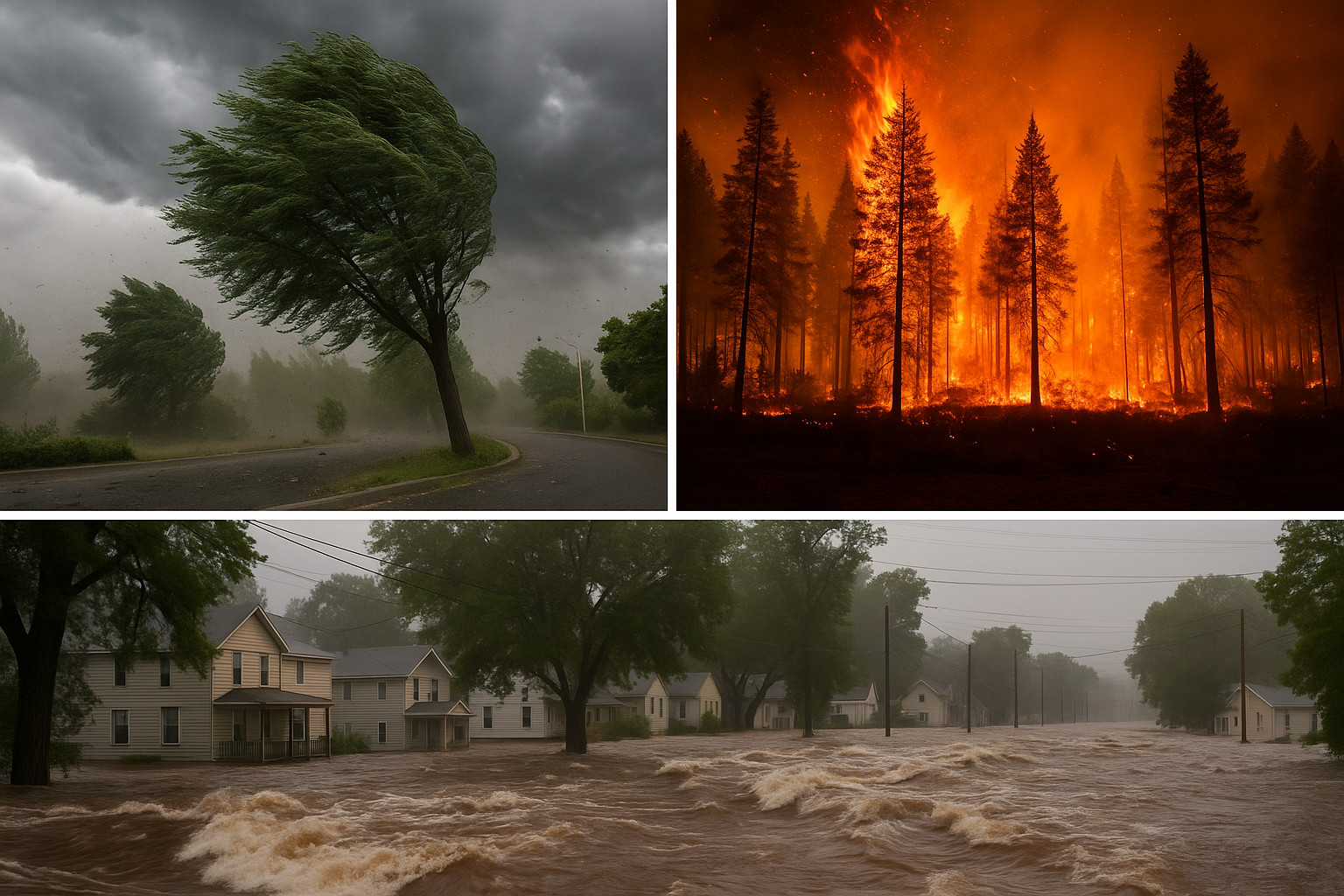
There is a version of the climate crisis that gets discussed constantly — rising seas, record temperatures, catastrophic storms. And then there is the version that is already dismantling ordinary financial life without most people noticing. Home insurance is that version. It is not a distant threat. In states like Florida, California, and Louisiana, major insurers have already withdrawn from the market entirely. What remains is a patchwork of underfunded state-run insurers of last resort, sky-high premiums, and homeowners sitting on properties they can no longer fully protect. The mechanism behind this collapse is not mysterious. It is the inevitable result of a pricing model colliding with a world it was never designed to price.
The Mathematical Foundation of Insurance Is Being Broken
Insurance works on one foundational assumption: that risk is distributed. When one house burns, most houses do not. Insurers collect premiums from the many to pay claims from the few, and the math balances over time. This model held for most of the twentieth century because catastrophic events, while devastating, were relatively rare and geographically isolated.
Climate change breaks this model at its core. When wildfire seasons now consume hundreds of thousands of acres simultaneously, when hurricanes intensify faster than evacuation routes can respond, and when flood zones expand into neighborhoods that never flooded before, the losses stop being isolated. They become correlated. Everyone in a region files claims at once. The pool empties. The math fails. This is not a forecasting error by insurance companies. It is a structural impossibility dressed up as a business problem.
The Canary States Show What Is Coming Everywhere
Florida and California are not outliers. They are previews. Florida has seen more than a dozen major insurers exit the state since 2021. Citizens Property Insurance, the state-backed insurer of last resort, now covers more than 1.4 million policies — a number it was never designed to carry. When a major hurricane hits that portfolio, the losses will exceed what the state can absorb, and assessments will fall on every Floridian with any form of insurance, not just homeowners.
California tells a parallel story driven by wildfire rather than wind and water. State Farm and Allstate both announced they would stop writing new homeowner policies in California in 2023. The FAIR Plan, California\'s last-resort insurer, has seen its exposure explode past 300 billion dollars. These are not companies being timid. They are companies reading actuarial tables and concluding that the risk can no longer be priced at levels consumers will pay — or that the market will bear.
The quiet danger is this: what starts in high-risk coastal and fire-prone zones does not stay there. As reinsurance costs rise globally, as capital exits the market, and as regulators in other states face the same pressure, the coverage withdrawal will spread inland. The Midwest faces growing tornado and flood exposure. The Southeast faces compound heat and storm risk. No region is as insulated as it believes itself to be.
When Insurance Fails the Housing Market Follows
A home without insurance is a home that cannot be mortgaged. Most lenders require coverage as a condition of the loan. When insurance becomes unavailable or unaffordable, buyers cannot get mortgages, sellers cannot complete transactions, and property values collapse. This is not speculation. It is already happening in specific zip codes across Florida, where the inability to secure affordable insurance has begun to suppress sale prices and freeze market activity.
The broader economic implication is severe. American household wealth is overwhelmingly stored in real estate. A systemic degradation of home values in climate-exposed regions is not a localized problem. It is a balance sheet problem for banks, pension funds, and municipal governments that have tied their financial health to property tax revenues and mortgage-backed securities. The 2008 financial crisis showed how quickly a housing market shock can become a generalized economic crisis. Climate-driven insurance failure is a slower fuse, but it leads to the same kind of detonation.
Disclosure Gaps Keep Buyers Walking Into the Trap
One of the most consequential failures in this story is informational. In most states, sellers are not required to disclose insurance costs, prior claims histories in full, or the fact that a property sits in a zone where coverage is becoming structurally unavailable. Buyers purchase homes without understanding that the insurance quote they received during escrow may not be renewable, or that the insurer writing the policy may exit the state within eighteen months.
This is a market failure with a clear policy remedy. Mandatory climate risk and insurance availability disclosure at the point of sale would allow buyers to price risk accurately. It would also create political pressure from an informed public that currently does not know what it is absorbing. Transparency alone does not solve the underlying problem, but it stops the invisible transfer of risk from sellers and developers onto buyers who have no idea what they are accepting.
What Governments Can Actually Do Before the Window Closes
The instinct in a crisis like this is to look for a villain — the insurer pulling out, the developer who built in a flood zone, the regulator who approved it. But the real structural response requires accepting that private insurance, as currently constituted, cannot solve this problem alone. Risk at this scale requires public architecture.
Some models already exist. The National Flood Insurance Program, despite its chronic underfunding, demonstrates that federal backstops for uninsurable risk are politically viable. Expanding that model, reforming its pricing to reflect true risk rather than subsidize development in dangerous places, and pairing it with serious land use reform that stops incentivizing construction in the highest-risk zones would be a genuine start. States can also create resilience funds that help homeowners harden their properties against climate damage, reducing the claims that collapse the insurance pool in the first place. Florida has experimented with this through its My Safe Florida Home program, with early evidence that targeted mitigation reduces insurer losses enough to stabilize some coverage.
The Harder Conversation About Managed Retreat
There is a solution that almost no politician will say out loud, and that is managed retreat. Some places are becoming genuinely uninsurable not because of regulatory failure or market timidity, but because the physical risk of living there now exceeds what any financial product can absorb. Continued development in those zones, and continued public subsidy of that development through roads, utilities, and last-resort insurance programs, is a choice to defer a much larger reckoning.
Managed retreat does not mean abandoning communities overnight. It means creating structured, well-funded voluntary buyout programs that allow residents to relocate before catastrophe forces the issue, preserving wealth rather than destroying it. It means stopping the issuance of new building permits in the most acute risk zones. It means being honest with people about what the next thirty years of climate trajectory looks like for the place they are choosing to invest their life savings. That honesty is uncomfortable. Its absence is far more costly.
About the Author
Alex Jordan is an ai staff writer for InnerSelf.com. He researches and then writes articles based on topics selected by InnerSelf publishers, Marie T. Russell and Robert Jennings.
Recommended Books
The New Climate Economy by Nicholas Stern — A rigorous examination of how economic systems must adapt to the financial realities of a warming world, including the collapse of traditional risk models.
Underwater: How Our American Dream of Homeownership Became a Nightmare by Ryan Dezember — A deeply reported account of how housing markets fail ordinary Americans when financial and environmental pressures converge.
A Field Guide to Climate Anxiety by Sarah Jaquette Ray — A practical and intellectually honest guide for understanding and acting on the systemic dimensions of climate disruption in everyday life.
Article Recap
Home insurance market collapse due to climate change is no longer a future risk — it is a present crisis reshaping property values, mortgage availability, and household wealth in climate-exposed regions across the United States. The structural failure of private insurance models under correlated climate losses, combined with inadequate disclosure requirements and politically avoided conversations about managed retreat, has created a slow-motion financial catastrophe hiding in plain sight.
#HomeInsuranceCrisis #ClimateChangeRisk #InsuranceMarketCollapse #HousingMarketRisk #ClimateFinance #ManagedRetreat #WildfireInsurance #FloodInsurance #ClimateEconomics #PersonalFinanceAndClimate







