







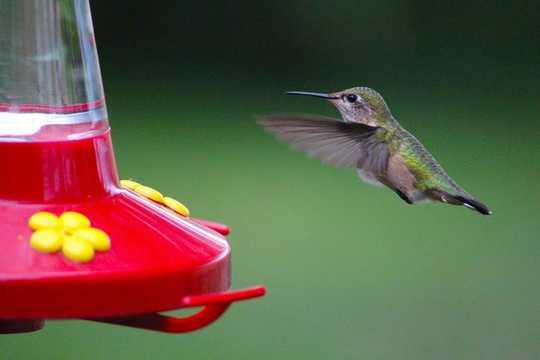
Hummingbirds flap their wings 800 times per minute. Dino Hans Farnese/Shutterstock.com
If you have a hummingbird feeder filled with sugar water, you might have the impression that all that hummingbirds need to live a healthy life is to sip sweet drinks all day long.
Hummingbirds require more than just sugar water for a healthy diet. While nectar is a primary food source, these birds also need proteins, fats, vitamins, and minerals, often obtained from insects and even dirt. Proper feeding practices are essential for attracting and maintaining healthy hummingbird populations.
In This Article
- What nutritional needs do hummingbirds have?
- How do hummingbirds obtain protein and other nutrients?
- What is the best way to prepare sugar water for hummingbirds?
- How can gardens attract hummingbirds effectively?
- What risks are associated with improper hummingbird feeding?
f you have a hummingbird feeder filled with sugar water, you might have the impression that all that hummingbirds need to live a healthy life is to sip sweet drinks all day long.
Believe it or not, these tiny birds need other types of fuel as well. While sugar makes up a large component of their diet, they also need proteins, fats, vitamins and minerals to be healthy. Their largest source of protein is from eating insects. If you watch hummingbirds near your feeders, you might get to see them do some erratic, zigzag flying – this is how they catch small insects flying through the air.
I’ve been studying hummingbirds for 10 years, and as part of my research, I place tiny aluminum bands on thousands of hummingbird legs to help me learn where they migrate and allow me to monitor how healthy their populations are each year.
What else do hummingbirds eat?
Hummingbirds will also pluck insects directly off of flowers, shrubs and trees. Some of their favorite bugs includes small flies and gnats, ants, tiny insect eggs, larva and even small spiders.
Some people report seeing hummingbirds eating dirt, sand and campfire ashes too. Ornithologists suspect this is to gain certain vitamins and minerals. They are also known to eat pollen and even tree sap. So a hummingbird diet is actually quite complex and varied, and they can’t eat sugar alone to survive.
When humans eat too much sugar consistently, their blood sugar levels rise and they are at risk of getting diabetes. Hummingbirds’ anatomy and digestion are very different from humans. While nectar accounts for about 90% of their diet, hummingbirds don’t get diabetes since their bodies are designed specifically for digesting sucrose. With a heartbeat that can reach 1,260 beats per minute, hummingbirds need the sugar rush.
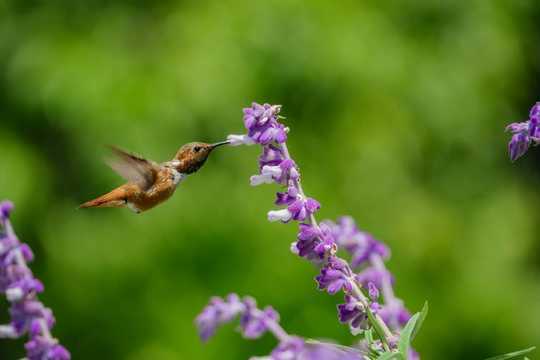 A hummingbird slurping nectar from Salvia officinalis flowers. Kit Leong
How to attract and feed hummingbirds
Diluted white sugar most closely resembles the sucrose nectar of flowers the birds feed on. You can easily fill your feeders with sugar water. Mix four parts water to one part white sugar and then boil, cool and fill the feeder. Remember to clean and refill your feeder every few days, especially in hot weather. A dirty or moldy feeder can make hummingbirds sick.
Don’t ever use brown sugar, honey, or any other type of sweetener, which can harm a hummingbird. For example, brown sugar has too much iron in it. Try not to make it too much sweeter than a 4:1 ratio because it is harder for them to digest. There is such a thing as too sweet, even for a hummingbird.
Did you know that hummingbirds probably don’t want red dye added to their sugar water? Red dye serves no healthy purpose for their body (or yours). Most red dyes are petroleum-based, and it makes their poop red, which is unnatural.
The red color on your feeder is enough for a hummingbird to find it. Or consider planting some red or purple flowers in your garden, like Salvias or Monardas – hummingbirds love them and they’re great sources of insects too.
So don’t be shocked if a hummingbird zips past you feeder and ignores a fresh batch of sugar water. It might be focused on getting its protein fix and catching a flying gnat right out of the air.
About The Author
Jessica Pollock, Research Biologist at Intermountain Bird Observatory, Boise State University
This article is republished from The Conversation under a Creative Commons license. Read the original article.
Further Reading
-
The Hummingbird Handbook: Everything You Need to Know about These Fascinating Birds
John Shewey offers a practical guide to hummingbird behavior, feeding, habitat, and backyard attraction. It is well suited for readers who want to understand why sugar water alone is not enough and how to support hummingbirds more responsibly.
Amazon: https://www.amazon.com/exec/obidos/ASIN/B0B5L5SD86/innerselfcom
-
North American Hummingbirds: An Identification Guide
This guide focuses on identifying, aging, and understanding hummingbird species found across North America. It gives readers a more detailed view of hummingbird biology, helping connect everyday feeder observations with the birds’ wider natural lives.
Amazon: https://www.amazon.com/exec/obidos/ASIN/0826337678/innerselfcom
-
Birds & Blooms Ultimate Guide to Hummingbirds: Discover the wonders of one of nature’s most amazing creatures
This accessible guide brings together hummingbird facts, garden ideas, and practical tips for people who enjoy attracting them at home. It supports the article’s message that healthy hummingbird feeding involves flowers, insects, clean feeders, and thoughtful habitat choices.
Amazon: https://www.amazon.com/exec/obidos/ASIN/B08LDY1N37/innerselfcom
Article Recap
Hummingbirds thrive on a varied diet that includes protein from insects, not just sugar water. Ensuring proper feeding practices can help maintain their health and attract them to gardens.
#InnerSelfcom #Hummingbirds #BirdFeeding #Pollinators #WildlifeConservation #GardeningTips







