








Many adults struggle with an inner teenager that resists healthy habits. By acknowledging this voice and fostering a dialogue, individuals can collaborate with themselves to make better lifestyle choices. This approach not only promotes self-discipline but also enhances the relationship with personal well-being.
In This Article
- What challenges arise from the inner teenager?
- How does the inner teenager influence choices?
- What methods can be used to engage with the inner teenager?
- How can this approach be applied to daily habits?
- What are the risks of ignoring the inner teenager?
"Don't tell me what to do!" We've all heard that… and we've all said it—out loud or silently.
Sounds like a teenager speaking. And it is.
It's that inner teenager most of us still carry around inside. The one that resists authority—especially when it comes to things like exercise, diet, or anything we think we “should” or "have to" do.
By acknowledging that voice and engaging it, instead of fighting it, we can find a way to make healthier choices without triggering resistance. Instead of a battle, it becomes a partnership.
Enough Already!
Teenagers get tired of being told what to do—what, when, where, how, and why. Rarely feeling heard. Rarely feeling like they have a real say. That teenager doesn’t disappear with age. She just moves inside.
Mine shows up most clearly when it’s time to exercise. That “I don’t want to” attitude has definitely interfered with my well-being. After all, exercise—especially as we get older—is not optional if we want to stay healthy and energized.
So I decided to sit down and have a conversation… with my inner teenager.
I asked, “Why don’t you want to exercise?”
“Dunno.”
But as I stayed with the question, something became clear. I wasn’t really resisting exercise itself. I was resisting being told that I had to exercise.
And who was doing the telling? Not my doctor. Not my husband.
Me.
That was the turning point. The resistance wasn’t about the activity—it was about the pressure. The “have to.” The command. And my inner teenager was pushing back.
Catch 22
So how do you get out of that loop?
You stop issuing orders… and start offering choices.
Instead of saying, “You have to exercise,” I asked what activity she might actually feel like doing. Not “exercise”—that word alone can trigger resistance—but "activity".
We came up with options: walking, riding a bike, jumping on a trampoline, playing tennis. and tai chi.
Then we made an agreement. Each morning, she gets to choose.
Now, she still tests me. There are mornings when she refuses everything. And I let that happen, sometimes. Not out of weakness, but out of respect for the process. Because the moment I push too hard, the resistance comes right back. The shift is subtle but important: nothing is being forced. There is a choice.
And interestingly enough, when there’s a real choice, she chooses to "exercise".
To Eat That or Not To Eat That
Food is another place where this inner teenager shows up.
She has a definite preference for cookies, pastries, and ice cream over beggies, fruit and yogurt. No surprise there. But instead of fighting her, I’ve learned to negotiate.
We agree that treats are fine—in moderation. And we decide, ahead of time, what that moderation looks like.
Of course, she can be sneaky. If I bring the whole bag of cookies, the “plan” tends to disappear somewhere around cookie number six… or ten or twenty.
So I adapted. I take out the agreed amount and put the rest away. Sometimes I even add one extra, just so she feels like she’s getting a bonus, like she's winning.
Same with ice cream. A small bowl, filled generously. It looks abundant, and that's what matters to her. Feeling that there is enough.
This isn’t about tricking myself. It’s about understanding how this part of me works—and working with it instead of against it. After all, my inner teenager and I share the same body.
So… What’s the Answer?
The answer isn’t stricter discipline. It’s a better relationship. Make friends with your inner teenager. Become a team. That means listening instead of commanding. Asking instead of telling. Respecting instead of overriding.
Many of us treat our inner voice the same way we were treated growing up:
Do this.
Don’t do that.
Stop that.
Behave.
And then we wonder why there’s resistance.
What if, instead, we opened a dialogue?
You can do that very simply. Sit quietly, close your eyes, and ask questions.
What’s bothering you?
Why are you resisting this?
What would you prefer?
Then listen.
You might be surprised by the answers.
Because when you stop fighting yourself, something shifts. What once felt like discipline starts to feel like cooperation. And from there, change becomes not only possible, but natural.
Recommended Book:
Awaken Your Strongest Self: Break Free of Stress, Inner Conflict, and Self-Sabotage
by Neil Fiore.
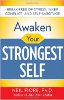 Using the latest research findings in neuropsychology, Cognitive Behavioral Therapy, and Peak Performance strategies, Awaken Your Strongest Self shows you how to live with greater joy, ease, and effectiveness. Author Neil Fiore, Ph.D., provides a four-step program that involves (1) stepping back from old, ineffective patterns, (2) waking up your "new brain"--what neuroscientists call the “Executive Organizing Function” (3) awakening the five qualities of your strongest self, and (4) putting everything together to achieve your goals. Through innovative examples, case studies, and exercises, you will learn how to cope with stress, recognize early signs of inner conflict, perform at your personal best on everyday work projects, minimize feelings of being overwhelmed; and ultimately, choose healthy alternatives to replace former bad habits.
Click here for more info or to order this book on Amazon.
About The Author
 Marie T. Russell is the founder of InnerSelf Magazine (founded 1985). She also produced and hosted a weekly South Florida radio broadcast, Inner Power, from 1992-1995 which focused on themes such as self-esteem, personal empowerment, and well-being. Her articles focus on transformation and reconnecting with our own inner source of joy and creativity.
Creative Commons 3.0: This article is licensed under a Creative Commons Attribution-Share Alike 4.0 License. Attribute the author: Marie T. Russell, InnerSelf.com. Link back to the article: This article originally appeared on InnerSelf.com
Further Reading
-
The Inner Child Workbook: What to do with your past when it just won't go away
Cathryn L. Taylor’s workbook fits the article’s focus on recognizing the younger emotional self that still reacts to pressure, rules, and resistance. It offers a practical path for listening inward rather than fighting the part of us that says, “Don’t tell me what to do.”
Amazon: https://www.amazon.com/exec/obidos/ASIN/087477635X/innerselfcom
-
Healing the Child Within: Discovery and Recovery for Adult Children of Dysfunctional Families
Charles L. Whitfield’s book addresses the wounded inner child and the emotional patterns that can follow us into adulthood. It connects well with the article’s message that self-discipline becomes healthier when it includes compassion, dialogue, and respect for the parts of ourselves that still feel unheard.
Amazon: https://www.amazon.com/exec/obidos/ASIN/0757319149/innerselfcom
-
Self-Compassion: The Proven Power of Being Kind to Yourself
Kristin Neff’s book supports the article’s central idea that inner change works better when kindness replaces self-criticism. For readers wrestling with habits around exercise, food, or motivation, it offers a grounded reminder that cooperation with oneself is usually more effective than inner punishment.
Amazon: https://www.amazon.com/exec/obidos/ASIN/0061733520/innerselfcom
Article Recap
Engaging with the inner teenager can lead to healthier lifestyle choices by fostering collaboration and understanding. Consider opening a dialogue with this aspect of self to create a more balanced approach to well-being.
#InnerSelfcom #SelfAwareness #MentalHealth #HealthyHabits #PersonalGrowth #EmotionalIntelligence







