
Happiness & Success
Achieving Happiness Through Acceptance of Life
The quest for happiness often leads to frustration, as many fail to realize that the...








 I’ve spent my life hiding my scars. I cope so well that no one, not even my husband knew the extent of what I deal with on a daily basis. Therapy has revealed my deepest hurts, brought them to the surface, and forced me to experience the pain I’ve been hiding so deeply in order to finally release it.

In a world filled with chaos and division, the practice of interspecies communication offers a pathway to deeper understanding and connection. By asking the question, 'What is it like to be you?', individuals can cultivate empathy not only for animals but also for each other, fostering a more compassionate existence that transcends boundaries.
 We must learn to take care of ourselves, to reconnect with who we are and what we want. By learning to practice some self-compassion, you can begin to treat yourself like a friend and give yourself the time and presence that you would give to someone else.
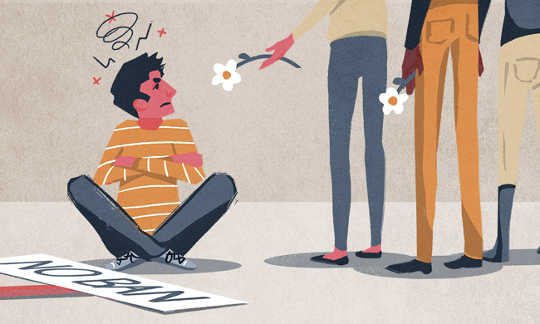
If you want to sustain yourself for the work ahead, here’s some advice: It doesn’t matter whether the other side “deserves” anger.
 As a result of years spent trying to teach people to rewrite their prejudicial stories about themselves and others, I am keenly aware of how prejudice can spread. It can develop into embedded beliefs and cause inordinate amounts of stress.
 Often in my readings I was simply validating the suspicions, insights, or intuitions that they already had about themselves and the changes they needed to make in their lives. Sometimes these readings ignited an inner physical and spiritual healing process.
 While feelings are a central component to caring, caring is not an entirely emotional experience. There’s also an intellectual component to caring, a mental stance that one must maintain to create lasting closeness. This stance is that your partner is fully human.
 There’s no denying it anymore: Hatred is erupting all over the United States, after having long simmered beneath the social surface. In the face of such upheaval, how can you prepare to protect those who are being threatened—to stand up for the worth and dignity of every person, even when it’s uncomfortable or scary?
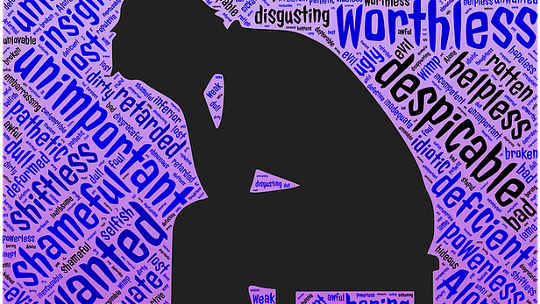 You have a constant stream of thoughts running through your mind, and we use the term “inner critics” to describe the thoughts that criticize you or tell you that you should be ashamed or feel guilty if you do what you want to do.
 In 1960, I was fourteen years old and my mother was the first civil rights activist that I knew. She did not march the streets. She lived her beliefs. She had Blacks, Muslims, Gays and other minorities over to our house for dinner almost every Sunday.
 Like strangers, and every person in our path, we encounter acquaintances and friends for a reason. More accurately, we attract them. Sometimes the reasons appear obvious, and at other times the reasons are not obvious at all and may take months or years to dawn.
 My heart aches for the division and anguish revealed in our November election. The fabric of our society is indeed torn and I wonder, can we find a way back together?
 Throughout primary school, I became accustomed to being in the crossfire of two opposing camps. When a French friend would insult my English friend, I would raise my hand, step forward, and launch into my own variation of Martin Luther King Jr’s “I have a dream” speech...

What we’re being called to do as a species before we either destroy ourselves or most of life on our planet is to meet ourselves fully. We must have the courage to meet our own prejudices and encounter every single place within us that would rather resort to blame than to face the collective human pain body.
 A few years ago, I discovered that a friend was cheating on their partner. This immediately blackened my perception of my friend. Then I remembered that I had done something quite similar some years earlier.
 Reading this will help you to identify the two voices that make you human: your ego with its chatty, self-serving endless quirkiness, and what I’m calling the wise Observer that is patient, non-judgmental and loving. While they appear to be completely different...
 I saw a documentary that introduced Jawara women who wear the bones of their dead husbands around their necks. In some cases, the widow totes the man’s skull. In our culture many of us also wear the skulls, bones, or remnants of dead husbands, lovers, family members, business partners, or friends around our necks—not physically, but energetically. We hang past memories, resentments, and upsets...
 A friend told of a family situation that you may relate to. For many years, she’d been estranged from her sister, who now lived across the country. Growing up, they’d been very close, and my friend could hardly recall why they’d stopped talking. Year followed year, and my friend could never bring herself to call.
 If you're waiting for a change and frustrated it's not happening, maybe it would be beneficial to give up all hope! Sounds strange? "Hope" is a double-edged word. Hope in its best sense is something that keeps you going in difficult times. But "hope" can also be...
 Thousands of case studies proved beyond any reasonable doubt that cancer can be cured by a change in one’s thinking! In the patients who were able to resolve the conflict through recognizing their innocence and mistaken self-blame and guilt, not only did the pattern in the scan resolve itself (disappear), but so did the cancer.
 The tragic mass shooting at the gay nightclub Pulse in Orlando has sparked renewed interest in the causes of homophobia.
The quest for happiness often leads to frustration, as many fail to realize that the...

Reaching sixty can evoke complex emotions, blending relief with ongoing ambition. This...

The quest for life's purpose often leads to unsatisfactory answers. This article...

Romantic love is a complex emotion shaped by historical, cultural, and biological...

Imagine going through one of the most physically and emotionally demanding experiences...

Have you ever argued over something that wasn't actually said? From cultural differences...

Daily actions often conflict with personal beliefs due to past experiences. By utilizing...

Therapists often use dream interpretation to delve into patients' emotions, but true...