








In a world filled with carefully crafted images, half-truths, and misinformation, honesty can feel like a radical act. Yet true peace of mind doesn't come from maintaining appearances. It comes from aligning our words, actions, and inner truth. Discover why honesty with ourselves and others remains one of the most powerful foundations for trust, authentic relationships, and inner peace.
In This Article
- Why even "small lies" can create distance between people.
- The difference between honesty and hurtful bluntness.
- How self-deception can quietly undermine our happiness.
- Why trust and intimacy depend on openness and truth.
- How living authentically leads to greater inner peace.
Judging by what I see online, in social media feeds, in advertising, in political discourse, and even in everyday conversations, one might think that deception has become an accepted part of life. Commercials use situations in which people bend the truth to sell us a product. Movies and television programs often feature "lovable" characters who lie to friends, family members, or employers to protect themselves. Social media encourages people to present carefully edited versions of their lives. And our inboxes continue to fill with messages designed to look like something they are not.
Of course, since what we see "out there" often reflects what exists within ourselves, we need to look at how honesty and deception show up in our own lives. We can only change ourselves, and life often sends us pointers as to what needs examining. Sometimes those pointers even arrive in the form of an unwanted email or a misleading advertisement.
Mea Culpa? My Bad
I was raised with the concept of "white lies". I don't know if that was specific to my Catholic upbringing, but here's how I understood it. There were the serious lies, the ones that were clearly wrong, and then there were the little lies that were more or less considered acceptable. They weren't exactly right, but they seemed to fall under the category of "to err is human".
Yet, when is a lie not a lie? When it's only a partial truth? When it's well-intentioned? Actually, when we withhold or camouflage the truth, we are deceiving ourselves and others, no matter the size of the lie.
One of the most common and seemingly harmless lies occurs when we give someone a compliment we don't really mean, or when we withhold the truth because we don't want to hurt someone's feelings.
Many times, we don't tell the truth because we don't want to rock the boat. There have been times in my life when people did not tell me something because they didn't want to hurt my feelings. Yet perhaps I needed to hear that truth to help me grow, to help me advance on my spiritual path. Perhaps they thought they were protecting me or being kind, when in reality they were withholding information that might have helped me become a better person.
If I was being rude and no one told me, how would I learn? How would I become aware of something that needed changing?
There's "What You Say" and There's "How You Say It"
The issue is not always whether we tell the truth, but how we tell it.
I remember being told in my twenties, "You're sure honest, aren't you?" The comment was not intended as praise. Later I realized what they meant. My honesty could be hurtful. I was blunt. I would simply blurt out whatever truth came to mind without considering how it would be received. I did not make an effort to communicate in a way that was non-threatening, non-judgmental, and free of blame, shame, or criticism.
Yes, I was honest, but my truth-telling sometimes carried a knife, or at least a sharp needle, in its hand.
Years later, when I had employees, I learned that there are many ways to communicate the same truth. If someone makes an error, you have choices. You can say, "That was really stupid," which may express what you're thinking but does little to help the person improve. Or you can say, "I see you're working hard at this. Perhaps if you try it this way, it will be easier."
Same truth. Different delivery. Very different outcome.
There is a difference between tact and lying. We can speak honestly while remaining caring and compassionate. We can communicate truth in a way that uplifts rather than tears down.
Perhaps if we always spoke with love, rather than with impatience or judgment, our messages would achieve their goal and naturally be more supportive and healing.
When the Culprit Is Me
Then there are those times when the lie is not intended to protect someone else, but to protect ourselves.
We have done something we don't want to admit. We made a mistake. We feel embarrassed. We fear judgment. So we hide the truth.
Yet no matter how much we pretend, we can never completely hide the truth from ourselves.
We know we lied. And the damage to our self-esteem and self-respect from that knowledge is often far greater than the discomfort of simply admitting the truth.
When we lie, we begin to see ourselves as liars. We carry the weight of the deception, consciously or unconsciously. Then we must expend even more energy remembering what we said so that we don't contradict ourselves later.
"Ah, what a tangled web we weave when first we practice to deceive."
The Most Dangerous Lies Are the Ones We Tell Ourselves
Over the years, I've come to realize that the most damaging lies are not always the ones we tell other people. Often, they are the stories we tell ourselves.
We tell ourselves we're happy when we're not. We convince ourselves that a relationship is fine when our heart knows something is missing. We say we're too busy to pursue a dream, when the truth is that we're afraid to fail. Sometimes we insist that we're over a hurt or disappointment while carrying it with us every day.
These are not lies in the traditional sense. We may not even be aware of them. Yet they create the same distance from truth and peace of mind as any spoken falsehood.
The ego often believes it is protecting us. It wants to shield us from pain, embarrassment, rejection, or uncertainty. Yet what we resist acknowledging usually remains with us until we are willing to face it honestly.
When we are willing to tell ourselves the truth, even when it is uncomfortable, we create the possibility for healing, growth, and change. The truth may not always feel pleasant, but it is far less painful than spending years defending an illusion.
Humpty Dumpty Sat On A Wall
If we want to create a better life for ourselves and for the people around us, we cannot build it on lies.
Whenever we lie to someone, a wall develops between us. We may not see it immediately, but it is there. The guilt, the secrecy, and the need to maintain the deception create distance.
As a result, we can no longer afford to be completely open with that person. And often, on some level, they know it too. They may sense something in our attitude. They may notice a change in our body language. Perhaps we no longer meet their eyes quite as easily.
When a lie exists between two people, true communication becomes difficult. Love and trust cannot fully flourish because part of the relationship is hidden behind a curtain of pretense.
The relationship becomes unbalanced. The lie stands between the two people like a smokescreen or a semi-transparent wall.
Is Your Security An Illusion?
For some of us, lying has become second nature.
We lie about what we ate because we don't want anyone to know we're not sticking to our diet. We lie about how much we spent on something because we don't want others to judge us. We tell little untruths because they seem easier than explaining the reality.
We lie about small things because we think they don't matter, and we lie about bigger things because we think it's safer than telling the truth. We convince ourselves that our world will be more secure if we conceal reality.
Yet if we are living a lie, then our happiness and our peace are built on unstable ground. It may appear on the surface that everything is running smoothly, but if our life rests on a network of deception, eventually that structure becomes impossible to maintain.
What began as a small lie can grow over months or years into a major breach of trust.
It is far more difficult to deal with the truth after it has been hidden and covered over repeatedly than to face it honestly from the beginning.
Lies Are A Bad Foundation for Good Relationships
Sometimes people tell small lies to make themselves appear more attractive, more successful, or more accomplished. Yet when the truth eventually emerges, trust often disappears with it. After all, if someone has lied about one thing, what else might they be hiding?
To be harmonious, relationships must be built on love, trust, and openness. And how can we be truly open while hiding behind deception?
Lies make life complicated. Truth simplifies it.
Want to have a peaceful life? Be honest with yourself and with others. Pay attention to the small untruths you tell. Notice the truths you may be hiding from yourself.
Often, the things we conceal are the very things that would set us free.
The ego mistakenly believes it is helping us by hiding the truth. Yet love and openness, not pretense, are the keys to inner peace.
Living Truthfully in an Age of Deception
The challenge of living truthfully may be greater today than ever before. We live in a world filled with carefully crafted images, curated online identities, misleading headlines, manipulated information, and endless opportunities to present ourselves as something other than who we really are.
Yet the path to peace remains the same as it has always been.
Peace does not come from maintaining an image. It does not come from protecting a false version of ourselves. Peace comes from living in harmony with our deepest truth.
And perhaps this is where the personal and the collective meet. The deception we see in the world around us does not arise out of nowhere. A society built on half-truths, manipulation, and misinformation is ultimately made up of individuals who have become comfortable hiding from truth in their own lives.
When we choose honesty with ourselves, we contribute honesty to the world. When we choose openness over pretense, we strengthen trust in our relationships and communities. Every act of truthfulness becomes a small step toward healing the larger fabric of human connection.
We can choose to live a life of pretense and half-truths. Or we can choose to become conscious of our words, our feelings, our inner knowing. We can learn to respect what is true for us in this moment, even when that truth is uncomfortable.
Truth Can Change and Evolve
As we grow, learn, and gain new understanding, our perspective may evolve, and our personal truth may change. Yet being truthful means honoring what we genuinely know and feel today, rather than pretending to be someone we are not.
When we live mindfully and consciously, we create our lives on a foundation of respect: respect for ourselves and respect for others.
And respect includes trusting someone enough to tell them our truth, and doing so with love.
Honesty is not merely a moral principle. It is a path to wholeness. When our words, our actions, and our inner reality are aligned, we no longer need to remember what story we told or what image we are trying to maintain. We can simply be ourselves.
There is a deep peace that comes from that kind of authenticity. It is the peace of knowing that there is no wall, no facade, between who we are and how we present ourselves to the world.
And perhaps that is one of the greatest gifts we can give ourselves and others: the courage to live truthfully, speak lovingly, and trust that the truth, expressed with compassion, is a stronger foundation than any lie could ever be.
About The Author
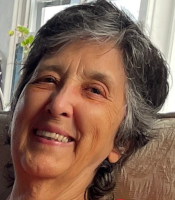 Marie T. Russell is the founder of InnerSelf Magazine (founded 1985). She also produced and hosted a weekly South Florida radio broadcast, Inner Power, from 1992-1995 which focused on themes such as self-esteem, personal empowerment, and well-being. Her articles focus on transformation and reconnecting with our own inner source of joy and creativity.
Creative Commons 3.0: This article is licensed under a Creative Commons Attribution-Share Alike 4.0 License. Attribute the author: Marie T. Russell, InnerSelf.com. Link back to the article: This article originally appeared on InnerSelf.com
Recommended book:
Honest to God: A Change of Heart That Can Change the World
by Neale Donald Walsch and Dr. Brad Blanton.
 "Nobody tells the truth about anything anymore. Not anything important. Everybody's lying to everybody else, and everybody knows it." With these words, two great figures in the emerging culture of consciousness begin a searingly powerful dialogue about the practical applications of honesty in our everyday lives. This book shows the absolute necessity for individual and social transformation and the absolute necessity for honesty in order to bring it about. The authors give us a blueprint for living fully, authentically and honestly in a world full of lies.
Click here for more info and/or to order this book on Amazon.
Article Recap
Honesty is about more than telling the truth to others; it begins with being truthful with ourselves. While deception may seem to offer protection or security, it often creates distance, distrust, and inner conflict. By embracing authenticity, compassion, and self-awareness, we build stronger relationships and cultivate the lasting inner peace that comes from living in alignment with our deepest truth.
#Honesty #SelfHonesty #Truthfulness #InnerPeace
#AuthenticLiving #PersonalGrowth #SelfAwareness
#Trust #Relationships #MindfulLiving #SpiritualGrowth
#EmotionalHealing Integrity #ConsciousLiving #Truth







