
Happiness & Success
Achieving Happiness Through Acceptance of Life
The quest for happiness often leads to frustration, as many fail to realize that the...








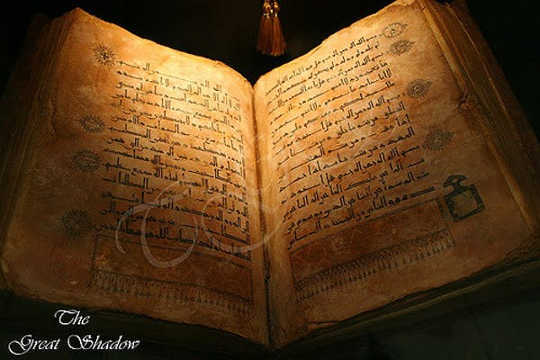 An estimated 3.3 million American Muslims celebrate Ramadan. The month of Ramadan marks the time when Prophet Muhammad is believed to have first received revelations from God and has been celebrated at the White House since 1996.
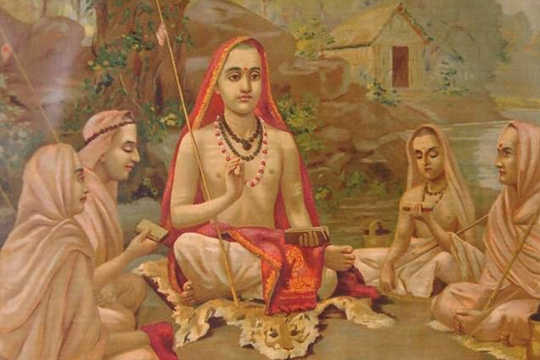 You might think that digital technologies, often considered a product of ‘the West’, would hasten the divergence of Eastern and Western philosophies.
 Just be what you are and don't care a bit about the world. Then you will feel a tremendous relaxation and a deep peace within your heart. This is what Zen Buddhists call your "original face" - In this essay Osho, through parables and narratives, helps you understand how to find yourself.
 The power of affirmation, prayer, and blessing has been used for thousands of years in both spiritual and folk rites, by priestesses and priests, and by people trying to bring health, harmony, and happiness into their lives. In earlier times at the gigantic stone temples that dot the English countryside...
 Zen is concerned with the problem of the nature of mind, so it necessarily includes an element of philosophical speculation. However, in Zen we are never separated from our personal practice, which we carry out with our body and mind. Zen aims at overthrowing our distorted view of the world...
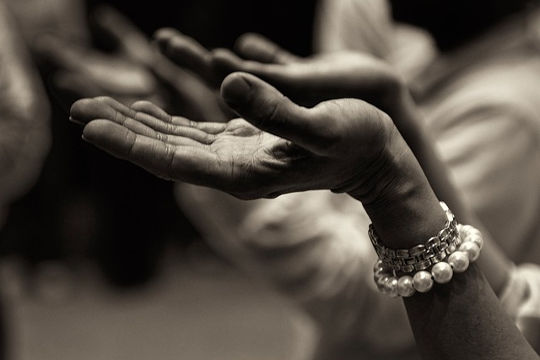 A woman told me that gratitude was her constant prayer, and I was impressed. But, I realized that her gratitude was actually a defense against life. 'I am so grateful for sunshine, health, my wonderful family'. 'Do you express gratitude for the storms, for the illness, for the down times too?'...
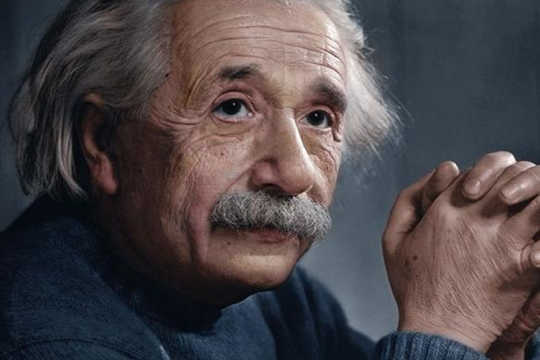 ‘The theory produces a good deal but hardly brings us closer to the secret of the Old One,’ wrote Albert Einstein in December 1926. ‘I am at all events convinced that He does not play dice.’
 For many, channeling is a buzz word and it seems that everyone is doing it and many people are talking about it, reading about it and indeed relying upon it. But what is channeling and of what use and purpose is it? Does it have a spiritual role for humanity at this time? Is it a dangerous pastime that can mislead and create...
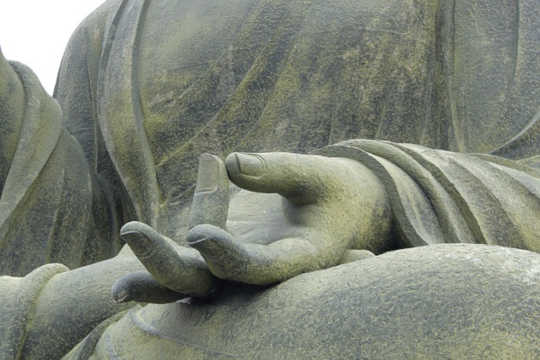 The Buddha is a documentary by David Grubin and narrated by Richard Gere that tells the story of the Buddha's life, and attempts to answer the questions Who is the Buddha. What is the Buddha. It also features the work of some of the world's greatest artists and sculptors
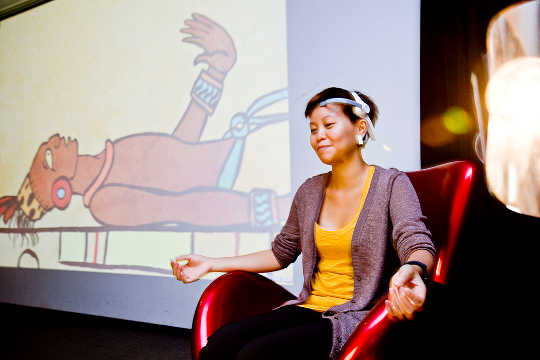 It is possible for the mind to become disempowered. It feels then as if reality is just a given, and all we can do is try to deal with it. The disempowered mind feels it has no choice about what it attends to. Training the attention is definitely one way to begin empowering the mind.
 Prayer can be a most difficult and trying task. The experiences of our century with its massive blind destruction, suffering, and carnage cast doubt on the concept of a God involved in the welfare of the created universe.

Religion does not help us to explain nature. It did what it could in pre-scientific times, but that job was properly unseated by science. Most religious laypeople and even clergy agree: Pope John Paul II declared in 1996 that evolution is a fact and Catholics should get over it. No doubt some extreme anti-scientific thinking lives on, but it has become a fringe position.
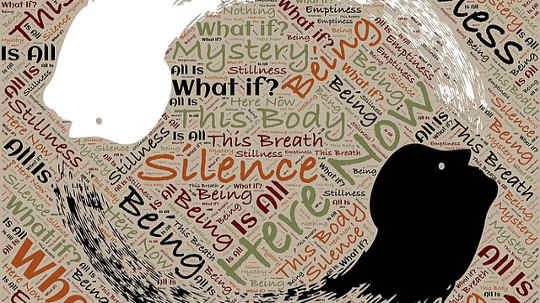 All disease, illness, unhappiness, misery, and self-punishment could be healed if we apply two principles of truth into our daily consciousness. The first is that there is a single, divine God that is All in all; and the second, that the Divinity which we call God lives inside of each and every one of us. Knowing deeply and believing completely at every level of our being that we are not separate from God, that we are one with the Divine, will heal us.

This summer, during the FIFA World Cup, I went with some friends to watch a soccer game at the house in Turin of the Italian philosopher and former member of the EU parliament Gianni Vattimo. As soon as our team began to lose, Vattimo said: ‘Oh, by the way, I forgot to tell you, the pope called me yesterday.’

As an academic - a researcher and senior lecturer at a university in the UK - people are often surprised by my unorthodox views on the nature of life, and of the world. For example, when I mention to colleagues that I’m open-minded about the possibility of some form of life after death, or that I believe in the possibility of paranormal phenomena such as telepathy or pre-cognition, they look at me as if I’ve told them I’m going to give up academia and become a truck driver.
If anything seems self-evident in human culture, it’s the widespread presence of religion. People do ‘religious’ stuff all the time; a commitment to gods, myths and rituals has been present in all societies. These practices and beliefs are diverse, to be sure, from Aztec human sacrifice to Christian baptism, but they appear to share a common essence. So what could compel the late Jonathan Zittell Smith, arguably the most influential scholar of religion of the past half-century, to declare in his bookImagining Religion: From Babylon to Jonestown (1982) that ‘religion is solely the creation of the scholar’s study’, and that it has ‘no independent existence apart from the academy’?

As traditional religions decline, many are embracing a contemplative spiritual journey through mysticism. This path, characterized by acceptance and unity, invites individuals to transcend the ego and connect with the essence of life. It emphasizes personal experiences and relationships, leading to a profound understanding of existence beyond conventional beliefs.

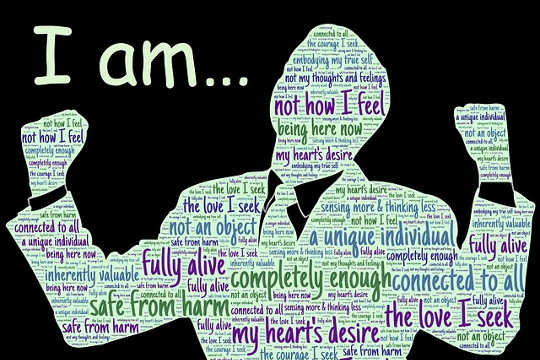
Run through as large an inventory as you can of the things that you would like to define your life. Then make the shift in your imagination from an "I am not" or "I am hoping to become" to "I am". Beginning with your inner dialogue, simply change the words that define your concept of yourself.

When I came to the United States, people did not seem to know very much about Buddhism. We Tibetans realized that it would be beneficial to teach and explain the dharma. We began to talk to people about how to create peace within their heart and peace within the world. We taught how to move beyond suffering.

Who was Mary Magdalene? What do we know about her? And how do we know it?

Buddhist teachings are often summarized in terms of the "three principle aspects of the path": renunciation, compassion, and the wisdom realizing emptiness. The first step on the path of renunciation is to begin searching for happiness within. Renouncing the world does not mean rejecting the world...
The quest for happiness often leads to frustration, as many fail to realize that the...

Reaching sixty can evoke complex emotions, blending relief with ongoing ambition. This...

The quest for life's purpose often leads to unsatisfactory answers. This article...

Romantic love is a complex emotion shaped by historical, cultural, and biological...

Imagine going through one of the most physically and emotionally demanding experiences...

Have you ever argued over something that wasn't actually said? From cultural differences...

Daily actions often conflict with personal beliefs due to past experiences. By utilizing...

Therapists often use dream interpretation to delve into patients' emotions, but true...