
Happiness & Success
Achieving Happiness Through Acceptance of Life
The quest for happiness often leads to frustration, as many fail to realize that the...









The 2008 financial crisis continues to plague the world economy and our politics. It’s also messing with how we understand our narratives of global integration.

The end of growth will come one day, perhaps very soon, whether we’re ready or not. If we plan for and manage it, we could well wind up with greater well-being.
 The doctor was desperate. ‘I need to talk to my patients,’ she said, ‘and give them time to ask questions.
 Another year, another list of the World’s 50 Best Restaurants. And another round of Michelin stars, Good Food Guide hats, and Gourmet Traveller Top 100 Restaurants in Australia.
 The United States spends much more per person on health care than other developed countries. But it’s largely because prices are higher, not because Americans get more care, according to a new study.
 The Chicago police officer Jason Van Dyke fired 16 shots, killing the African-American teenager Laquan McDonald; 14 of those shots were apparently fired while McDonald lay on the ground.
 Just like the rest of us, the rich and powerful have had to accept that youth is fleeting, that strength and health soon fail, and that all possessions must be relinquished within a few decades.
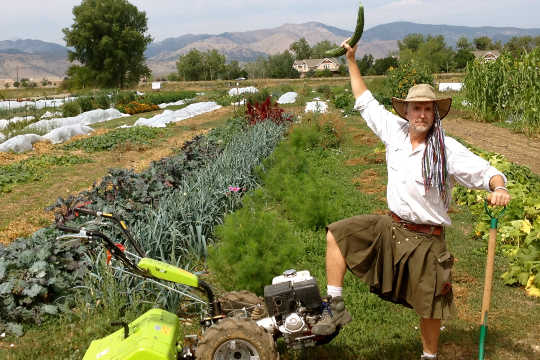 The number of farmers markets in the US has grown dramatically in recent years, but with an aging population of farmers, who’s supporting this growth? Meet the “new American farmer.”
 The right would like us to believe that the inequality we see in the United States, and increasingly in other countries, is a natural outcome of market processes.

There is a significant perception gap between what the general public think about why people become homeless, and what people who have experienced homelessness say

The purpose of our social, economic and political systems is to enable all Australians to lead good lives. Australia is doing well on some fronts. It ranks third out of 188 countries on the UN Human Development Index, which takes into account life expectancy, education and national income per capita. We also rank 19th on national income per capita.
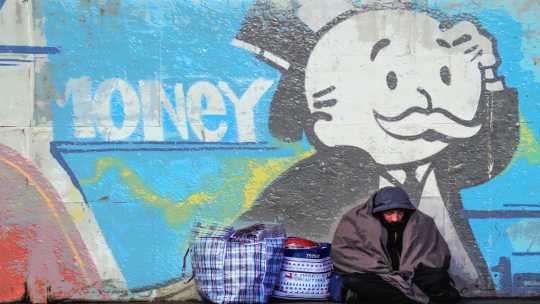 If the United States doesn’t address rising inequality, the middle class could start feeling the effects in the form of fewer government services, one expert says.

Researchers have created an interactive, map-based tool—the Opportunity Atlas—that can trace the root of people’s outcomes, such as poverty or incarceration, to the neighborhoods in which they grew up.
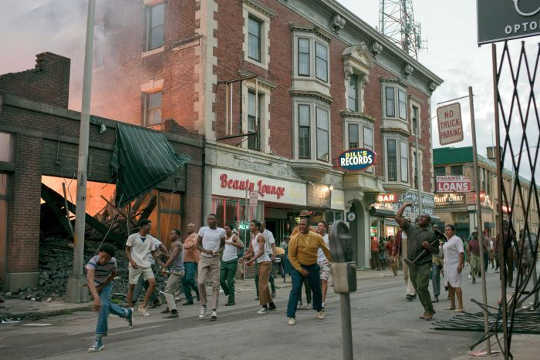 Racial wealth inequality was an important factor contributing to the riots in many American cities in the 1960s, but a half-century later, the issue has gotten short shrift, researchers report.
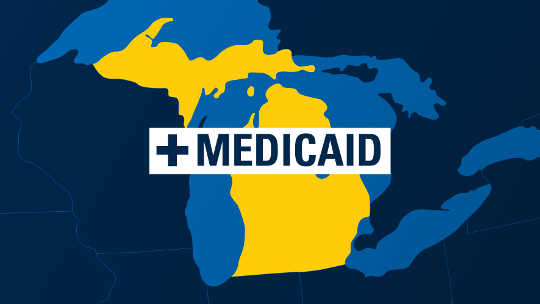 When low-income Michigan residents enrolled in an expanded Medicaid program, many got more than just coverage for their health needs—they also got a boost to their wallets, according to a new study.
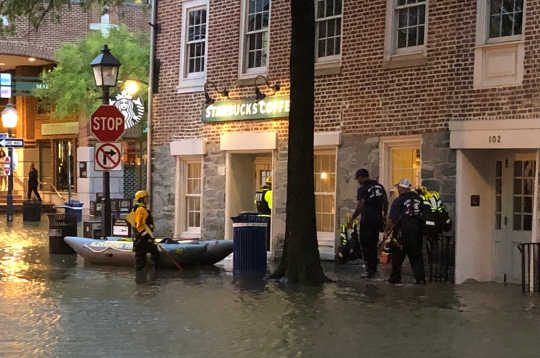 Though the flooding from Hurricane Florence is predicted to be unprecedented, residents of the coastal North Carolina towns threatened by the storm surge know what it’s like to take on water. Some homes in these areas have been repeatedly flooded — and repeatedly bailed out by federal flood insurance.
 American workers’ occupational status reflects that of their parents more than previously known, a new study shows.
The findings reaffirm more starkly that the lack of social mobility in the United States is in large part due to the occupation of our parents.

While many economists assume the “invisible hand” theory influences markets, new research finds a disruptor has turned this long-held concept—which Adam Smith introduced in 1759—on its head. The disruptor does not have anything to do with technological advancements or innovation like one might expect—in fact, it’s much simpler. It’s a third party who interrupts a trading relationship.
The Mudgirls collective redefines expectations about what a construction site is supposed to look like—child care, breastfeeding breaks, and all.
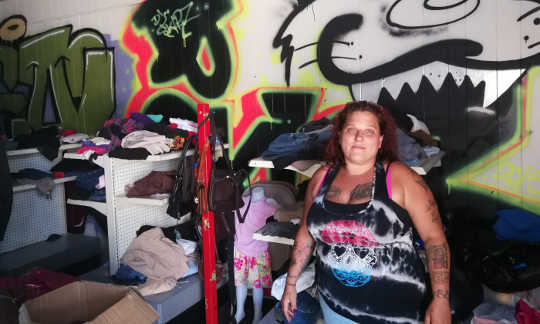 A range of neighbor-to-neighbor efforts address basic needs, from healthcare to food access, that are going unmet by local government agencies.

The past several years have seen increased calls for colleges and universities to demonstrate their value to students, families and taxpayers.
The quest for happiness often leads to frustration, as many fail to realize that the...

Reaching sixty can evoke complex emotions, blending relief with ongoing ambition. This...

The quest for life's purpose often leads to unsatisfactory answers. This article...

Romantic love is a complex emotion shaped by historical, cultural, and biological...

Imagine going through one of the most physically and emotionally demanding experiences...

Have you ever argued over something that wasn't actually said? From cultural differences...

Daily actions often conflict with personal beliefs due to past experiences. By utilizing...

Therapists often use dream interpretation to delve into patients' emotions, but true...