
Happiness & Success
Achieving Happiness Through Acceptance of Life
The quest for happiness often leads to frustration, as many fail to realize that the...








 Access to health insurance can help hold a community together socially, and lack of it can help fray neighborhood cohesion, report researchers.
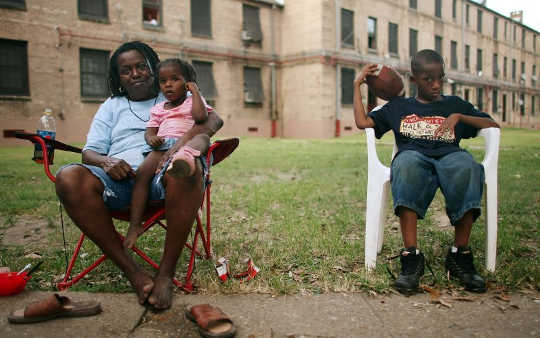 As Donald J. Trump assumes the presidency and lays out his agenda for our country, he will likely proclaim himself, as he did in the campaign, the voice of "the forgotten Americans."
 Young people entering the workforce today are far less likely to earn more than their parents when compared to children born two generations earlier, new research shows.
 Since social scientists and economists began measuring poverty, its definition has never strayed far from a discussion of income.
 New research links income inequality with greater civic engagement among young people—particularly among young people of color and those of lower socioeconomic status.
 Teachers communicate with parents based on their racial and immigrant backgrounds—not just their child’s academic performance—research finds.
 A common argument for the decline in employment in recent years is that more workers are dropping out of the labor force to live off public benefits, particularly Social Security Disability Insurance (SSDI).
 In all parts of the United States, the number of neighborhoods that are home to a mix of black, white, Asian, and Hispanic residents is growing.
 Sophisticated eye-tracking technology shows that preschool teachers “show a tendency to more closely observe black students, and especially boys, when challenging behaviors are expected.”
 New research may explain why American children resist their parents’ instructions to share.
 Gender bias can influence how supervisors view a manager’s long-term potential, a new study shows.
 Over the course of four years, at least 5,000 Wells Fargo employees opened more than a million fake bank and credit card accounts on behalf of unwitting customers.
 Police killings of African-Americans on social media have become the visual hallmark of our time. This decade will be recalled through blurry cellphone and dash-cam videos of shootings. But how will it be remembered?
 Last week, Congress engaged in a bipartisan barrage of CEO bashing.
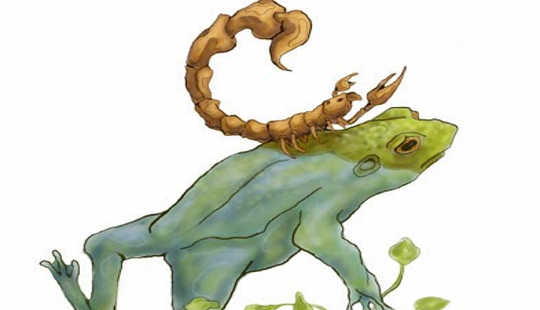 Scorpion met Frog on a river bank and asked him for a ride to the other side. “How do I know you won’t sting me?” asked Frog. “Because,” replied Scorpion, “if I do, I will drown.” Satisfied, Frog set out across the water with Scorpion on his back. Halfway across, Scorpion stung Frog. “Why did you do that?” gasped Frog as he started to sink. “Now we’ll both die.” “I can’t help it,” replied Scorpion. “It’s my nature.”
 Donald Trump poses as a working-class populist, but about his new economic plan would be a gusher for the wealthy. And almost nothing will trickle down to anyone else.
 This week on the presidential campaign trail, Donald Trump took a big step out of traditional Republican territory to propose a federal solution to the high cost of child care. His plan suggests utilizing the tax code to give a break to working parents with young kids.
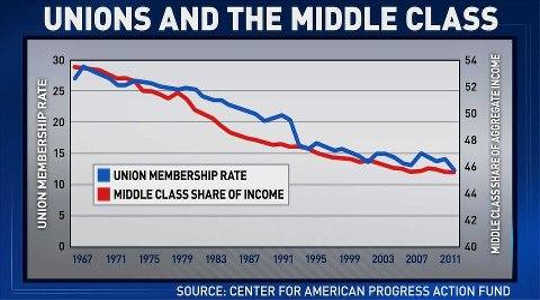 A dramatic decline in the density of US labor unions since the 1970s has resulted in lower wages for both union and nonunion workers, a new study suggests.
 What can be done to deter pharmaceutical companies from jacking up prices of critical drugs? To prevent Wall Street banks from excessive gambling? To nudge CEOs into taking a longer-term view? To restrain runaway CEO pay?
 Leading economic think-tank the institute of Fiscal Studies has warned that “middle-income families are the new poor” – a damning indictment of the way poverty in Britain has spread far beyond groups that are traditionally considered poor.
 Inequities in wealth and income are one of the biggest social, economic and political challenges of our time. It’s important to address these inequities for three key reasons.
The quest for happiness often leads to frustration, as many fail to realize that the...

Reaching sixty can evoke complex emotions, blending relief with ongoing ambition. This...

The quest for life's purpose often leads to unsatisfactory answers. This article...

Romantic love is a complex emotion shaped by historical, cultural, and biological...

Imagine going through one of the most physically and emotionally demanding experiences...

Have you ever argued over something that wasn't actually said? From cultural differences...

Daily actions often conflict with personal beliefs due to past experiences. By utilizing...

Therapists often use dream interpretation to delve into patients' emotions, but true...