
Happiness & Success
Achieving Happiness Through Acceptance of Life
The quest for happiness often leads to frustration, as many fail to realize that the...








 Kryptowire, a security firm, recently identified several models of Android mobile devices that have preinstalled permanent software, known as firmware, that serve as backdoor that collects sensitive personal data, including text messages, geolocations, contact lists, call logs and transmits them to a third-party server in Shanghai, China.
 When it comes to theft online, “you’re only protected by other, easier victims,” says Hsinchun Chen, an expert in cybersecurity.
 Enabled by exponential technological advancements in data storage, transmission and analysis, the drive to “datify” our lives is creating an ultra-transparent world where we are never free from being under surveillance.
 When Yahoo! confirmed that it had experienced a massive online attack from hackers who stole personal information from more than 500 million people — including names, emails and phone numbers — it revealed a disturbing truth about our digital media system.
 Imagine, if you can, a period long before today’s internet-based connectivity. Imagine that, in that distant time, the populations of every country were offered a new plan.
 Drone footage is everywhere, whether used to film extreme sports, outdoor events, nature, music festivals, or just for its own sake.
 President Obama has promised to support a bold future for medicine where diagnostic testing and treatments aren’t just what’s best for most people – they’re what’s best for you.
 A new study reveals employers are using online information about job applicants without their knowledge, to inform hiring decisions. Approximately 55% of organizations now have a policy about this type of practice, called profiling.
 For more than two decades, people have used the internet to research, shop, make friends, find dates, and learn about the world. And third parties have been watching—and learning.
 The State Senate of Michigan is currently considering legislation that would scale back “zero tolerance” discipline policies in the state’s public schools.
 There are more than 865 encryption tools in use worldwide, all addressing different aspects of a common problem. People want to protect information: hard drives from oppressive governments, physical location from stalkers, browsing history from overly curious corporations or phone conversations from nosy neighbors.
 We now have dozens of smart devices in our houses and even on our bodies. They improve our lives in so many ways – from lowering energy consumption in our homes to egging us on to be active.

The FBI has succeeded in hacking into an iPhone that belonged to San Bernardino shooter Syed Farook without Apple’s help. As a consequence, the FBI has dropped its legal case that was trying to force Apple...
 The range and number of “things” connected to the internet is truly astounding, including security cameras, ovens, alarm systems, baby monitors and cars. They’re are all going online, so they can be remotely monitored and controlled over the internet.
 “You have nothing to fear if you have nothing to hide” is an argument that is used often in the debate about surveillance.
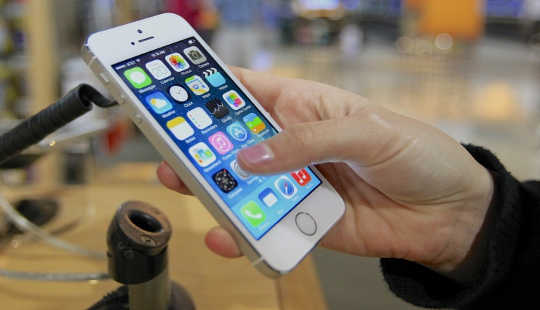 Apple has been ordered to help FBI investigators access data on the phone belonging to San Bernardino gunman Syed Rizwan Farook. The technical solution proposed by the FBI appears to undermine Apple’s earlier claim that they would be unable to help.
 It’s a common assumption that being online means you’ll have to part ways with your personal data and there’s nothing you can do about it.
 How much does your smart home know about you? That was the question that Charles Givre, a data scientist at Booz Allen Hamilton, set out to answer in a recent experiment. Givre has an account on Wink, a platform designed to control, from a single screen, his Internet-connected home devices, such as door locks, window shades and LED lights.
 Verizon is giving a new mission to its controversial hidden identifier that tracks users of mobile devices. Verizon said in a little-noticed announcement that it will soon begin sharing the profiles with AOL's ad network, which in turn monitors users across a large swath of the Internet.
The quest for happiness often leads to frustration, as many fail to realize that the...

Reaching sixty can evoke complex emotions, blending relief with ongoing ambition. This...

The quest for life's purpose often leads to unsatisfactory answers. This article...

Romantic love is a complex emotion shaped by historical, cultural, and biological...

Imagine going through one of the most physically and emotionally demanding experiences...

Have you ever argued over something that wasn't actually said? From cultural differences...

Daily actions often conflict with personal beliefs due to past experiences. By utilizing...

Therapists often use dream interpretation to delve into patients' emotions, but true...