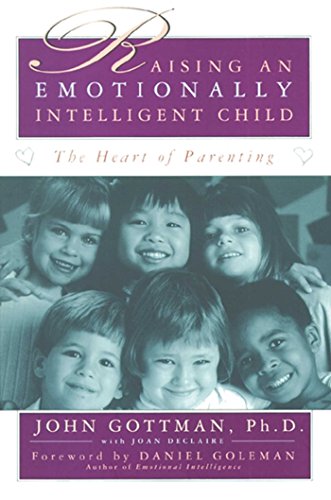














Parenting stands as one of life's most rewarding yet challenging endeavors, and the emotional landscape we create with our children profoundly shapes their capacity for happiness, resilience, and healthy relationships throughout their lives. This groundbreaking guide illuminates a path that many parents desperately seek: how to raise children who not only understand their own emotions but can navigate the complex emotional terrain of human connection with grace and wisdom.
At its heart, this work introduces readers to the concept of "emotion coaching," a parenting philosophy that transforms the way families interact. Rather than dismissing children's feelings as inconvenient or inappropriate, emotion coaching validates these experiences while helping young people develop the skills to understand and manage their emotional lives. This approach recognizes that emotions are not obstacles to overcome but rather valuable information systems that deserve attention and respect. Through emotion coaching, parents learn to view their children's emotional moments as opportunities for connection and growth rather than battles to be won.
The foundation of this parenting methodology rests on decades of research examining what actually works in family dynamics. The principles presented are grounded in rigorous scientific study, yet they translate into practical, accessible wisdom that parents can implement immediately. Readers will discover why punitive responses to emotional outbursts often backfire, creating disconnection rather than understanding, and why a more compassionate approach actually produces children with better self-control and emotional regulation.
One of the most valuable discoveries within these pages is understanding that children's emotions are not rejection or defiance but rather genuine feelings requiring acknowledgment. When a child experiences disappointment, fear, or anger, the instinctive parental response of dismissing these emotions often teaches children to distrust their own inner experiences. This guidance shows parents how to validate feelings while still maintaining necessary boundaries and teaching appropriate behavior. This distinction is crucial: accepting emotions is entirely different from accepting all behaviors, and this nuanced understanding helps parents avoid the false choice between being strict and being permissive.
Readers will learn specific strategies for managing their own emotional reactivity as parents, recognizing that children naturally mirror the emotional regulation they observe in their caregivers. To coach children through emotions effectively, parents must first understand and manage their own emotional responses. This self-awareness component elevates parenting from mere technique to genuine personal transformation, inviting parents to examine their own emotional histories and patterns.
The practical applications extend into various real-world scenarios that families encounter daily. From managing sibling conflicts to handling separation anxiety, from responding to academic disappointments to navigating social rejection, these pages provide framework after framework for approaching these challenges as opportunities to strengthen the parent-child bond while developing the child's emotional competence. Parents will recognize situations from their own homes and discover new pathways through familiar struggles.
Perhaps most importantly, this approach directly addresses a critical gap in modern parenting: many children receive excellent instruction in academic subjects and physical skills but receive minimal formal education in emotional intelligence. Yet emotional intelligence stands as one of the strongest predictors of life success, relationship satisfaction, and overall wellbeing. By embracing emotion coaching, parents become developers of this essential capacity in their children.
The ripple effects of emotionally intelligent parenting extend far beyond individual families. Children raised with awareness of their emotions and skill in managing them become adults who relate to others with greater empathy and understanding. They navigate conflicts more constructively, build healthier relationships, and contribute more meaningfully to their communities. In this way, conscious parenting becomes not just a family matter but a contribution to collective wellbeing.
This resource invites parents to reimagine their role as guides and coaches rather than controllers, creating a family culture where emotions are honored, understood, and transformed into wisdom.