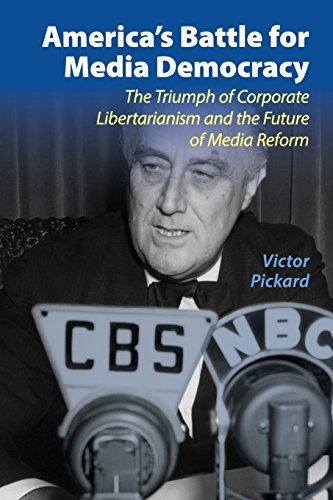



















The landscape of American media has undergone profound transformations over the past century, and understanding these changes is essential for anyone seeking to engage consciously with the democratic process. This comprehensive examination reveals how the battle over media ownership, control, and access has fundamentally shaped the health of American democracy itself.
At its core, this exploration traces the historical struggle between two competing visions for media in America: one rooted in the public interest and democratic participation, and another driven by commercial profit motives. The tension between these forces has determined what information reaches the public, whose voices get heard, and ultimately, how power operates in our society. For those committed to personal growth and social consciousness, grasping this dynamic is crucial to understanding the world we inhabit and the forces that shape our collective future.
The narrative unfolds through a century of pivotal moments, revealing how American media evolved from a system with strong public service obligations into an increasingly privatized landscape dominated by corporate interests. Readers discover how early broadcast pioneers and policy makers envisioned radio and television as public utilities, similar to water or electricity systems, that should serve the common good. These reformers understood that democratic societies require an informed citizenry, and they fought vigorously to establish media systems that would educate, enlighten, and empower the general population rather than merely entertain or manipulate consumers.
Throughout this journey, the work examines the critical junctures where these public-oriented ideals were challenged, compromised, and often defeated. The documentation of corporate consolidation reveals how media ownership became increasingly concentrated in fewer and fewer hands, a process that accelerated dramatically in recent decades. This concentration fundamentally undermines the diversity of viewpoints necessary for genuine democratic deliberation. When a handful of corporations control what stories get told and how they are framed, the possibility of a truly informed public becomes increasingly elusive.
The exploration also delves into the philosophical and practical arguments made by advocates for democratic media throughout American history. These voices, often marginalized in conventional histories, championed the idea that media should be accountable to the public rather than to shareholders. They understood that advertising-driven commercial media creates perverse incentives, encouraging sensationalism over substance and consumption over critical thinking. They recognized that when media exists primarily to sell products and services, democracy itself becomes a commodity.
For readers interested in social consciousness, this narrative becomes particularly resonant when examining how media systems shape what we think is possible, what we believe to be true, and how we understand our role in society. The structures we accept as natural or inevitable are often the result of specific policy choices and political struggles. By understanding this history, readers gain perspective on how current media arrangements serve certain interests while marginalizing others.
The work also provides practical insight into the mechanisms of media policy and regulation, demystifying how these systems actually function. Readers learn about the Federal Communications Commission, broadcast licensing, spectrum allocation, and the various regulatory frameworks that have governed media throughout American history. This knowledge proves empowering, as it reveals that media structures are not unchangeable facts of nature but rather human creations that can be reformed through political action and social will.
Contemporary relevance emerges throughout the narrative. The challenges facing traditional journalism, the rise of social media platforms, the spread of misinformation, and the erosion of local news all connect to the longer historical struggle over media democracy. By understanding how we arrived at the current moment, readers can better understand the stakes involved in ongoing debates about net neutrality, platform regulation, and public broadcasting funding.
This historical perspective ultimately serves those committed to creating a more conscious, equitable society. A truly informed citizenry is essential for addressing the complex challenges facing humanity, from climate change to economic inequality. Media systems that serve democracy rather than dominate it are foundational to building the transparent, participatory institutions necessary for genuine social transformation. By understanding this battle, readers empower themselves to become more critical consumers of information and more engaged participants in shaping our shared media future.