

















Happiness & Success
Achieving Happiness Through Acceptance of Life
The quest for happiness often leads to frustration, as many fail to realize that the...

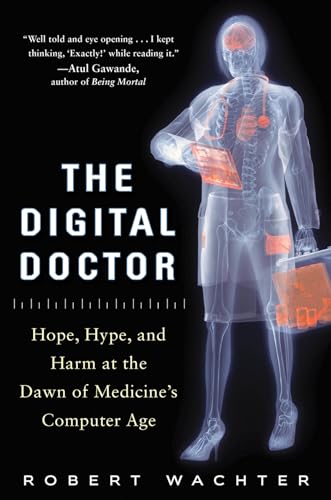
Healthcare technology promised to revolutionize medicine, making it safer, more efficient, and more patient-centered. Yet anyone who has watched a doctor stare at a computer screen instead of making eye contact, or experienced the frustration of medical errors despite sophisticated electronic systems, knows the reality has been far more complicated. This illuminating exploration takes readers deep into the paradox of digital transformation in medicine, revealing why the computerization of healthcare has been simultaneously essential and profoundly problematic.
For professionals working in healthcare, technology sectors, or anyone concerned about the future of medical care, this work offers an unflinching look at what happens when the technology revolution meets the complexity of human bodies and the art of healing. Through compelling stories from hospitals and clinics across America, readers discover how electronic health records, computerized physician order entry, artificial intelligence, and other digital tools have reshaped the daily reality of medical practice in ways both promising and perilous.
The narrative skillfully weaves together accounts of medical errors caused by poorly designed software, doctors suffering from screen-induced burnout, and patients feeling increasingly disconnected from their caregivers. Yet this is not a Luddite's manifesto against progress. Instead, it presents a nuanced examination of why healthcare information technology has been uniquely challenging to implement effectively, drawing crucial distinctions between medicine and other industries that have successfully digitized.
Read more ▼
Ashok Bedi

Wallace D. Wattles, Ruth L Miller, Patricia J. Crane, Rick Nichols

The sciences of the artificial
Herbert Alexander Simon
The quest for happiness often leads to frustration, as many fail to realize that the...

Reaching sixty can evoke complex emotions, blending relief with ongoing ambition. This...

The quest for life's purpose often leads to unsatisfactory answers. This article...

Romantic love is a complex emotion shaped by historical, cultural, and biological...

Imagine going through one of the most physically and emotionally demanding experiences...

Daily actions often conflict with personal beliefs due to past experiences. By utilizing...

Have you ever argued over something that wasn't actually said? From cultural differences...

Therapists often use dream interpretation to delve into patients' emotions, but true...