
Happiness & Success
Achieving Happiness Through Acceptance of Life
The quest for happiness often leads to frustration, as many fail to realize that the...








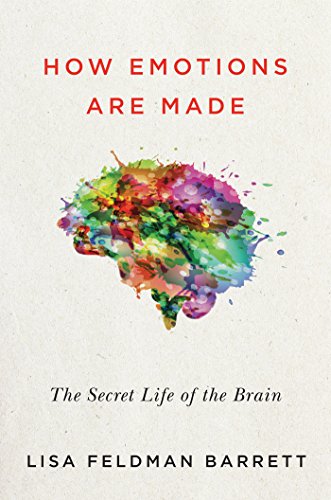
For centuries, we've believed that emotions are universal, hardwired reactions that happen to us—that anger, sadness, and joy are built into our biology and simply triggered by the world around us. We've accepted that our brains contain emotion circuits that activate automatically, producing distinct feelings that everyone, everywhere, experiences in fundamentally the same way. This revolutionary work dismantles these long-held assumptions and replaces them with a startling new understanding of how emotional life actually works.
Drawing on decades of groundbreaking research in psychology, neuroscience, and related fields, this paradigm-shifting exploration reveals that emotions are not universal responses programmed into our brains at birth. Instead, they are constructed in the moment by core systems that interact to make meaning of sensations based on our past experiences, cultural learning, and immediate context. Rather than having distinct, dedicated circuits for fear, anger, or happiness, the brain operates through far more flexible and dynamic processes that create emotional experiences as predictions about what our body needs and what our sensations mean.
This construction process happens so rapidly and automatically that emotions feel like they're happening to us, creating the powerful illusion that they are reactions to the world rather than actively created interpretations. Understanding this fundamental shift has profound implications for every aspect of life. When we recognize that emotions are made, not merely triggered, we gain unprecedented power to influence our emotional experiences and responses.
Read more ▼
Catherine Ponder
Raising your sexual self-esteem
Beverly Engel
100 Thoughts That Lead to Happiness
Len Chetkin
Breaking the habit of being yourself
Joe Dispenza
The quest for happiness often leads to frustration, as many fail to realize that the...

Reaching sixty can evoke complex emotions, blending relief with ongoing ambition. This...

The quest for life's purpose often leads to unsatisfactory answers. This article...

Romantic love is a complex emotion shaped by historical, cultural, and biological...

Imagine going through one of the most physically and emotionally demanding experiences...

Daily actions often conflict with personal beliefs due to past experiences. By utilizing...

Have you ever argued over something that wasn't actually said? From cultural differences...

Therapists often use dream interpretation to delve into patients' emotions, but true...