
Happiness & Success
Achieving Happiness Through Acceptance of Life
The quest for happiness often leads to frustration, as many fail to realize that the...








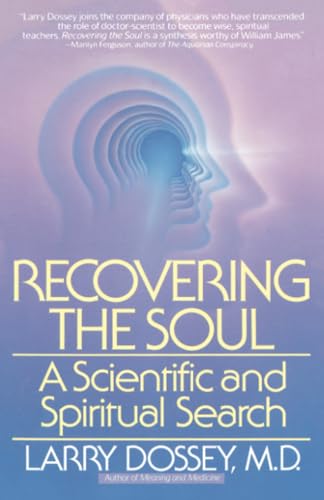
Modern medicine has achieved remarkable technological advances, yet something essential appears to be missing from our current understanding of health, healing, and human nature. This groundbreaking work challenges the prevailing materialistic view that consciousness is merely a byproduct of brain chemistry, offering instead a revolutionary perspective that could transform how we approach medicine, healing, and the very nature of our existence.
At the heart of this exploration lies a provocative question: What if consciousness is not confined to the physical boundaries of our bodies? Drawing on compelling evidence from scientific research, clinical observations, and cross-cultural healing traditions, this work presents a compelling case for nonlocal mind—the concept that consciousness extends beyond the brain and body, transcending the ordinary limits of space and time. This isn't merely philosophical speculation; it's grounded in documented phenomena including distant healing, prayer studies, telepathy, and the mysterious connections that seem to link human beings across vast distances.
Readers will discover how the mechanistic worldview that has dominated Western medicine for centuries may be fundamentally incomplete. While acknowledging the tremendous value of conventional medical approaches, this perspective reveals their limitations when it comes to understanding the full spectrum of healing phenomena. The separation of mind and body, spirit and matter, has created a fragmented approach to health that often overlooks the deepest aspects of human experience and healing potential.
Read more ▼
Kathleen A. Brehony
Roberto Kaplan, O.D., M.Ed., Roberto Kaplan
Kathryn Hudson
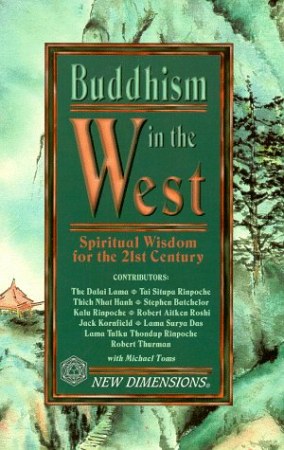
His Holiness Tenzin Gyatso the XIV Dalai Lama, Michael Toms
The quest for happiness often leads to frustration, as many fail to realize that the...

Reaching sixty can evoke complex emotions, blending relief with ongoing ambition. This...

The quest for life's purpose often leads to unsatisfactory answers. This article...

Romantic love is a complex emotion shaped by historical, cultural, and biological...

Imagine going through one of the most physically and emotionally demanding experiences...

Daily actions often conflict with personal beliefs due to past experiences. By utilizing...

Have you ever argued over something that wasn't actually said? From cultural differences...

Therapists often use dream interpretation to delve into patients' emotions, but true...