
Happiness & Success
Achieving Happiness Through Acceptance of Life
The quest for happiness often leads to frustration, as many fail to realize that the...








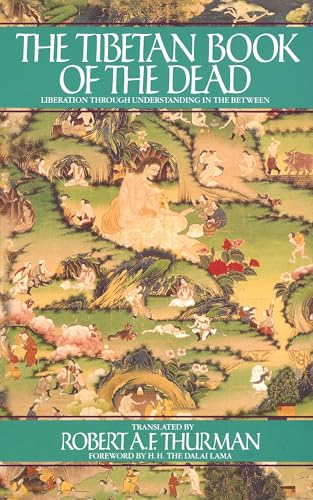
Journey into the profound depths of Tibetan Buddhist wisdom with this ancient text that has guided countless souls through one of life's most mysterious transitions: the passage from death to rebirth. Originally composed in the eighth century and rediscovered in the fourteenth century, this sacred teaching offers far more than instruction for the dying—it provides a transformative map for living with greater awareness, courage, and spiritual understanding.
At its core, this remarkable spiritual guide presents a detailed description of the intermediate state between death and rebirth, known as the bardo. Through poetic and vivid imagery, readers encounter a step-by-step navigation of consciousness as it dissolves from its attachment to physical form and enters realms of pure experience. The text describes encounters with peaceful and wrathful deities, brilliant lights and seductive shadows, moments of terror and opportunities for liberation. Yet these descriptions serve a dual purpose: they prepare us not only for the moment of death but also for the bardos we experience throughout life—those transitional moments between one state of consciousness and another.
What makes this teaching revolutionary for contemporary readers is its psychological sophistication. Long before modern psychology explored the nature of consciousness, projection, and the mind's creative power, this tradition understood that the visions and experiences after death are manifestations of one's own mind. The peaceful and wrathful deities encountered are not external beings but projections of consciousness itself—aspects of our own Buddha nature appearing in symbolic form. This recognition transforms the entire journey: liberation comes not from external salvation but from recognizing the true nature of our own awareness.
Read more ▼
Marc Bonnard, Marc, M.D. Bonnard
David Suzuki

Rainer Maria Rilke
The quest for happiness often leads to frustration, as many fail to realize that the...

Reaching sixty can evoke complex emotions, blending relief with ongoing ambition. This...

The quest for life's purpose often leads to unsatisfactory answers. This article...

Imagine going through one of the most physically and emotionally demanding experiences...

Romantic love is a complex emotion shaped by historical, cultural, and biological...

Daily actions often conflict with personal beliefs due to past experiences. By utilizing...

Have you ever argued over something that wasn't actually said? From cultural differences...

Therapists often use dream interpretation to delve into patients' emotions, but true...