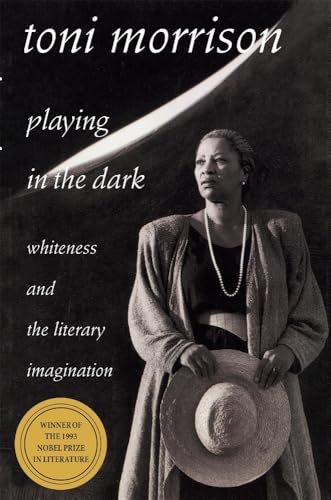

Discover how the hidden narratives woven throughout American literature have shaped our collective consciousness and personal identities in ways we rarely acknowledge. This groundbreaking exploration examines the intricate relationship between race, imagination, and the stories that define a nation, offering readers a transformative lens through which to understand themselves and their culture more deeply.
At its core, this work invites us to confront an uncomfortable truth: the fundamental narratives of American literary tradition have been constructed with an invisible racial presence that profoundly shapes meaning, even when not explicitly acknowledged. By examining how whiteness and blackness function as literary devices and psychological markers in canonical American literature, readers gain insight into the subconscious patterns that influence how we interpret stories, form beliefs, and understand our place in the world.
For those committed to personal growth and social consciousness, this examination becomes remarkably relevant. The book reveals how literary imagination doesn't exist in a vacuum. Instead, it emerges from and perpetuates cultural assumptions that have seeped into our individual psyches. By understanding these hidden currents, readers can begin to recognize similar patterns in their own thinking and perception. We learn that transforming ourselves requires understanding the larger cultural narratives that have shaped our consciousness from childhood.
The exploration reveals why certain images, characters, and plot devices resonate so powerfully in our collective imagination. It demonstrates how the absence of a character's voice or perspective can be just as meaningful as their presence, and how we unconsciously fill in blanks according to cultural scripts we've internalized. This awareness becomes a tool for liberation. When we recognize how these patterns operate in great literature, we can begin identifying similar mechanisms in our own lives, relationships, and communities.
Readers will discover how imagination itself carries responsibility and consequence. The book argues that literature is never innocent or separate from the social realities it reflects and shapes. This insight empowers readers to become more conscious consumers of narratives in all forms, from books and films to news media and social conversations. By understanding how meaning is constructed and whose perspectives are centered or marginalized, we develop greater discernment and agency in our own storytelling and belief formation.
The work also addresses how artists, thinkers, and creative individuals can develop more authentic and responsible approaches to their craft. Rather than viewing racial and social consciousness as limiting to artistic expression, this examination shows how deeper awareness actually expands creative possibilities and depth. It invites readers to consider how their own creative work, whether through writing, art, or simply how they narrate their lives, might unconsciously perpetuate limiting patterns or might instead offer genuine insight and transformation.
For spiritual seekers and those on paths of personal transformation, this book offers essential wisdom. Genuine growth requires examining not just our individual psychology but also the cultural narratives and assumptions we've absorbed. It acknowledges that transformation is both personal and collective, both internal and social. We cannot fully understand ourselves without understanding the larger systems of meaning that have constructed us.
The insights presented challenge readers to become architects of their own narratives rather than passive recipients of inherited stories. This is deeply empowering. When we recognize that stories shape reality, we gain the ability to tell different stories, imagine different possibilities, and create different futures. For communities seeking greater consciousness and justice, this work provides essential intellectual and imaginative tools.
This exploration ultimately matters because it demonstrates that personal empowerment and social consciousness are inseparable from our engagement with culture, imagination, and the stories we tell ourselves and each other. By reading more consciously and thinking more deeply about how narratives function, we reclaim our power as both interpreters and creators of meaning.