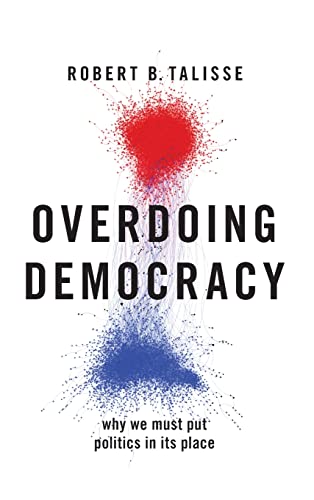
Democracy stands at a crossroads. In our modern era of information overload, polarization, and institutional skepticism, understanding the fundamental principles that sustain free societies has become more critical than ever. This collection illuminates the philosophical underpinnings necessary for anyone seeking to engage meaningfully with politics, society, and personal intellectual growth.
The philosophical framework presented here addresses one of the most pressing challenges facing contemporary democracies: how to distinguish between genuine knowledge and mere opinion, between scientific truth and dogmatic assertion. For those committed to personal growth and social consciousness, this distinction becomes essential. Without it, we cannot hope to make informed decisions about our political systems, our communities, or our individual lives.
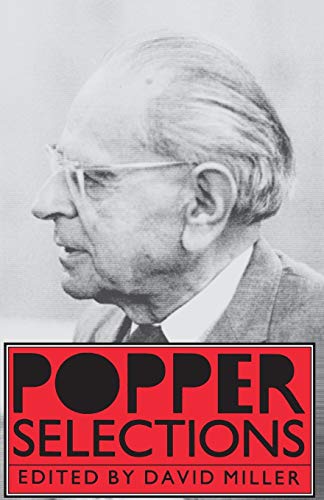
At the heart of this exploration lies a revolutionary approach to human knowledge and reasoning. Rather than seeking certainty through accumulation of evidence, the framework encourages us to test our ideas by attempting to prove them wrong. This counterintuitive method transforms how we think about learning, growth, and problem-solving. For individuals committed to spiritual and personal development, this approach offers a liberating perspective: that growth comes not from defending what we believe, but from remaining open to correction and challenge.
This principle has profound implications for democratic society. Authoritarian systems and ideological rigidity thrive when citizens accept claims without critical examination. Conversely, democracies flourish when people actively question authority, test assumptions, and remain willing to revise their positions in light of new understanding. By embracing intellectual humility and the courage to admit when we might be wrong, we strengthen both our personal integrity and our collective democratic institutions.
The collection explores the relationship between science and politics with particular clarity. Scientific progress depends on the freedom to propose bold hypotheses and submit them to rigorous testing. Similarly, political progress requires the freedom to propose alternative policies, experiment with different approaches, and learn from failures. Societies that suppress these freedoms inevitably stagnate. Those that protect them create environments where both scientific innovation and social improvement become possible.
Readers will encounter compelling arguments about the dangers of historical inevitability and utopian thinking. Whether in politics or personal development, the belief that history follows a predetermined path or that perfect solutions await can become paralyzing and even dangerous. Instead, the perspective offered here encourages incremental improvement, honest engagement with complexity, and recognition of unintended consequences. This wisdom proves invaluable for anyone attempting to navigate social change or personal transformation in realistic, constructive ways.
The material also addresses the paradox of tolerance and the limits of democracy itself. Can democracies protect themselves against those who would use democratic freedoms to destroy democracy? This question resonates deeply for anyone concerned with safeguarding the institutions that enable personal freedom and social progress. Understanding these tensions helps citizens navigate contemporary political challenges with greater sophistication.
Perhaps most importantly, this philosophical framework empowers readers to become more effective participants in democratic life. Whether you're concerned with local community issues, national policies, or global challenges, the thinking tools presented here enable clearer reasoning, better decision-making, and more productive dialogue with those who hold different views. Rather than viewing disagreement as something to overcome through rhetoric or force, this approach treats it as an opportunity for mutual learning and refinement of ideas.
For individuals on journeys of personal and spiritual growth, this material offers intellectual scaffolding that supports developing genuine wisdom. True wisdom requires not just accumulation of knowledge, but cultivation of intellectual virtues: honesty about limitations, willingness to be wrong, commitment to testing beliefs against reality, and respect for the knowledge of others. These same virtues strengthen democratic participation.
By engaging with this philosophical perspective, readers gain tools for more conscious engagement with the world. The approach respects human dignity, values freedom, and recognizes that lasting solutions emerge through open dialogue and honest engagement with evidence and argument. In a world where misinformation spreads easily and dogmatism threatens both personal fulfillment and social stability, these insights offer both practical wisdom and philosophical orientation toward more truthful, conscious living.