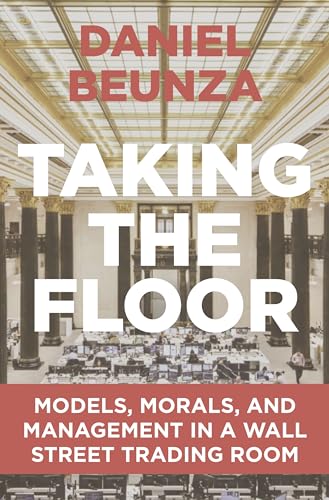
Discover how ordinary people transform themselves into agents of change within complex institutional systems, and learn practical insights about reclaiming your power in bureaucratic, financial, and social structures that often seem beyond individual influence.
This profound exploration reveals the hidden mechanisms through which individuals and groups challenge established hierarchies and reshape institutions from within. Rather than focusing on grand revolutionary movements or top-down policy changes, this work examines the subtle, everyday acts of resistance and transformation that occur when people refuse to be passive participants in systems designed to contain them.
At its heart, this investigation centers on a pivotal moment in financial history: the 2008 economic crisis and its aftermath. Through compelling case studies and rigorous research, readers gain access to the inner workings of the financial industry during a period of unprecedented disruption. But beyond the specifics of Wall Street and banking systems, the insights contained here apply broadly to anyone seeking to understand how power operates, how systems perpetuate themselves, and most importantly, how individuals can intervene meaningfully in those systems.
The work reveals how professional communities develop shared understandings and narratives that shape their decision-making. Financial analysts, traders, and executives don't simply follow rules; they operate within elaborate systems of meaning that determine what seems possible, rational, or ethical. By understanding these invisible frameworks, readers learn how social consensus around a particular way of doing things can be challenged and transformed. This applies equally to corporate environments, academic institutions, government agencies, healthcare systems, and any other complex organization where multiple stakeholders interact.
One of the most empowering lessons involves recognizing that systems are not monolithic entities existing outside human control. Instead, they consist of countless interactions between people who have more agency than they typically realize. When individuals become conscious of their role in perpetuating or challenging a system's logic, possibilities emerge for transformation. This represents a crucial insight for personal empowerment: you are not merely a cog in an impersonal machine, but an active participant whose choices, voice, and presence matter.
The narrative also explores how identity and professional communities shape behavior in ways that remain largely invisible until examined closely. Financial professionals, like those in any field, develop particular ways of seeing the world that become normalized and unquestioned. Yet when external pressures mount or internal contradictions become undeniable, cracks appear in the consensus. Individuals within these systems sometimes find themselves positioned to act as translators, bridge-builders, or dissidents, helping to shift collective understanding.
For readers committed to personal growth and social consciousness, this work offers something rare: a sophisticated analysis of institutional change grounded in real human experiences. It moves beyond abstract theory to show how actual people navigate moral dilemmas, challenge authority, and sometimes risk their careers and reputations to advocate for alternative approaches. These stories demonstrate that meaningful change often emerges not from grand gestures but from accumulating small acts of courage and clarity.
The implications extend far beyond finance. In an era when many feel powerless before massive social, environmental, and economic challenges, understanding how systems actually change becomes vital. Readers will discover that transformation requires both individual awakening and collective action, that speaking up matters even when it feels futile, and that the narratives supporting existing structures are more fragile than they appear.
This essential reading for anyone seeking to understand their role within institutional contexts and to discover concrete ways they can exercise greater agency, influence conversations, and contribute to systemic change while maintaining integrity and purpose.