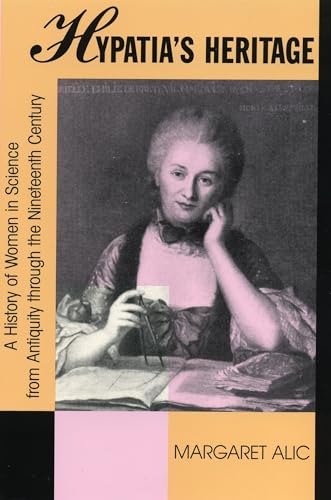
Discover the untold stories of women whose scientific contributions have been erased from history, reshaping your understanding of what women are capable of achieving in the pursuit of knowledge. This groundbreaking exploration reveals how centuries of intellectual achievement by women have been systematically overlooked, misattributed, or forgotten entirely, and why reclaiming this legacy matters profoundly for anyone seeking to understand their own potential and place in the world.
Throughout history, science has been presented as a male-dominated field, a narrative that has shaped how society views women's intellectual capabilities and their role in advancing human knowledge. Yet this story is far from complete or accurate. Countless women have made groundbreaking discoveries, developed revolutionary theories, and solved problems that changed the course of human civilization. Their absence from mainstream historical accounts is not due to their lack of contribution but rather to the systematic erasure of their work by institutions, publishers, and historians who either failed to recognize their achievements or deliberately excluded them from the record.
This comprehensive historical account traces the contributions of women scientists across multiple disciplines and centuries, beginning with ancient times and moving through the medieval period, the Renaissance, the Scientific Revolution, and into modern times. Readers will encounter mathematicians, astronomers, physicians, naturalists, and chemists whose work laid the foundation for scientific progress that continues to benefit humanity today. Each story is meticulously researched and presented with the detail and dignity these pioneering women deserve.
What makes this exploration particularly transformative for readers is the way it challenges fundamental assumptions about women's intellectual capacity and their place in the pursuit of knowledge. When you learn about women who mastered mathematics in times when female education was virtually nonexistent, or who made astronomical observations that advanced scientific understanding, you begin to question the narratives that have limited women's opportunities and potential. This isn't merely historical curiosity; it's an act of personal empowerment that comes from understanding that barriers to women's achievement have always been social and institutional rather than intellectual or biological.
The book demonstrates how women scientists developed innovative approaches to research, often working around significant obstacles including lack of formal education, exclusion from universities and scientific societies, limited access to equipment and resources, and social pressure to prioritize family obligations over intellectual pursuits. Many conducted their most important work in isolation or in collaboration with male relatives who received credit for their discoveries. Their persistence despite these barriers reveals a profound truth: human curiosity, creativity, and the drive to understand the world are not gendered traits.
For readers engaged in personal growth and self-discovery, understanding this hidden history provides essential context for recognizing internalized limitations. If women throughout history have contributed to every field of scientific inquiry despite overwhelming obstacles, what might become possible in our own lives when we release the belief that certain intellectual pursuits are not "for us"? This recognition extends beyond science; it applies to any field where women have been underrepresented or marginalized.
The exploration also addresses broader themes of how knowledge is constructed, preserved, and transmitted through society. It examines the institutions and power structures that determine whose work gets remembered and celebrated. Understanding these mechanisms empowers readers to question other narratives they've been taught and to seek out the hidden contributions of marginalized groups throughout history.
Reading about these remarkable women provides inspiration and validation. It counters the isolation that comes from believing yourself to be an anomaly and connects you to a rich tradition of female intellectual achievement. It demonstrates that the struggle against systemic barriers is not new, and that many women have navigated similar challenges with grace, determination, and ultimately, success.
This essential reading transforms how you see yourself, history, and what's possible.