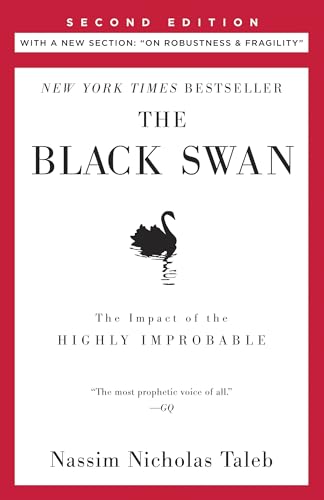




Our world is filled with events that seem to come out of nowhere, shocking us with their impact and forcing us to reconsider everything we thought we knew. A financial crisis crashes through markets with devastating force. A pandemic reshapes civilization overnight. A personal tragedy strikes when we least expected it. These are the moments that define our lives, yet they remain stubbornly resistant to prediction. What if the way we currently think about probability, risk, and the future is fundamentally flawed? What if our greatest blind spot lies in our absolute confidence in our ability to anticipate what's coming?
This exploration reveals how our minds systematically fail to account for the role of extreme, unexpected events in shaping history, our personal lives, and the world around us. The central insight is that rare, unpredictable occurrences have far greater impact than the ordinary events we constantly prepare for and discuss. We live under the illusion that the world is more predictable than it actually is, a misconception that can leave us vulnerable and unprepared.
Throughout this profound examination, readers discover why history is dominated by the unexpected. Wars, technological breakthroughs, artistic masterpieces, scientific discoveries, and personal transformations typically arrive as surprises. Our tendency is to construct narratives after the fact, convincing ourselves that these events were somehow inevitable or that we could have seen them coming. This retrospective bias gives us false confidence in our ability to forecast the future. We convince ourselves we understand the world when, in reality, we remain largely blind to its true nature.
One of the most transformative aspects of this investigation is understanding the difference between what we can predict and what we cannot. Some domains offer relatively stable patterns and repeatable outcomes. Others are dominated by randomness and extremes. The problem arises when we apply our understanding from predictable domains to those governed by unpredictability. We use historical data to forecast financial markets, then act shocked when markets behave in ways the data never prepared us for. We plan our lives based on the assumption that the future will resemble the past, then feel devastated when it doesn't.
The implications for personal empowerment are profound. Rather than spending energy on futile attempts to predict the unpredictable, we can learn to build lives that are resilient to shocks and positioned to benefit from unexpected opportunities. This shift in thinking moves us from a victim mentality toward events to a more robust stance. We stop asking only "What will happen?" and start asking "What if I'm wrong?" and "How can I be positioned to thrive regardless?"
Readers gain practical wisdom about managing risk in uncertain times. They learn why diversification matters not just in investments but in life choices. They discover the importance of optionality—maintaining flexibility and multiple pathways forward rather than committing entirely to a single predicted scenario. They understand why exposure to small negative events can actually protect us from catastrophic ones, and why sitting safely on the sidelines doesn't eliminate risk.
This knowledge becomes particularly valuable in navigating modern life. In our complex, interconnected world, small events can cascade into enormous consequences. Yet we remain remarkably focused on measuring and worrying about small, manageable risks while remaining blind to the possibility of genuine catastrophe. By recalibrating our thinking, we can make better decisions about careers, investments, relationships, and how we spend our limited time and energy.
The deeper personal transformation comes from accepting humility about what we know. There is profound freedom in acknowledging that the future will surprise us, that our plans may become irrelevant, and that unforeseen events will shape our destinies. This acceptance doesn't lead to paralysis but to wisdom. It allows us to live more flexibly, more authentically, and more prepared for genuine life changes. We can pursue what matters most to us while maintaining the resilience to bounce back when circumstances shift dramatically.