# A Guide to Breaking Free From Consumer Culture and Discovering What Truly Matters
We live in an age of unprecedented material abundance. Never before in human history have so many people had access to such vast quantities of possessions. Yet despite having more stuff than any generation before us, surveys consistently show that people are not happier. In fact, many report feeling overwhelmed, stressed, and oddly empty despite overflowing closets, garages, and storage units.
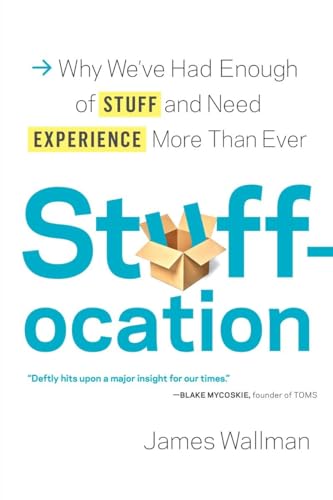
This exploration of modern consumerism presents a compelling thesis: our culture of accumulation is making us miserable, and the antidote lies in shifting our values away from material possessions and toward experiences, relationships, and personal growth. The work is rooted in extensive research and cultural analysis, revealing how we've arrived at this paradox and what we can do to escape it.
The concept at the heart of this work is that we are suffering from "stuffocation"—a condition characterized by the overwhelming feeling of having too much stuff. Unlike minimalism, which can sound austere and punitive, this framework presents a more nuanced perspective. It's not about deprivation or harsh self-denial; rather, it's about recognizing that beyond a certain point, more possessions actually detract from our well-being and quality of life.
Throughout these pages, you'll discover how consumer culture became the dominant value system in modern society. The narrative traces the historical shift from a culture focused on community, spirituality, and personal development to one centered almost exclusively on economic growth and material accumulation. This transition accelerated dramatically in the twentieth century, driven by advertising, technological innovation, and a fundamental reshaping of how societies measure progress and success. Understanding this history is crucial because it helps readers recognize that the relentless drive to acquire more is not an inherent human nature but rather a constructed cultural value that we can choose to question and change.
What makes this work particularly valuable for personal empowerment is its practical focus on solutions. Rather than simply diagnosing the problem, it offers a roadmap for transitioning to what the author calls "experientialism"—a values system centered on experiences, relationships, learning, and personal growth rather than material possessions. This shift has profound implications for how we spend our time, money, and energy.
Readers will learn about the psychological research demonstrating that experiences bring more lasting happiness than material goods. They'll discover why relationships and community are genuine sources of fulfillment, and how prioritizing these elements can transform daily life. The work also explores the environmental implications of overconsumption, connecting personal well-being with planetary health in a way that resonates with spiritually conscious readers.
One of the most valuable aspects of this exploration is how it validates the growing intuition many people have that something is fundamentally wrong with our consumer-driven society. If you've ever felt guilty about not wanting the latest gadget, or experienced anxiety about the possessions cluttering your space, or wondered why acquiring things you thought you wanted didn't bring the satisfaction you expected, this work provides explanation and permission to live differently.
The text offers concrete strategies for evaluating your relationship with possessions, identifying what truly brings you joy versus what you've been conditioned to want, and gradually shifting your lifestyle toward greater alignment with authentic values. It addresses the social pressure to consume, the role of identity in purchasing decisions, and how to navigate a consumer culture while maintaining personal integrity.
This exploration ultimately serves as both a wake-up call and an invitation—a call to recognize how cultural narratives about success and happiness have been shaped by commercial interests, and an invitation to reclaim agency in defining what a meaningful, fulfilling life truly looks like. For anyone seeking genuine personal empowerment and transformation, understanding and addressing your relationship with material accumulation is foundational work that opens the door to deeper fulfillment and authentic living.