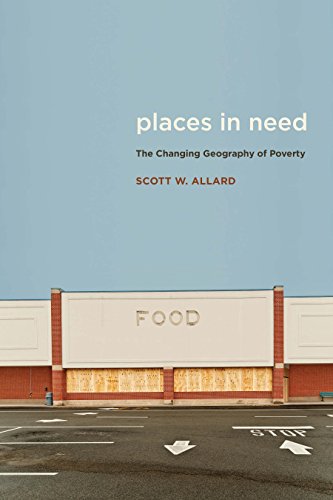

Discovering how neighborhoods struggle and transform offers profound insights into the interconnected nature of our society and our individual role within it. This exploration into distressed communities reveals patterns of poverty, isolation, and systemic challenges that extend far beyond what casual observation might suggest. For readers seeking to understand both the complexities of social inequality and pathways toward meaningful change, this work provides essential knowledge that bridges personal empowerment with community consciousness.
At its core, this examination addresses one of contemporary society's most pressing questions: how do communities overcome concentrated disadvantage, and what role do institutions and individuals play in facilitating transformation? The research presented draws from extensive fieldwork across multiple distressed neighborhoods, providing authentic, ground-level perspectives on how poverty operates in American cities. Rather than relying on abstract statistics alone, the material grounds its analysis in real experiences, real struggles, and real possibilities for change.
What makes this work particularly valuable for personal growth seekers is its emphasis on understanding systems while maintaining focus on human agency. Too often, discussions of poverty and community decline either blame individuals for their circumstances or suggest that systemic forces make change impossible. This balanced perspective acknowledges structural barriers while illuminating how communities, organizations, and individuals can still exercise meaningful choice and create positive outcomes. This nuanced understanding is liberating for readers who want to engage with social issues authentically without falling into despair or false oversimplification.
The investigation reveals how institutional networks shape opportunity and access within communities. Nonprofits, churches, schools, and government agencies interact in complex ways that either facilitate or hinder upward mobility. By understanding these dynamics, readers gain insight into how social infrastructure works and where leverage points for change exist. This knowledge is empowering because it moves beyond helplessness toward informed action. When you understand the mechanisms that create disadvantage, you also understand where intervention becomes possible.
One particularly enlightening aspect involves examining how social service provision actually functions in struggling neighborhoods. Rather than accepting assumptions about what poor communities need, the research investigates what residents actually access and how effectively existing resources serve them. This gap between presumed and actual need often reveals surprising inefficiencies and missed opportunities. For readers interested in social change, nonprofit work, or community development, this analysis provides invaluable practical understanding.
The work also addresses a question central to personal empowerment: how do individuals maintain hope and agency within constrained circumstances? Throughout the exploration of struggling communities, stories emerge of people who navigate difficult situations, make meaningful connections, and create positive change despite systemic obstacles. These narratives of resilience and intentional action offer inspiration while remaining grounded in realistic recognition of genuine constraints. This balance between acknowledging difficulty and celebrating human capacity for change resonates deeply with those pursuing personal transformation.
For those on a spiritual or consciousness-raising journey, this material invites expansion of awareness regarding social interconnection. Personal growth accelerates when we understand how our individual wellbeing connects to community wellbeing. Recognizing systemic inequality and its human costs deepens compassion while motivating meaningful engagement with the broader world. Understanding the invisible barriers facing others strengthens our commitment to justice and authenticity in our own lives.
The practical frameworks presented equip readers to think more clearly about community challenges and solutions. Whether you work in nonprofit sectors, serve your community as a volunteer, advocate for policy change, or simply seek deeper understanding of social dynamics, the insights offered enhance your effectiveness and clarity. You'll develop more sophisticated mental models for understanding how change actually happens in real communities, moving beyond simplistic solutions toward nuanced, contextual approaches.
Ultimately, this exploration serves as both mirror and window. It reflects the reality of many communities while opening windows onto possibilities for transformation grounded in authentic understanding rather than idealistic fantasy.