# Reclaiming Women's Intellectual Legacy: Philosophy as a Path to Personal Empowerment
The history of philosophy has long been told as a story dominated by male voices and male contributions to human thought. Yet beneath this narrow narrative lies a hidden legacy of brilliant women whose ideas shaped the intellectual landscape of Western civilization. Discovering this forgotten chapter of human intellectual development offers far more than historical correction—it provides profound insights into personal empowerment, self-discovery, and the ways women can claim their rightful place as creators of knowledge and meaning.
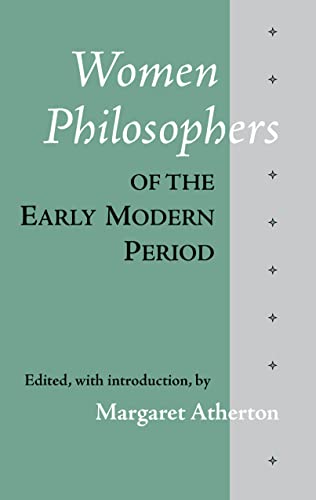
This collection presents a transformative exploration of female philosophers whose work emerged during the early modern period, a fascinating era spanning from the Renaissance through the Enlightenment. During these centuries, women faced significant cultural, legal, and educational barriers that prevented them from participating in academic institutions and philosophical societies that defined intellectual discourse. Yet despite these obstacles, remarkable women found ways to engage with the deepest questions of human existence, contributing original and sophisticated ideas about knowledge, identity, morality, and the nature of reality itself.
What makes this exploration particularly valuable for readers on a personal growth journey is how it demonstrates the power of intellectual persistence and creative resistance. These women philosophers developed strategies to make their voices heard—through salons, private correspondence, published works, and ingenious arguments about their own right to think and speak. Their stories illuminate how individuals can overcome systemic barriers to claim their authentic intellectual identity and authority. They serve as historical role models for anyone seeking to trust their own capacity for wisdom and insight, particularly those who have been discouraged from valuing their own thinking.
The work presented here covers diverse philosophical traditions and perspectives. Readers will encounter women who engaged with Cartesian philosophy, Platonism, empiricism, and rationalism. Some developed critiques of mainstream philosophy while others advanced entirely original positions on consciousness, the mind-body relationship, and epistemology. The intellectual range is striking—from metaphysics to ethics to political philosophy. What unites these thinkers is not any single doctrine but rather a shared commitment to rigorous thinking and a refusal to accept that women's minds were inherently less capable of philosophical insight than men's.
For those seeking personal transformation, this collection offers several profound gifts. First, it expands your understanding of what is possible when you claim intellectual authority. These women's lives demonstrate that pursuing genuine understanding and developing coherent philosophical positions is an inherently human capacity, not a male privilege. This realization can be deeply liberating, especially for readers who internalized messages limiting their intellectual potential or who feel disconnected from their own wisdom.
Second, the philosophical ideas themselves have direct relevance to contemporary spiritual and personal growth. Early modern women philosophers grappled with questions about the nature of consciousness, the relationship between mind and body, the grounds of knowledge, and how we should live. Their insights remain philosophically sophisticated and practically applicable to navigating modern life. Engaging with their ideas directly, rather than through a filtered lens, allows you to experience the transformative power of philosophical thinking firsthand.
Third, this collection reveals something essential about human resilience and creativity. When people are prevented from accessing traditional pathways to intellectual expression and recognition, they innovate. The strategies these women employed to participate in philosophical discourse offer valuable lessons for anyone navigating systems that seem designed to exclude them. Their example teaches that obstacles can become catalysts for developing unique perspectives and more authentic forms of expression.
This work ultimately affirms that intellectual and spiritual development knows no gender limitations. By reclaiming these forgotten voices, we reclaim a fuller, more honest understanding of human potential and possibility. For readers committed to personal empowerment, this collection serves as both historical documentation and inspirational testament to the power of claiming one's right to think, question, and contribute to the world's understanding of truth and meaning.