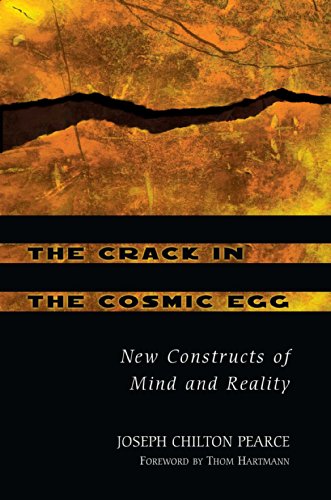
Have you ever wondered why human beings operate at only a fraction of their true potential? Why the vast majority of us seem trapped in patterns of thinking that limit our possibilities, our creativity, and our ability to perceive reality as it truly is? This groundbreaking exploration delves into one of the most profound questions facing modern consciousness: the nature of the invisible barriers that prevent us from accessing the full spectrum of our mental and spiritual capabilities.
At the heart of this inquiry lies a revolutionary premise: that our ordinary perception of reality is not comprehensive or complete, but rather a culturally conditioned interpretation that has become so normalized we mistake it for truth itself. We are, in essence, operating with a profoundly limited operating system, one that was programmed into us through years of social conditioning, educational systems, and cultural assumptions about what is possible and what is not.
The exploration begins by examining how culture literally shapes the structure of consciousness itself. From infancy, we are trained to see the world in specific ways. We are taught which aspects of experience matter and which should be ignored. We learn to filter out the vast majority of sensory information available to us, retaining only what our culture has deemed significant. This filtering process, while useful for social functioning, creates what might be called a crack in our cosmic egg, a fundamental fissure in our ability to perceive and interact with reality in its wholeness.
What makes this perspective so transformative is the recognition that this crack is not irreparable. Throughout history, certain individuals and cultures have managed to operate beyond these conventional limitations. Mystics, artists, geniuses, and spiritual practitioners have demonstrated capacities that seem to defy the ordinary rules we assume govern human consciousness. They perceive connections where others see separation. They access knowledge through intuition and direct experience rather than only through rational analysis. They seem to operate with access to dimensions of reality that remain invisible to the conventionally trained mind.
The investigation explores how our thinking processes, particularly our dependence on a language-based, linear, rational mode of consciousness, creates both incredible advantages and serious limitations. While these capabilities allowed human civilization to develop and flourish, they simultaneously created rigid structures of thought that prevent us from accessing other modes of awareness that might be equally or more valuable. We have essentially sacrificed wholeness for specialization, depth for breadth, and intuitive knowing for analytical understanding.
One of the most valuable insights this work provides is the understanding that personal empowerment does not primarily come from acquiring more information or developing better techniques within our existing framework. Rather, it comes from fundamentally transcending the framework itself. True personal growth requires what might be called a crack in our individual cosmic egg, a rupture in the conditioned patterns that have defined our sense of self and possibility.
The exploration offers readers a pathway toward accessing these deeper potentials. It demonstrates how periods of crisis, confusion, or cognitive disruption can actually serve as gateways to expanded consciousness. It explains why children often display capacities that adults have learned to suppress, and how we might reclaim access to these natural human abilities. It reveals that imagination, intuition, and creative insight are not luxuries or secondary capabilities but rather fundamental ways of knowing that are equally valid to rational analysis.
For those committed to personal transformation and spiritual development, this work provides essential intellectual and philosophical grounding. It explains why traditional self-help approaches often fail to produce lasting change. It illuminates why meditation, creative expression, and practices that quiet the rational mind can lead to breakthrough experiences. It demonstrates that the journey toward wholeness requires not just changing our thoughts but fundamentally shifting the operating system through which we generate and interpret experience.
This is not a book that offers quick fixes or simple formulas. Rather, it invites readers into a deeper inquiry about the nature of human potential and the invisible architecture that both supports and constrains our development. For anyone genuinely committed to understanding and transcending their limitations, this exploration provides invaluable illumination and inspiration.