
Happiness & Success
Achieving Happiness Through Acceptance of Life
The quest for happiness often leads to frustration, as many fail to realize that the...








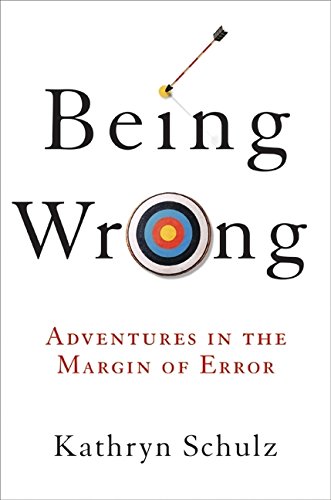
We live in a culture that treats being wrong as something shameful, a character flaw to be avoided at all costs. From childhood onward, we learn to associate mistakes with punishment, humiliation, and failure. Yet paradoxically, being wrong is one of the most fundamental aspects of the human experience. Every breakthrough in science, every innovation in technology, every leap forward in social progress has come through the recognition and correction of previous errors. This fascinating exploration of human fallibility reveals why we make mistakes, why we refuse to admit them, and how embracing our capacity for error can transform our lives, relationships, and society.
At the heart of this work lies a profound paradox: we are wrong far more often than we realize, yet we feel certain about our beliefs and perceptions most of the time. This gap between our confidence and our accuracy shapes everything from our personal relationships to our political discourse. Through compelling stories, cutting-edge research, and philosophical inquiry, readers discover why the human mind is fundamentally prone to error, and why this vulnerability is not a bug in our programming but an essential feature of how we navigate complexity and create meaning.
The exploration begins with the mechanics of wrongness itself, examining how our senses deceive us, how our memories reconstruct rather than record reality, and how our reasoning processes lead us systematically astray. Through vivid examples ranging from optical illusions to false confessions, readers gain insight into the startling unreliability of subjective experience. These revelations are not meant to inspire despair but rather humility and curiosity about the nature of knowledge itself.
Read more ▼
Gopi Krishna

Peace Pilgrim

Robert B. Reich
John F. Demartini
The quest for happiness often leads to frustration, as many fail to realize that the...

Reaching sixty can evoke complex emotions, blending relief with ongoing ambition. This...

The quest for life's purpose often leads to unsatisfactory answers. This article...

Romantic love is a complex emotion shaped by historical, cultural, and biological...

Imagine going through one of the most physically and emotionally demanding experiences...

Daily actions often conflict with personal beliefs due to past experiences. By utilizing...

Have you ever argued over something that wasn't actually said? From cultural differences...

Therapists often use dream interpretation to delve into patients' emotions, but true...