
Happiness & Success
Achieving Happiness Through Acceptance of Life
The quest for happiness often leads to frustration, as many fail to realize that the...








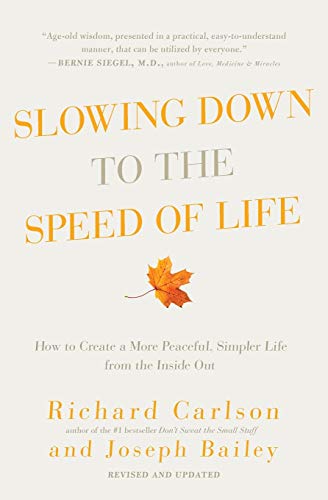
In our hyperactive modern world, where productivity is prized above presence and busyness has become a badge of honor, a profound paradox emerges: the faster we try to move through life, the more we miss. This transformative guide reveals how our relentless mental activity and future-focused thinking actually diminish our effectiveness, our relationships, and our overall sense of wellbeing. Through practical wisdom drawn from psychological principles and common sense, readers discover that genuine clarity, creativity, and peace emerge not from doing more, but from learning to be present with what is.
At the heart of this exploration lies a revolutionary understanding of how thought works. Most people navigate life in one of two distinct modes of consciousness: emergency thinking and reflective thinking. Emergency thinking is characterized by a sense of urgency, anxiety about the future or regrets about the past, and a chronic feeling that there's never enough time. This mental state activates our stress response, floods us with cortisol, and ironically makes us less capable of handling the very challenges we're worried about. Reflective thinking, by contrast, operates from a place of mental quietness and presence. When we slow down internally, we access deeper intelligence, natural wisdom, and creative solutions that emergency thinking obscures.
Readers learn that feelings serve as an internal compass, constantly providing feedback about the quality of their thinking. When experiencing stress, anxiety, or overwhelm, these emotions aren't signaling that external circumstances need to change, but rather that thought patterns have accelerated into emergency mode. This insight alone proves liberating for countless individuals who have exhausted themselves trying to fix or control outer conditions, not realizing that inner shifts in consciousness create far more powerful transformations.
Read more ▼
Patricia Broersma

Beloved Mighty Victory

Elizabeth Honey
James F. Twyman
The quest for happiness often leads to frustration, as many fail to realize that the...

Reaching sixty can evoke complex emotions, blending relief with ongoing ambition. This...

The quest for life's purpose often leads to unsatisfactory answers. This article...

Imagine going through one of the most physically and emotionally demanding experiences...

Romantic love is a complex emotion shaped by historical, cultural, and biological...

Daily actions often conflict with personal beliefs due to past experiences. By utilizing...

Have you ever argued over something that wasn't actually said? From cultural differences...

Therapists often use dream interpretation to delve into patients' emotions, but true...