What if the economic system that shapes your daily life, determines your opportunities, and influences your sense of possibility could be fundamentally transformed? What if the path to genuine well-being and social progress didn't require waiting for distant political solutions but instead invited you to participate in building economic alternatives right now?
This exploration delves into a provocative question that challenges the conventional wisdom most of us absorbed throughout our education and careers: Is capitalism truly the only viable economic model for modern society? More importantly, are there practical, proven alternatives already emerging that could create a more equitable, sustainable, and spiritually aligned way of organizing our economic lives?
The foundation of this inquiry rests on a sobering observation. Despite unprecedented technological advancement and material abundance in many developed nations, we continue to experience persistent poverty, environmental degradation, concentrated wealth, and a pervasive sense that something essential is missing from our economic arrangements. This disconnect suggests that perhaps the problem isn't scarcity or human limitation, but rather the fundamental structure through which we organize production, distribute resources, and define economic success.
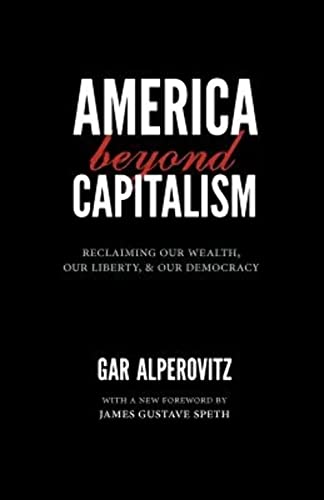
The book presents a systematic examination of what lies beyond traditional capitalism, exploring models that have demonstrated real success in communities across America and beyond. These aren't utopian fantasies or untested theories. They are functioning systems where workers own and democratically control their workplaces, where communities manage resources for collective benefit, and where economic decisions flow from values rather than purely from profit maximization. Readers will discover how cooperative enterprises, community land trusts, municipal ownership, and worker-owned businesses create prosperity while maintaining human dignity and environmental responsibility.
One of the most transformative aspects of this exploration involves understanding that decentralized economic power correlates with authentic democracy. When economic decisions concentrate in distant corporate headquarters, genuine political participation becomes nearly impossible, regardless of how many times citizens cast votes. Conversely, when communities and workers control their own economic institutions, they naturally engage more deeply in collective decision-making and take responsibility for outcomes that affect their lives. This insight connects economics directly to personal empowerment and self-determination.
The material covers concrete examples of how alternative economic structures already function successfully. Employee-owned companies demonstrate higher productivity and worker satisfaction. Community land trusts preserve affordable housing and build neighborhood stability. Municipal utilities provide better service at lower cost than private corporations. Cooperative groceries strengthen local food systems while returning profits to members. These aren't marginal experiments but increasingly significant portions of the economic landscape, particularly among conscious communities seeking alignment between their values and their economic participation.
For readers on a spiritual path or engaged in personal growth work, this becomes especially relevant. Many people dedicated to inner transformation find themselves troubled by a contradiction: they pursue compassion, connection, and consciousness in their personal lives while participating in economic systems built on competition, extraction, and disconnection. This exploration offers a bridge across that gap, revealing how aligning economic participation with deeper values becomes not just possible but increasingly practical.
The framework presented here also addresses the psychological and spiritual dimensions of economic change. Beyond policy analysis and institutional redesign, it examines how different economic arrangements shape consciousness, relationships, and our sense of possibility. When we participate in democratic economic institutions where our voice matters and our labor creates value we actually control, our sense of agency and dignity shifts fundamentally.
Perhaps most importantly, this material invites you to consider your own role in economic transformation. Rather than positioning change as something to demand from distant authorities, it reveals how you can participate directly in building economic alternatives through your career choices, consumer decisions, community involvement, and collaborative efforts. Economic transformation isn't something that happens to us but something we create together through conscious participation and collective imagination.