

# Understanding How Women Built Power Through Strategic Action: A Journey Into Collective Change
Discover how ordinary women transformed themselves into agents of social change through organized activism, collective intelligence, and adaptive strategy. This scholarly yet accessible exploration reveals the remarkable story of women's movements in America and the psychological, social, and political dynamics that enabled them to challenge entrenched systems and reshape society itself.
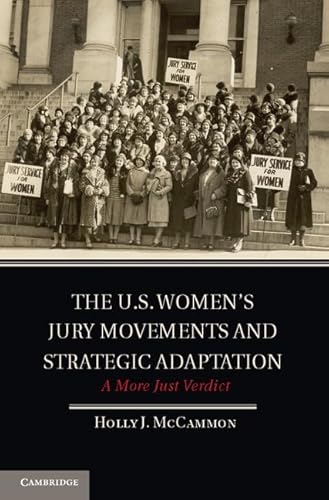
The women's jury movement stands as one of the most significant yet underappreciated struggles in American history. Rather than focusing solely on dramatic political victories, this work examines the less visible but equally powerful mechanisms through which women organized, strategized, and ultimately succeeded in gaining the right to serve on juries. More importantly, it illuminates universal principles about how marginalized groups can recognize their own power, adapt their approaches when facing resistance, and persistently move toward liberation.
What makes this exploration particularly valuable for readers interested in personal empowerment is its focus on strategic adaptation. Throughout history, women's movements didn't simply demand change once and expect to receive it. Instead, activists continuously assessed their circumstances, learned from failures, modified their tactics, and tried again. This cycle of evaluation and reinvention represents a master class in resilience and intelligent action. Readers will discover how successful social change requires not just passion and conviction, but also flexibility, cultural awareness, and the willingness to meet opposition with creative solutions.
The narrative unfolds across different regions and time periods, revealing how women in various states employed different strategies suited to their unique political landscapes and cultural contexts. Some areas demanded confrontational approaches, while others required working within existing systems to effect change. This geographical and temporal variation demonstrates a crucial truth: there is rarely one single path to transformation. Effective change-makers must develop the capacity to read their environment, understand the forces arrayed against them, and calibrate their response accordingly. For contemporary readers facing their own challenges, whether personal or social, this lesson proves invaluable.
The movement's evolution also demonstrates the importance of coalition building and intersectional thinking. Women of different backgrounds, economic circumstances, and perspectives had to find common ground while respecting their differences. They learned to build alliances with sympathetic men, moderate reformers, and other social movements, recognizing that lasting change requires a broader base of support than any single group can provide. This insight applies powerfully to modern movements for personal and social transformation, where isolated efforts often falter while connected, collaborative approaches flourish.
Throughout this historical account, readers will encounter examples of women who developed sophisticated political consciousness. These activists moved beyond simply wanting a change to understanding the systems that opposed them, the historical forces shaping their circumstances, and the leverage points where pressure could generate transformation. They learned to use the language and frameworks of their opponents against them, to appeal to values their adversaries claimed to hold, and to expose the contradictions between what society professed and what it actually practiced. This intellectual and strategic development represents a model for anyone seeking to create meaningful change in their own life or community.
Perhaps most compellingly, this examination reveals how participation in activism itself becomes transformative. Women who joined these movements didn't simply achieve an external goal; they underwent internal transformation. They developed confidence, skills, networks, and a sense of collective efficacy that extended far beyond the specific issue of jury service. They discovered capabilities they didn't know they possessed and contributed to something larger than themselves.
For modern readers, the implications are profound. Whether you're working toward personal liberation from limiting beliefs, seeking to build a more authentic life, or hoping to contribute to social transformation, understanding how strategic movements achieve sustained change provides a powerful template. The principles revealed through historical struggle remain relevant today: maintain clear vision while remaining flexible in tactics, build authentic relationships and coalitions, develop deep understanding of the systems you're challenging, and recognize that the journey itself transforms you as you work toward your goals.