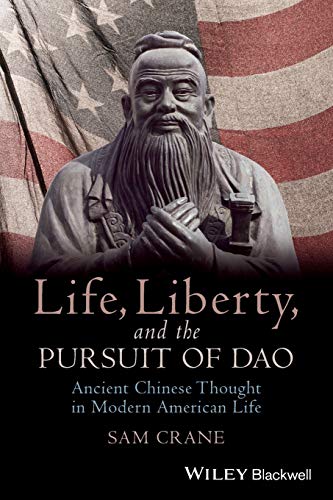



Discover how the profound principles of an ancient Eastern philosophy can transform the way we understand freedom, rights, and the pursuit of happiness in contemporary democratic societies. This exploration bridges two seemingly distant worlds—the timeless wisdom of Daoism and the fundamental values that underpin Western political thought—revealing unexpected connections that can reshape your understanding of what it truly means to live a free and meaningful life.
For centuries, Western democracies have grounded their ideals in concepts inherited from Enlightenment thinkers: individual rights, the social contract, and the pursuit of happiness through rational self-interest. Yet many people in these societies find themselves feeling empty, conflicted, and disconnected despite their theoretical freedoms. What if the missing piece to this puzzle has been available all along, encoded in a philosophical tradition that predates modern democracy by thousands of years?
The concept of the Dao, often translated as "the Way," represents a natural flow and harmony that exists beneath the surface of reality. Rather than imposing artificial structures and rigid systems upon the world, Daoist philosophy encourages alignment with the natural order of things. This stands in stark contrast to the legalistic, rights-based framework that often dominates political discourse in liberal democracies. Yet when examined carefully, these two approaches are not opponents but rather complementary perspectives that can enrich each other profoundly.
This exploration examines how Daoist principles can inform and deepen our understanding of liberty and democratic governance. Liberty, from this perspective, is not simply the absence of external constraints or the ability to do whatever we wish. Instead, it becomes something far more nuanced and psychologically sophisticated—the freedom to align ourselves with natural rhythms and to find authentic flourishing within a complex social world. The pursuit of happiness, similarly, shifts from a frantic grasping for external satisfactions to a quieter, deeper contentment that comes from living in harmony with our true nature and the nature of reality itself.
Throughout this investigation, you will encounter practical wisdom that speaks directly to contemporary challenges. In an age of political polarization, increasing social fragmentation, and widespread anxiety about the future, the Daoist approach offers an alternative way of thinking about conflict and difference. Rather than viewing political opponents as enemies to be defeated, what if we understood them as expressions of complementary forces that, like yin and yang, create a dynamic balance essential to the health of the whole?
The text explores how concepts such as wu wei, often translated as "non-action" or "effortless action," can be understood within a democratic context. This is not a call for passivity or withdrawal from civic engagement, but rather an invitation to work more effectively and with greater wisdom by understanding when to act forcefully and when to step back, when to push for change and when to allow natural processes to unfold. This refined understanding of action has profound implications for how we approach political engagement, social change, and personal empowerment.
You will also discover how Daoist philosophy addresses the tension between individual liberty and collective wellbeing—a perennial challenge in democratic societies. The Daoist perspective suggests that when we align ourselves with the natural order, these apparent opposites begin to reconcile. Personal flourishing and social harmony are not competitors but natural partners; pursuing one while respecting the other creates a sustainable, generative approach to political life.
This work matters because it offers a corrective to some of the limitations of purely Western political philosophy. It provides a richer vocabulary for understanding freedom, a more sophisticated approach to governance, and a path toward personal transformation that is simultaneously a path toward social wisdom. By integrating these ancient insights with modern political consciousness, readers will discover new possibilities for understanding their relationship to society, democracy, and the pursuit of a life that is not merely free but genuinely whole, meaningful, and in harmony with deeper truths.