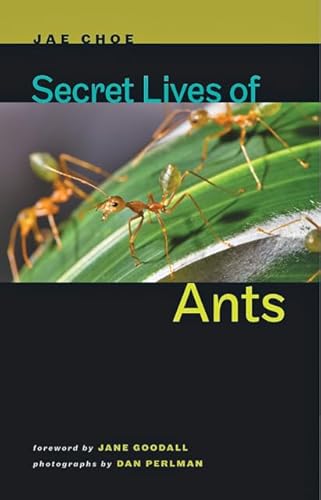

Deep beneath our feet and all around us exists a world of extraordinary complexity, cooperation, and innovation that most of us walk past without a second glance. The hidden universe of ants offers profound lessons about community, adaptation, communication, and survival that can fundamentally shift how we understand our own place in the world and approach our personal challenges.
Through vivid storytelling and scientific insight, readers are invited into the astonishing realm of these tiny creatures whose sophisticated societies have thrived for over 100 million years. What emerges is not merely a natural history lesson, but a mirror reflecting back essential truths about leadership, collective intelligence, sacrifice, and the delicate balance between individual autonomy and communal responsibility.
The remarkable strategies ants employ to survive and flourish offer unexpected wisdom for anyone seeking to navigate the complexities of modern life. Consider their approach to problem-solving: when faced with obstacles, ant colonies don't rely on top-down commands from a single authority. Instead, they demonstrate emergent intelligence, where simple interactions between individuals create sophisticated solutions that no single ant could devise alone. This decentralized decision-making process challenges our assumptions about leadership and control, suggesting alternative pathways for human organizations and personal growth.
The exploration of ant communication systems reveals how these creatures create cohesive communities through chemical signals, touch, and coordinated action. Despite lacking the verbal sophistication we pride ourselves on, ants achieve levels of cooperation that put many human societies to shame. They demonstrate that effective communication isn't about complexity but clarity of purpose and genuine responsiveness to one another's needs. For readers struggling with relationships, team dynamics, or community building, these insights offer practical wisdom about creating authentic connection.
Particularly compelling are the examples of how different ant species have evolved unique survival strategies perfectly suited to their environments. Some farm fungi, others herd aphids like livestock, and still others conduct elaborate raids on neighboring colonies. These varied approaches to survival illustrate a crucial life principle: there is no single path to success. What works brilliantly in one context may fail utterly in another. This recognition can liberate readers from rigid thinking about their own life choices and career paths, encouraging adaptive thinking and creative problem-solving.
The book delves into the concept of superorganisms, where the colony functions as a single entity despite being composed of thousands of individuals. This perspective invites reflection on our own interconnectedness and challenges the Western emphasis on radical individualism. We see how individual ants willingly sacrifice themselves for colony survival, raising profound questions about purpose, legacy, and what gives life meaning beyond personal gratification.
The exploration of ant warfare, cooperation, and competition provides unflinching insights into the dual nature of social life. Ants can be both remarkably altruistic toward colony members and ruthlessly aggressive toward outsiders. This complexity mirrors human behavior and invites honest examination of our own tribal instincts, in-group loyalties, and capacity for both compassion and cruelty.
Environmental adaptations demonstrated by ants offer lessons in resilience and flexibility that feel particularly relevant in our era of rapid change. Some species have survived ice ages, continental shifts, and dramatic climate fluctuations by remaining adaptable rather than rigid. Their success stems not from fighting against change but from flowing with it while maintaining core survival strategies.
For readers interested in mindfulness and present-moment awareness, observing ant behavior encourages a shift in perspective. These creatures respond to immediate circumstances without apparent worry about past or future, demonstrating a kind of practical mindfulness born from evolutionary necessity. Their focus on purposeful action over anxious deliberation offers an antidote to human overthinking.
The intricate architectural achievements of ant colonies, from underground labyrinths to suspended leaf nests, showcase how patient, incremental effort creates magnificent results. Each ant moves a single grain of sand or leaf fragment, yet collectively they construct cities housing millions. This illustrates the power of consistent small actions, a principle that applies directly to personal transformation, habit formation, and achieving long-term goals.
Ultimately, this journey into ant societies offers more than entomological knowledge. It provides a fresh lens through which to examine human existence, revealing that wisdom and inspiration can come from the most unexpected sources when we approach the natural world with humility and curiosity.