

Happiness & Success
Achieving Happiness Through Acceptance of Life
The quest for happiness often leads to frustration, as many fail to realize that the...








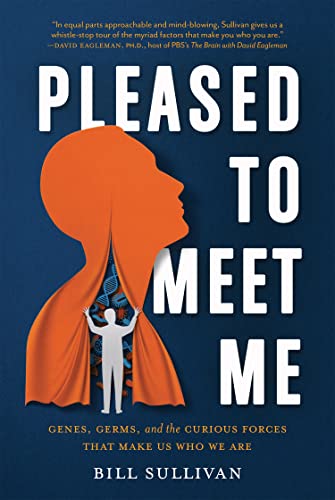
What if the person you believe yourself to be isn't entirely of your own making? What if the thoughts you think, the foods you crave, the moods you experience, and even the choices you make are influenced by an invisible world of microscopic organisms living inside you and genetic codes written long before you were born? These provocative questions open up a fascinating exploration into the biological forces that shape human behavior, personality, and identity in ways we're only beginning to understand.
Drawing from cutting-edge research in genetics, microbiology, neuroscience, and psychology, this illuminating work reveals how our bodies host trillions of microorganisms that collectively weigh as much as our brains and contain far more genetic material than our own cells. These microscopic tenants aren't passive passengers. They actively influence our cravings, our emotional states, our susceptibility to illness, and even our social behaviors. The gut-brain axis, a complex communication network between our digestive system and our minds, serves as a highway for these tiny influencers to shape our decisions and desires in remarkable ways.
Beyond the microbial world, the exploration delves deep into how our genetic inheritance creates predispositions that affect everything from our vulnerability to addiction to our capacity for empathy and aggression. Yet this isn't a story of biological determinism or helplessness. Instead, it presents a nuanced understanding of how genes create tendencies rather than destinies, how environmental factors can turn genes on or off, and how awareness of these influences can actually enhance our ability to make conscious choices about who we want to become.
Read more ▼
Jim Taylor

Eric Butterworth

Beatrix Rohlsen
The quest for happiness often leads to frustration, as many fail to realize that the...

Reaching sixty can evoke complex emotions, blending relief with ongoing ambition. This...

The quest for life's purpose often leads to unsatisfactory answers. This article...

Imagine going through one of the most physically and emotionally demanding experiences...

Romantic love is a complex emotion shaped by historical, cultural, and biological...

Daily actions often conflict with personal beliefs due to past experiences. By utilizing...

Have you ever argued over something that wasn't actually said? From cultural differences...

Therapists often use dream interpretation to delve into patients' emotions, but true...