

Happiness & Success
Achieving Happiness Through Acceptance of Life
The quest for happiness often leads to frustration, as many fail to realize that the...








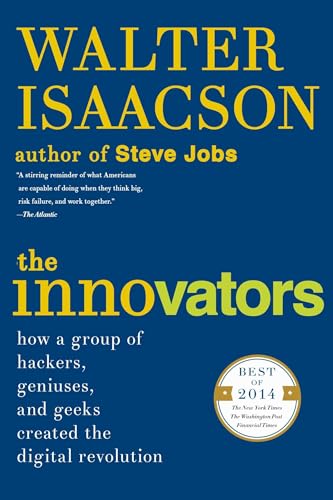
Throughout history, the greatest leaps forward have come not from solitary geniuses working in isolation, but from collaborative teams who understood that innovation is fundamentally a team sport. This compelling narrative takes readers on a transformative journey through the digital revolution, revealing how the modern world was built by people who combined creativity with practical execution, vision with collaboration, and bold ideas with the determination to see them through.
At its heart, this work explores something profoundly relevant to personal empowerment: how ordinary individuals became extraordinary by learning to work together, by standing on the shoulders of those who came before them, and by understanding that breakthrough innovation requires both imagination and the ability to implement. Rather than perpetuating the myth of the lone genius, readers discover how Ada Lovelace, Alan Turing, Grace Hopper, Bill Gates, Steve Jobs, and countless others achieved greatness through connection, collaboration, and building upon existing knowledge.
The journey begins in the nineteenth century with the first conceptual frameworks for computing and follows the thread through the development of the computer, the transistor, the microchip, programming languages, the personal computer, software, and the internet. But this isn't merely a technical history—it's a deeply human story about creativity, persistence, and the power of diverse minds working toward common goals. Each chapter reveals how breakthroughs emerged from the intersection of different disciplines, perspectives, and talents.
Read more ▼
Daniel J. Kindlon, PH. D., Michael Thompson, PH. D., Dan Kindlon, Michael Thompson, Teresa Barker

Tina Welling

James Fadiman, Jordan Gruber
The quest for happiness often leads to frustration, as many fail to realize that the...

Reaching sixty can evoke complex emotions, blending relief with ongoing ambition. This...

The quest for life's purpose often leads to unsatisfactory answers. This article...

Imagine going through one of the most physically and emotionally demanding experiences...

Romantic love is a complex emotion shaped by historical, cultural, and biological...

Daily actions often conflict with personal beliefs due to past experiences. By utilizing...

Have you ever argued over something that wasn't actually said? From cultural differences...

Therapists often use dream interpretation to delve into patients' emotions, but true...