
Happiness & Success
Achieving Happiness Through Acceptance of Life
The quest for happiness often leads to frustration, as many fail to realize that the...








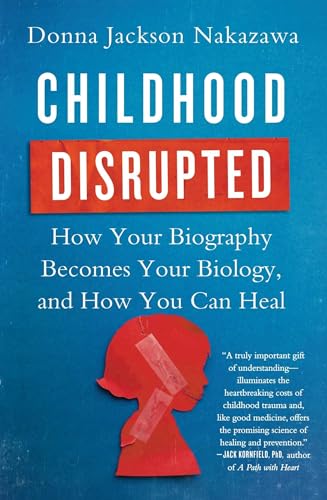
The experiences we carry from our earliest years don't simply fade into memory—they become embedded in our very cells, shaping not only our emotional landscape but our physical health, our relationships, and surprisingly, our professional success and financial wellbeing. This groundbreaking exploration reveals how childhood adversity creates biological changes that can follow us into adulthood, affecting everything from our ability to negotiate a salary to our capacity to maintain stable employment and build wealth.
Drawing on cutting-edge research in neuroscience, immunology, and psychology, this work illuminates the profound connection between early life stress and adult outcomes. The science is clear: chronic unpredictability, emotional neglect, physical or verbal abuse, or growing up with a parent struggling with mental illness, addiction, or chronic anger doesn't just hurt in the moment. These experiences trigger a cascade of biological responses that can alter brain development, disrupt the immune system, and create patterns of stress response that persist decades later.
For many professionals struggling with unexplained career plateaus, difficulty with authority figures, challenges in workplace relationships, or patterns of self-sabotage just as success seems within reach, the roots often trace back to these early experiences. The chronic stress response established in childhood can manifest as difficulty making decisions under pressure, trouble trusting colleagues or business partners, perfectionism that prevents completion of projects, or an inability to advocate effectively for oneself in negotiations. Understanding this connection offers not blame, but profound liberation—the recognition that these challenges aren't character flaws but biological imprints that can be addressed and healed.
Read more ▼
Bruce H. Lipton
The new science and spirituality reader
Laszlo, Ervin, Kingsley Dennis

Scott Shaw

Wallace D. Wattles, Ruth L Miller, Patricia J. Crane, Rick Nichols
The quest for happiness often leads to frustration, as many fail to realize that the...

Reaching sixty can evoke complex emotions, blending relief with ongoing ambition. This...

The quest for life's purpose often leads to unsatisfactory answers. This article...

Romantic love is a complex emotion shaped by historical, cultural, and biological...

Imagine going through one of the most physically and emotionally demanding experiences...

Daily actions often conflict with personal beliefs due to past experiences. By utilizing...

Have you ever argued over something that wasn't actually said? From cultural differences...

Therapists often use dream interpretation to delve into patients' emotions, but true...