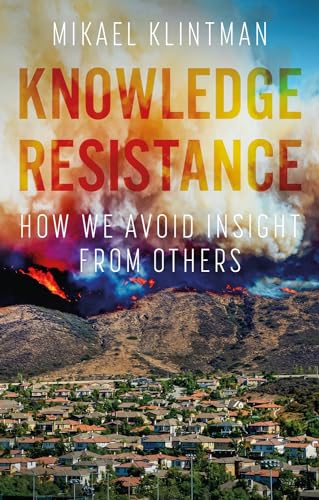
Why do we reject information that could help us make better decisions? Why do intelligent people sometimes refuse to acknowledge facts that contradict their beliefs? These questions sit at the heart of one of our most pressing contemporary challenges: our tendency to resist knowledge even when it serves our best interests.
This groundbreaking exploration reveals how knowledge resistance operates at multiple levels of human experience, from individual psychology to social dynamics and institutional structures. Rather than simply dismissing those who reject evidence as ignorant or irrational, this work offers a sophisticated framework for understanding the complex mechanisms that cause all of us, at various times, to turn away from potentially valuable information.
Readers will discover that knowledge resistance isn't merely about lack of education or access to facts. Instead, it emerges from deeply embedded cognitive patterns, social identities, and institutional incentives that shape how we process information. The analysis demonstrates how our brains naturally seek cognitive shortcuts, how group belonging influences what we accept as true, and how organizational structures can systematically discourage critical inquiry.
One of the most valuable insights offered here is the distinction between different types of knowledge resistance. Some resistance stems from individual psychological factors like confirmation bias or motivated reasoning. Other forms arise from social pressures to maintain group cohesion or protect shared worldviews. Still others emerge from institutional arrangements that reward certain kinds of knowledge while suppressing others. Understanding these distinctions empowers readers to recognize which type of resistance they're encountering and respond more effectively.
For those committed to personal growth and transformation, this examination provides essential tools for self-reflection. We all resist knowledge at times, often without realizing it. By illuminating the subtle ways resistance operates in our own thinking, this work enables readers to identify their blind spots and develop greater intellectual humility. Learning to notice when we're avoiding uncomfortable information becomes a crucial skill for genuine personal development.
The social dimension receives particular attention, showing how knowledge resistance functions within communities, organizations, and entire societies. This perspective proves especially relevant for readers concerned with social consciousness and collective wellbeing. Understanding how groups collectively resist certain types of knowledge helps explain many contemporary challenges, from public health crises to environmental degradation to political polarization.
Perhaps most importantly, this exploration avoids simplistic judgments about who resists knowledge and why. Rather than dividing the world into rational people who accept facts and irrational people who reject them, it reveals how situational factors, institutional structures, and evolutionary predispositions make knowledge resistance a universal human tendency. This compassionate approach opens pathways for more constructive dialogue across ideological divides.
Readers will gain practical wisdom for navigating an information-saturated world where distinguishing reliable knowledge from misinformation grows increasingly difficult. The framework provided helps identify not just when others are resisting knowledge, but when we ourselves might be falling into that trap. This self-awareness becomes foundational for making better decisions in every area of life, from health choices to relationship dynamics to civic engagement.
The implications extend to anyone working in education, healthcare, environmental advocacy, or social change. Understanding the psychological, social, and institutional barriers to knowledge acceptance enables more effective communication strategies. Rather than simply presenting more facts to skeptical audiences, change agents can address the underlying reasons for resistance.
For spiritual seekers, the content resonates with ancient wisdom traditions that emphasize the importance of confronting uncomfortable truths and transcending ego-driven thinking patterns. The call to recognize our own resistance to knowledge aligns with contemplative practices that cultivate awareness of mental habits and automatic responses.
Ultimately, this examination offers hope alongside its diagnosis of the problem. By understanding the mechanisms of knowledge resistance, we gain agency to counteract them. We can design institutions that encourage rather than suppress critical inquiry. We can develop personal practices that help us remain open to evidence that challenges our assumptions. We can foster social environments where intellectual honesty takes precedence over tribal loyalty. In doing so, we take crucial steps toward both personal empowerment and collective flourishing in an age desperately needing wisdom and clear-sighted action.