
Happiness & Success
Achieving Happiness Through Acceptance of Life
The quest for happiness often leads to frustration, as many fail to realize that the...








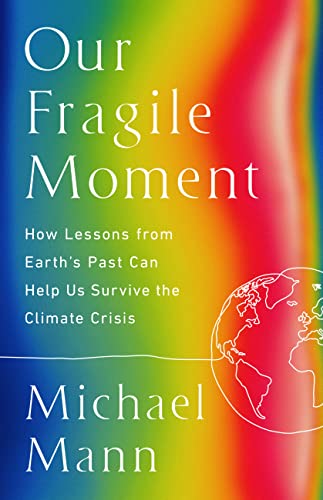
Climate history holds profound lessons for understanding our present moment and shaping the future we want to create. By examining Earth's past climatic shifts—from ancient hothouse conditions to ice ages, from periods of flourishing biodiversity to mass extinctions—we gain essential context for the environmental crisis facing humanity today. More importantly, we discover that our actions matter tremendously, and that we possess both the knowledge and the agency to influence what comes next.
This illuminating work takes readers on a journey through 4.5 billion years of planetary history, revealing how delicate the balance has been between conditions that support complex life and those that threaten it. The exploration demonstrates that Earth's climate has never been static, yet the current rate of change stands apart from anything in the geological record. Understanding this distinction empowers readers to cut through confusion and misinformation, replacing anxiety with informed awareness and purposeful action.
One of the most valuable insights offered is the examination of past climate transitions and what made them survivable or catastrophic for life on Earth. From the "Snowball Earth" episodes that nearly froze the planet entirely to the hothouse conditions that caused mass extinctions, each historical example provides crucial lessons. These aren't abstract scientific curiosities but rather essential context for understanding the narrow range of conditions within which human civilization has thrived. Readers will come to appreciate just how fortunate we are to live in the relatively stable Holocene epoch, and why preserving conditions similar to those that allowed our species to flourish should be a priority.
Read more ▼
Len Saputo, Nancy Faass

The architecture of all abundance
Lenedra J. Carroll

Pamela D. Blair

Matthew Smith
The quest for happiness often leads to frustration, as many fail to realize that the...

Reaching sixty can evoke complex emotions, blending relief with ongoing ambition. This...

The quest for life's purpose often leads to unsatisfactory answers. This article...

Imagine going through one of the most physically and emotionally demanding experiences...

Romantic love is a complex emotion shaped by historical, cultural, and biological...

Daily actions often conflict with personal beliefs due to past experiences. By utilizing...

Have you ever argued over something that wasn't actually said? From cultural differences...

Therapists often use dream interpretation to delve into patients' emotions, but true...