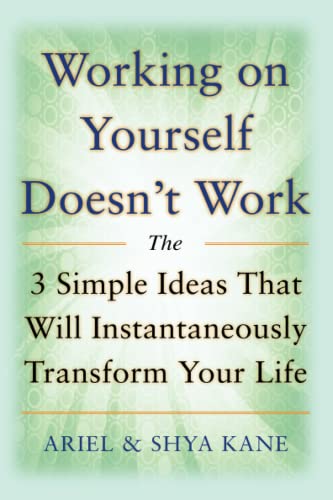
For decades, the personal development industry has operated on a fundamental premise: that we are somehow broken and need fixing. We've been told to work harder on ourselves, to dig deeper into our traumas, to analyze our patterns, and to continuously strive for improvement. But what if this entire approach is actually keeping us stuck in the very problems we're trying to solve?
This revolutionary perspective challenges everything we've been taught about personal transformation. Rather than offering yet another technique for self-improvement, it presents a radical alternative that turns conventional wisdom on its head. The core insight is both simple and profound: the very act of working on yourself creates and reinforces the problems you're trying to eliminate.
When we constantly focus on what's wrong with us, we're actually strengthening our identification with those very issues. Every time we try to fix our anxiety, we're acknowledging and empowering the belief that we are anxious people. When we work on our anger, we're reinforcing our identity as angry individuals. The harder we try to change, the more entrenched these patterns become. It's like quicksand—the more we struggle, the deeper we sink.
The alternative presented here involves a complete shift in approach. Instead of analyzing, processing, and trying to change our emotional experiences, we're invited to simply observe what's happening without judgment or intervention. This isn't about positive thinking or affirmations—it's about discovering a state of being that exists beyond our thoughts, emotions, and habitual reactions.
Readers will discover practical tools for accessing what's called the "Possibility of You"—a state of natural wellbeing that doesn't require effort, therapy, or endless self-examination. This isn't about achieving some future state of enlightenment; it's about recognizing what's already present when we stop trying so hard to improve ourselves.
One of the most liberating concepts explored is the distinction between experiencing our emotions and being controlled by them. Most personal development work encourages us to feel our feelings fully, to express them, to understand their origins. But this approach suggests something entirely different: that we can allow feelings to exist without making them mean anything about who we are or what we need to do.
The implications for relationships are particularly powerful. When we stop working on ourselves, we naturally stop trying to fix our partners, children, and friends. This creates space for authentic connection rather than constant evaluation and improvement projects. Relationships transform when we're present with people as they are, rather than seeing them through the lens of what needs to change.
For those who have spent years in therapy, read countless self-help books, or attended numerous workshops, this perspective offers both relief and possibility. It explains why, despite all that work, certain patterns persist. It's not that we haven't tried hard enough or found the right technique—it's that the entire framework is fundamentally flawed.
The practical applications extend into every area of life. In work situations, instead of managing stress or trying to be more confident, we discover a natural state of clarity and capability that emerges when we're not constantly monitoring and judging ourselves. In parenting, we find that children respond better when we're simply present rather than always trying to shape and improve them.
What makes this approach particularly relevant for contemporary readers is its efficiency. In our overscheduled, overwhelmed lives, the promise of transformation without adding more work is deeply appealing. This isn't about adding meditation practices, journaling routines, or therapy appointments to an already full schedule. It's about recognizing what becomes available when we stop all that effortful striving.
The shift described here isn't intellectual understanding—it's experiential. Through specific examples and guided explorations, readers gain direct access to states of being that don't require maintenance or practice. This is about discovering a fundamentally different relationship with yourself and life itself, one characterized by ease, presence, and authentic engagement rather than constant self-monitoring and improvement.
For anyone exhausted by the endless cycle of personal development work, this offers a genuine alternative that paradoxically delivers the transformation we've been seeking all along.