

Happiness & Success
Achieving Happiness Through Acceptance of Life
The quest for happiness often leads to frustration, as many fail to realize that the...








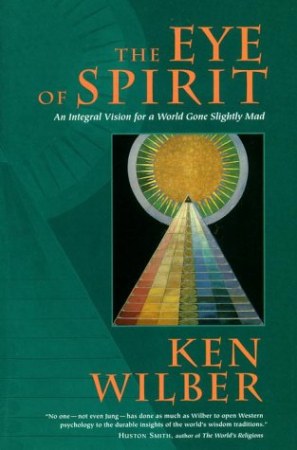
At the intersection of ancient wisdom and modern science lies a revolutionary framework for understanding consciousness, reality, and human potential. This groundbreaking work presents an integral vision that weaves together insights from psychology, philosophy, spirituality, and the natural sciences into a comprehensive map of human development and awakening.
Readers will discover a bold challenge to the reductionist materialism that has dominated Western thought for centuries. Through rigorous philosophical argument combined with deep spiritual insight, a compelling case emerges for the reality of interior dimensions of experience that cannot be reduced to mere brain states or physical processes. This isn't simply mysticism or wishful thinking, but rather a careful articulation of how subjective, intersubjective, and objective realities all play essential and irreducible roles in the Kosmos.
The exploration begins with fundamental questions about the nature of seeing itself. What does it mean to truly perceive reality? How do our modes of knowing shape what we can discover? Through examining the "three eyes of knowing" – the eye of flesh, the eye of mind, and the eye of spirit – a framework emerges that honors empirical science, rational philosophy, and contemplative spirituality as equally valid but distinct ways of accessing truth. Each eye reveals dimensions of reality invisible to the others, and genuine understanding requires engaging all three.
Read more ▼
James F. Balch

Vijay Vad

Hugh Prather, Gayle Prather
The quest for happiness often leads to frustration, as many fail to realize that the...

Reaching sixty can evoke complex emotions, blending relief with ongoing ambition. This...

The quest for life's purpose often leads to unsatisfactory answers. This article...

Romantic love is a complex emotion shaped by historical, cultural, and biological...

Imagine going through one of the most physically and emotionally demanding experiences...

Daily actions often conflict with personal beliefs due to past experiences. By utilizing...

Have you ever argued over something that wasn't actually said? From cultural differences...

Therapists often use dream interpretation to delve into patients' emotions, but true...