
Happiness & Success
Achieving Happiness Through Acceptance of Life
The quest for happiness often leads to frustration, as many fail to realize that the...








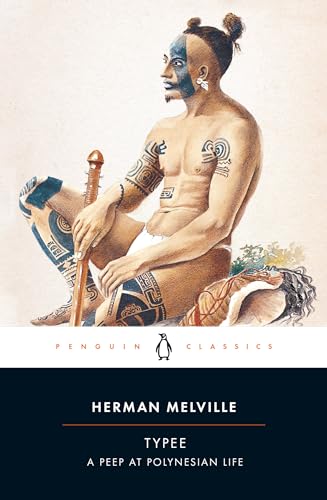
Journey into the heart of the Marquesas Islands in the 1840s and discover a transformative narrative that challenges everything you thought you knew about civilization, freedom, and what it means to live an authentic life. This groundbreaking work of adventure literature doubles as a profound meditation on cultural conditioning, personal liberation, and the courage required to question the society that shaped you.
When a young sailor abandons his whaling ship and escapes into the lush, mysterious valleys of Nuku Hiva, he embarks on far more than a physical journey. His immersion into the world of the Taipi people becomes a catalyst for examining the deepest assumptions about progress, happiness, and human nature itself. Living among a community labeled as cannibals and savages by Western society, he discovers people who embody joy, generosity, and social harmony in ways that starkly contrast with the so-called civilized world he left behind.
The narrative unfolds as both thrilling adventure and philosophical inquiry, inviting readers to reconsider their own cultural programming. Through vivid descriptions of daily life in this Polynesian valley, a portrait emerges of a society operating on fundamentally different principles than Western capitalism and Christianity. Here are people who work only when necessary, who share resources communally, who integrate spirituality seamlessly into everyday existence, and who prioritize human connection over material accumulation. The contrast becomes impossible to ignore and increasingly uncomfortable.
Read more ▼
Christine Hassler

Sharron Murray, Mao Shing Ni

Marc Bonnard, Marc, M.D. Bonnard

Pierre Teilhard de Chardin, Pierre Teilhard de Chardin
The quest for happiness often leads to frustration, as many fail to realize that the...

Reaching sixty can evoke complex emotions, blending relief with ongoing ambition. This...

The quest for life's purpose often leads to unsatisfactory answers. This article...

Imagine going through one of the most physically and emotionally demanding experiences...

Romantic love is a complex emotion shaped by historical, cultural, and biological...

Daily actions often conflict with personal beliefs due to past experiences. By utilizing...

Have you ever argued over something that wasn't actually said? From cultural differences...

Therapists often use dream interpretation to delve into patients' emotions, but true...