
Happiness & Success
Achieving Happiness Through Acceptance of Life
The quest for happiness often leads to frustration, as many fail to realize that the...








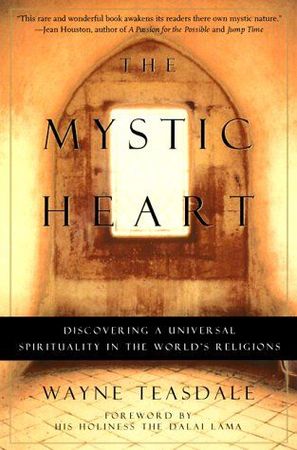
A revolutionary vision emerges for those seeking to navigate the spiritual landscape of our interconnected world, one that transcends the boundaries of individual religious traditions while honoring the depths of each. At its core lies a profound invitation to explore what happens when the contemplative practices and mystical insights of the world's great spiritual traditions converge, creating a universal pathway accessible to seekers everywhere regardless of their religious background or beliefs.
The concept of interspirituality takes center stage, presenting a framework for understanding how the mystical dimensions of Christianity, Buddhism, Hinduism, Islam, Judaism, and indigenous traditions share common ground in their deepest experiences and insights. This is not about creating a shallow spiritual syncretism or abandoning one's own tradition, but rather about discovering the universal truths that mystics across centuries and cultures have consistently encountered in their deepest moments of spiritual realization. These common elements point toward an emerging consciousness that honors diversity while recognizing our fundamental spiritual unity.
Nine essential elements form the foundation of this universal mysticism, creating a practical roadmap for anyone committed to genuine spiritual transformation. These elements include cultivating moral capacity and the development of authentic virtue, engaging in solidarity with all living beings, practicing deep nonviolence that extends beyond mere pacifism to embrace a reverence for all life, and developing a contemplative practice that opens the heart to divine presence. Additional elements address the spiritual significance of living simply, embracing selfless service and compassionate action, creating a prophetic voice that speaks truth to power, and nurturing both humility and a listening heart that remains open to wisdom from unexpected sources.
Read more ▼
Sylvia Browne
Ellen J. Langer

Normandi Ellis, Jean Houston, Lynn Andrews

Robert Sardello
The quest for happiness often leads to frustration, as many fail to realize that the...

Reaching sixty can evoke complex emotions, blending relief with ongoing ambition. This...

The quest for life's purpose often leads to unsatisfactory answers. This article...

Romantic love is a complex emotion shaped by historical, cultural, and biological...

Imagine going through one of the most physically and emotionally demanding experiences...

Have you ever argued over something that wasn't actually said? From cultural differences...

Daily actions often conflict with personal beliefs due to past experiences. By utilizing...

Therapists often use dream interpretation to delve into patients' emotions, but true...