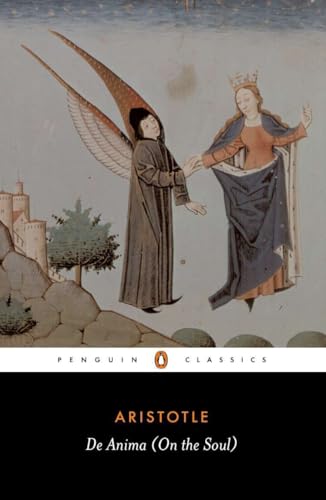
Deep within the foundations of Western philosophy lies a revolutionary exploration of what it means to be alive, conscious, and human. This ancient text invites modern readers on a profound journey into the nature of the soul, consciousness, and the very essence of our being. Far from being merely an academic treatise, this work offers timeless insights that speak directly to anyone seeking to understand themselves at the deepest level.
At its core, this philosophical masterwork grapples with questions that remain strikingly relevant today: What animates living beings? How do we perceive and understand the world around us? What distinguishes humans from other forms of life? How do thought, emotion, and sensation interconnect to create our experience of existence? These inquiries form the bedrock of a systematic investigation into the principles that govern all living things, from the simplest plants to the complexity of human consciousness.
Readers will discover a comprehensive framework for understanding life itself, presented through careful observation and logical reasoning. The exploration begins with fundamental questions about what makes something alive rather than inanimate, proceeding to examine the various capacities that different living beings possess. This layered approach reveals how nutrition, sensation, imagination, and rational thought build upon one another in increasingly sophisticated forms of life.
One of the most valuable insights concerns the relationship between body and soul, matter and consciousness. Rather than presenting these as entirely separate realms, the text develops a nuanced understanding of their intimate connection. This perspective offers a middle path between pure materialism and disembodied spiritualism, suggesting instead that our mental and physical aspects form an integrated whole. For modern readers struggling with mind-body dualism or seeking holistic approaches to wellbeing, this ancient wisdom provides a surprisingly contemporary framework.
The examination of perception and cognition offers particularly rich territory for personal growth. By analyzing how we receive sensory information, process it through imagination and memory, and ultimately arrive at understanding, the text illuminates the mechanisms behind our conscious experience. This knowledge empowers readers to become more aware of their own mental processes, potentially transforming how they engage with thoughts, emotions, and sensory experiences. Such awareness forms the foundation for mindfulness practices and conscious living.
Another significant contribution lies in the discussion of human uniqueness and potential. The text identifies rational thought and contemplation as distinctively human capacities, suggesting that actualizing these abilities represents the highest form of human flourishing. This philosophical foundation supports the idea that personal development through learning, reflection, and wisdom-seeking constitutes a fundamental aspect of living well. For readers committed to personal empowerment, this validates the pursuit of knowledge and self-understanding as essential rather than optional activities.
The systematic methodology employed throughout demonstrates the power of careful observation and logical analysis in understanding ourselves and our world. This approach encourages readers to examine their own experiences with similar rigor, fostering critical thinking skills that enhance decision-making and self-awareness. The text models how to ask fundamental questions, consider multiple perspectives, and build coherent frameworks for understanding complex phenomena.
Beyond individual transformation, this work connects personal consciousness to broader questions about human nature and our place in the natural world. Understanding ourselves as living beings with specific capacities and potentials can inform how we relate to other forms of life and the environment. This ecological awareness aligns with contemporary concerns about sustainability and our relationship with nature.
The enduring relevance of these ideas testifies to their fundamental importance. Despite being millennia old, the questions posed and answers suggested continue to resonate with contemporary discussions in neuroscience, psychology, philosophy of mind, and consciousness studies. Engaging with this foundational text allows readers to participate in ongoing conversations about human nature while developing their own informed perspectives.
For seekers of wisdom and personal transformation, this philosophical exploration offers both intellectual stimulation and practical insight. It challenges readers to think deeply about their own existence while providing frameworks for understanding the remarkable phenomenon of consciousness they experience every moment.