
Happiness & Success
Achieving Happiness Through Acceptance of Life
The quest for happiness often leads to frustration, as many fail to realize that the...








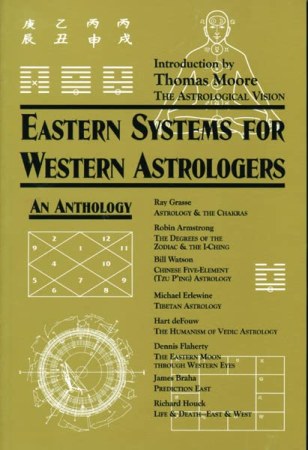
For centuries, Western and Eastern astrological traditions have developed along parallel but separate paths, each offering profound insights into human nature and destiny. This groundbreaking exploration bridges these two ancient wisdom systems, revealing how the sophisticated techniques of Vedic astrology can dramatically enhance and deepen Western astrological practice. Rather than suggesting one system is superior to the other, this work demonstrates how their integration creates a more complete and nuanced understanding of the human experience.
At the heart of this comprehensive guide lies a practical framework for Western astrologers to incorporate Eastern methodologies into their existing practice. The journey begins with an accessible introduction to Vedic astrology's foundational principles, carefully explaining concepts that may initially seem foreign to those trained in Western traditions. The sidereal zodiac, which forms the backbone of Eastern astrology, is thoroughly explored and compared with the tropical zodiac familiar to Western practitioners. This comparison illuminates why the same birth chart can yield different yet complementary insights depending on which lens we apply.
One of the most valuable aspects covered involves the Vedic system of planetary periods, known as dashas, which provide a sophisticated timing technique largely absent from traditional Western astrology. These planetary cycles offer remarkable precision in predicting when certain life themes and events are likely to unfold. Instead of relying solely on transits and progressions, readers gain access to a timing system that has proven its worth through thousands of years of application. The practical examples and case studies throughout demonstrate how these periods can pinpoint significant life changes with startling accuracy.
Read more ▼
Ahad Cobb

Debra Landwehr Engle
Barbara Ehrenreich
The quest for happiness often leads to frustration, as many fail to realize that the...

Reaching sixty can evoke complex emotions, blending relief with ongoing ambition. This...

The quest for life's purpose often leads to unsatisfactory answers. This article...

Imagine going through one of the most physically and emotionally demanding experiences...

Romantic love is a complex emotion shaped by historical, cultural, and biological...

Daily actions often conflict with personal beliefs due to past experiences. By utilizing...

Have you ever argued over something that wasn't actually said? From cultural differences...

Therapists often use dream interpretation to delve into patients' emotions, but true...