
Happiness & Success
Achieving Happiness Through Acceptance of Life
The quest for happiness often leads to frustration, as many fail to realize that the...








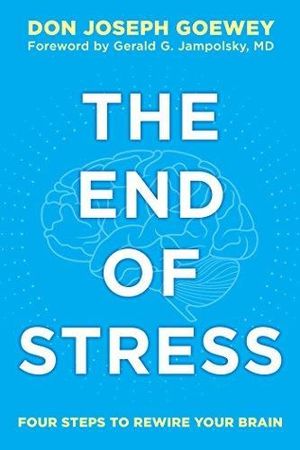
Stress has become the defining affliction of modern life, draining our energy, clouding our minds, and compromising our health in ways we're only beginning to understand. Yet what if everything we've been told about stress is incomplete? What if the answer to ending stress isn't about managing it better, but about fundamentally transforming our relationship with it through a revolutionary understanding of how the brain works?
This groundbreaking work draws on cutting-edge neuroscience research to reveal a startling truth: our brains possess an extraordinary capacity for change that most of us never tap into. Through neuroplasticity, the brain's ability to rewire itself, we can literally reshape our neural pathways and free ourselves from the stress response that keeps us trapped in cycles of anxiety, worry, and fear. Rather than offering temporary relief or coping mechanisms, this approach provides a pathway to actually eliminating chronic stress at its source.
The exploration begins with a deep dive into the neuroscience of stress, explaining how the primitive part of our brain, designed to protect us from saber-toothed tigers, now responds to modern challenges with the same fight-or-flight intensity. This outdated response system floods our bodies with stress hormones that were meant for short bursts of emergency action, not the constant low-grade threats of contemporary life. The result is a population living in a perpetual state of mild emergency, with devastating consequences for physical health, emotional wellbeing, and cognitive function.
Read more ▼
Alan Cohen

Shirley Knapp, Nanette McLane
Mihaly Csikszentmihalyi

Feel the fear-- and do it anyway
Susan J. Jeffers
The quest for happiness often leads to frustration, as many fail to realize that the...

Reaching sixty can evoke complex emotions, blending relief with ongoing ambition. This...

The quest for life's purpose often leads to unsatisfactory answers. This article...

Romantic love is a complex emotion shaped by historical, cultural, and biological...

Imagine going through one of the most physically and emotionally demanding experiences...

Daily actions often conflict with personal beliefs due to past experiences. By utilizing...

Have you ever argued over something that wasn't actually said? From cultural differences...

Therapists often use dream interpretation to delve into patients' emotions, but true...