
Happiness & Success
Achieving Happiness Through Acceptance of Life
The quest for happiness often leads to frustration, as many fail to realize that the...









For centuries, Western spirituality has been dominated by a theology centered on human sinfulness, unworthiness, and the need for redemption from an inherently flawed nature. This groundbreaking work challenges that foundational assumption and offers instead a radically different starting point for spiritual development: the concept that creation itself is fundamentally good, and that humans are born as blessings rather than burdens requiring salvation from original sin.
At the heart of this transformative approach lies a recovery of an ancient spiritual tradition that celebrates the goodness of creation, the divinity present in all living things, and the creative power inherent in human nature. Rather than beginning the spiritual journey with guilt and self-denial, this path invites seekers to start with gratitude, wonder, and an appreciation for the gift of existence itself. This shift in perspective has profound implications not just for individual spiritual practice, but for how we approach ecology, social justice, sexuality, and our relationship with the cosmos.
Drawing from mystics across various traditions including Hildegard of Bingen, Meister Eckhart, Julian of Norwich, and Thomas Aquinas, as well as Indigenous wisdom and contemporary science, this work presents a four-fold path of spiritual development. This path moves through stages of awe and delight in creation, acknowledgment of darkness and suffering, creative expression and transformation, and finally celebration and justice-making. Each phase builds upon the others, creating a comprehensive framework for personal and collective transformation that honors both the ecstatic joy of existence and the very real pain present in our world.
Read more ▼
Robert Farris Thompson

Trent W. Nichols MD, Nancy Faass MSW MPH
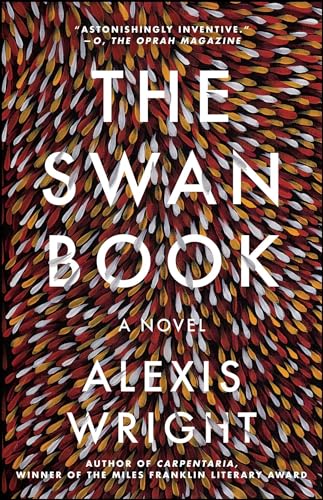
Alexis Wright
Making Peace with Death and Dying
Judith Johnson
The quest for happiness often leads to frustration, as many fail to realize that the...

Reaching sixty can evoke complex emotions, blending relief with ongoing ambition. This...

The quest for life's purpose often leads to unsatisfactory answers. This article...

Romantic love is a complex emotion shaped by historical, cultural, and biological...

Imagine going through one of the most physically and emotionally demanding experiences...

Have you ever argued over something that wasn't actually said? From cultural differences...

Daily actions often conflict with personal beliefs due to past experiences. By utilizing...

Therapists often use dream interpretation to delve into patients' emotions, but true...