
Happiness & Success
Achieving Happiness Through Acceptance of Life
The quest for happiness often leads to frustration, as many fail to realize that the...








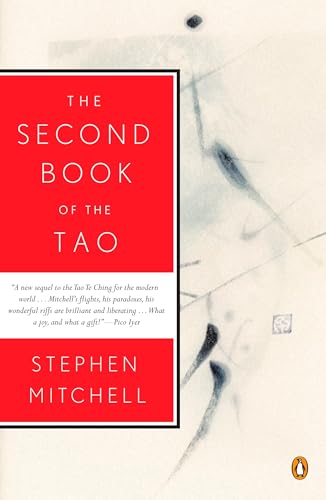
Ancient Taoist wisdom offers profound guidance for navigating the complexities of modern life, and this compilation draws from two essential classical Chinese texts to illuminate pathways toward personal freedom, authentic living, and inner peace. By bringing together selections from the Chuang-tzu, one of the foundational texts of Taoism, and the Chung Yung, also known as the Doctrine of the Mean, readers encounter a treasure trove of philosophical insights presented in accessible, contemporary language.
The teachings contained within these pages address fundamental questions about how to live with spontaneity, grace, and wisdom in a world that often seems chaotic and demanding. Through parables, dialogues, and philosophical reflections, the material explores themes of non-attachment, effortless action, and the cultivation of inner stillness. Rather than prescribing rigid rules or dogmatic principles, the Taoist approach encourages readers to discover their own authentic path by aligning with the natural flow of life itself.
One of the central concepts explored is wu wei, often translated as "effortless action" or "non-doing." This doesn't mean passivity or laziness, but rather learning to act from a place of deep centeredness and alignment with natural rhythms. When we stop forcing outcomes and trying to control every aspect of existence, paradoxically we often become more effective and find that obstacles dissolve more easily. The text provides numerous examples and stories that illustrate this principle in action, helping readers understand how to apply it in their own lives.
Read more ▼
Pema Chödrön

Sobonfu Somé
Transition To The Golden Age In 2032
Diana Cooper
The Myth of Sisyphus and Other Essays
Albert Camus
The quest for happiness often leads to frustration, as many fail to realize that the...

Reaching sixty can evoke complex emotions, blending relief with ongoing ambition. This...

The quest for life's purpose often leads to unsatisfactory answers. This article...

Romantic love is a complex emotion shaped by historical, cultural, and biological...

Imagine going through one of the most physically and emotionally demanding experiences...

Have you ever argued over something that wasn't actually said? From cultural differences...

Daily actions often conflict with personal beliefs due to past experiences. By utilizing...

Therapists often use dream interpretation to delve into patients' emotions, but true...