


Happiness & Success
Achieving Happiness Through Acceptance of Life
The quest for happiness often leads to frustration, as many fail to realize that the...








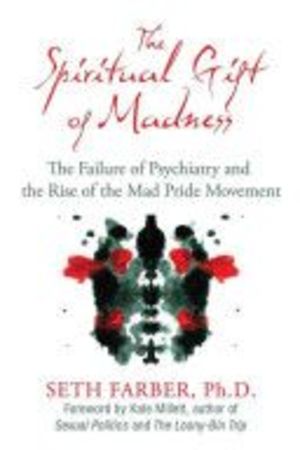
For centuries, Western society has pathologized experiences that fall outside the narrow boundaries of consensus reality, labeling visionary states, mystical encounters, and radical spiritual awakenings as symptoms of mental illness requiring pharmaceutical intervention. This groundbreaking work challenges the foundational assumptions of modern psychiatry, revealing how what mainstream medicine dismisses as "madness" may actually represent profound spiritual emergence and transformative potential.
Drawing on decades of research, clinical observation, and the testimonies of those who have navigated extreme psychological states, this exploration demonstrates that many experiences diagnosed as psychotic breaks, schizophrenia, or bipolar disorder can be understood instead as spiritual crises—temporary periods of psychological chaos that, when properly supported, lead to expanded consciousness, creative breakthroughs, and authentic self-realization. The distinction is crucial: where the medical model sees only pathology requiring suppression, a spiritual framework recognizes these states as potential gateways to healing, wisdom, and enlightenment.
Readers will discover how the psychiatric establishment, in partnership with pharmaceutical corporations, has systematically medicalized human diversity and spiritual experience. The analysis reveals how diagnostic categories become tools of social control, marginalizing those whose perceptions and behaviors challenge dominant cultural norms. This isn't merely theoretical critique—detailed case studies illustrate how individuals experiencing genuine mystical breakthroughs have been misdiagnosed, hospitalized against their will, and subjected to treatments that suppress rather than support their natural healing processes.
Read more ▼
Stephen Cope

Hersch Wilson
The quest for happiness often leads to frustration, as many fail to realize that the...

Reaching sixty can evoke complex emotions, blending relief with ongoing ambition. This...

The quest for life's purpose often leads to unsatisfactory answers. This article...

Romantic love is a complex emotion shaped by historical, cultural, and biological...

Imagine going through one of the most physically and emotionally demanding experiences...

Daily actions often conflict with personal beliefs due to past experiences. By utilizing...

Have you ever argued over something that wasn't actually said? From cultural differences...

Therapists often use dream interpretation to delve into patients' emotions, but true...