
Happiness & Success
Achieving Happiness Through Acceptance of Life
The quest for happiness often leads to frustration, as many fail to realize that the...








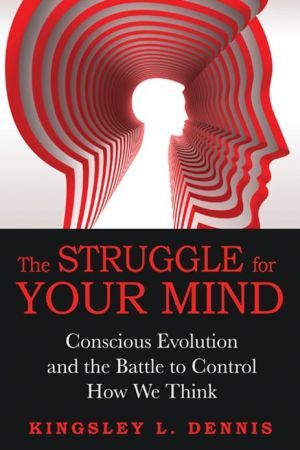
Understanding how external forces shape our thoughts, beliefs, and behaviors has never been more critical than in today's hyperconnected world. Modern society faces an unprecedented assault on individual consciousness, with powerful institutions, corporate interests, and technological systems working to influence how we think, what we desire, and how we perceive reality itself. This groundbreaking exploration reveals the invisible mechanisms of social control and offers pathways toward reclaiming personal sovereignty over our mental and spiritual lives.
At the heart of this work lies a profound examination of how mass media, political propaganda, consumer culture, and emerging technologies combine to create what might be called a "manufactured consensus" about reality. Readers discover how sophisticated psychological techniques originally developed for advertising and political campaigns have evolved into comprehensive systems designed to shape collective consciousness on a massive scale. From the subtle manipulation of language and symbols to the deliberate engineering of fear and desire, the methods employed to influence public thinking operate largely beneath our conscious awareness.
The exploration delves deeply into historical patterns of social control, tracing how techniques of mass influence have developed throughout the twentieth century and accelerated dramatically in recent decades. Drawing on research from psychology, sociology, neuroscience, and communications theory, a compelling case emerges showing how our personal autonomy has been systematically undermined by forces that benefit from keeping populations passive, distracted, and compliant. Television programming, news coverage, entertainment media, and increasingly, social media platforms all play crucial roles in this architecture of influence.
Read more ▼
Anne Moir, David Jessel

Gertrud Hirschi

Don Altman

Lora Cheadle
The quest for happiness often leads to frustration, as many fail to realize that the...

Reaching sixty can evoke complex emotions, blending relief with ongoing ambition. This...

The quest for life's purpose often leads to unsatisfactory answers. This article...

Romantic love is a complex emotion shaped by historical, cultural, and biological...

Imagine going through one of the most physically and emotionally demanding experiences...

Daily actions often conflict with personal beliefs due to past experiences. By utilizing...

Have you ever argued over something that wasn't actually said? From cultural differences...

Therapists often use dream interpretation to delve into patients' emotions, but true...