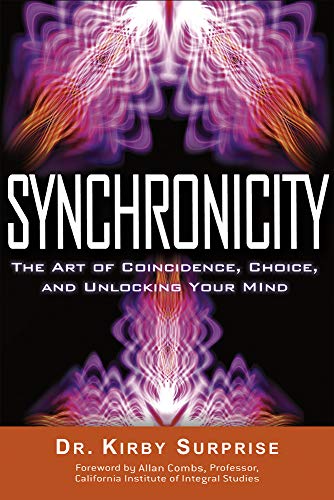
Meaningful coincidences have fascinated humanity for millennia, appearing as mysterious moments when the external world seems to mirror our internal states with uncanny precision. These experiences, often dismissed as mere chance, may actually represent one of the most profound gateways to understanding the relationship between consciousness and reality itself.
Drawing on cutting-edge research in psychology, neuroscience, and quantum physics, this groundbreaking work presents a revolutionary framework for understanding how our minds actively participate in creating the patterns and connections we perceive as meaningful coincidences. Rather than viewing these occurrences as messages from an external force or simple randomness, readers discover a third path: these experiences emerge from the creative interaction between human consciousness and the probabilistic nature of reality.
At the heart of this exploration lies a transformative insight: our beliefs, expectations, and unconscious patterns don't just influence how we interpret events—they actively shape which events we encounter. Through detailed analysis of how attention, perception, and probability intersect, readers gain practical understanding of the mechanisms that generate these experiences. This knowledge becomes a powerful tool for personal transformation, offering the ability to consciously work with these principles rather than remaining their unconscious subject.
The psychological dimension receives thorough examination, revealing how our filtering systems determine which aspects of reality capture our attention. Every moment contains countless potential connections and patterns, yet we notice only those that resonate with our current mental and emotional states. By understanding this selective attention process, readers learn to recognize how their inner world creates a feedback loop with external experience, generating chains of meaningful coincidences that seem to validate and amplify existing beliefs.
This understanding carries profound implications for healing and personal growth. Many people interpret meaningful coincidences as confirmation of their fears, limitations, or negative self-concepts, unknowingly reinforcing patterns that obstruct wellbeing. By recognizing the participatory nature of these experiences, individuals gain the power to consciously redirect this creative process. The work provides practical guidance for identifying unconscious belief patterns that may be attracting unwanted experiences and offers methods for establishing new patterns aligned with health, purpose, and fulfillment.
The therapeutic applications extend beyond individual psychology into relationships, career, and life purpose. Readers learn to track patterns of meaningful coincidences as diagnostic tools, revealing hidden beliefs and emotional patterns operating beneath conscious awareness. This self-knowledge becomes instrumental in addressing chronic issues that resist conventional approaches, from recurring relationship dynamics to persistent health challenges that seem to have no clear physical cause.
Particularly valuable is the integration of Eastern and Western perspectives on consciousness. While honoring mystical traditions that have long recognized the interconnected nature of mind and world, the presentation grounds these insights in contemporary scientific understanding. This bridge between ancient wisdom and modern knowledge makes these principles accessible to skeptics and believers alike, offering a framework that respects empirical evidence while acknowledging the full spectrum of human experience.
The practical exercises and techniques provided empower readers to become active experimenters rather than passive observers. By learning to notice patterns, track coincidences, and observe the correlation between internal states and external experiences, individuals develop heightened awareness of their creative participation in reality. This awareness itself becomes transformative, naturally leading to more intentional living and conscious choice.
For those struggling with feelings of powerlessness or victimhood, this perspective offers genuine hope. Understanding that consciousness actively participates in shaping experience returns agency to the individual. Rather than being subject to random forces or predetermined fate, readers discover their capacity to influence the trajectory of their lives through conscious attention to the beliefs and expectations they hold.
The implications extend into collective healing and social transformation, suggesting that groups sharing beliefs and expectations may collectively influence the patterns and events they experience together. This understanding invites reflection on how cultural narratives shape collective reality and how conscious communities might deliberately create conditions for healing and positive change.